Correlation analysis of gamma-glutamyl transferase to lymphocyte ratio and patients with acute aortic syndrome in China: a propensity score-matched analysis
Minhong Li, Weimin Xu, Hongchun Chen, Yidong Lai, Yequn Chen, Zhouwu Shu, Xuerui Tan

TL;DR
This study explores the link between gamma-glutamyl transferase to lymphocyte ratio (GLR) and acute aortic syndrome (AAS) in China, finding GLR is a significant risk factor.
Contribution
The study is the first to report an association between GLR and AAS, using a propensity score-matched analysis in a Chinese population.
Findings
GLR was identified as an independent risk factor for AAS after propensity score-matching.
Combining D-dimer with GLR improved diagnostic value for AAS compared to using either alone.
GLR showed high specificity, while D-dimer showed high sensitivity in diagnosing AAS.
Abstract
Acute aortic syndrome (AAS) is a life-threatening condition in which there is a fracture in the integrity of the aortic wall. gamma-glutamyl transferase to lymphocyte ratio (GLR) is recognized as a risk factor for liver cirrhosis, fibrosis, and hepatocellular carcinoma. However, there are no clinical reports of GLR and AAS. We attempted to determine whether GLR level is associated with AAS in patients from the Chaoshan region of southern China. A total of 2,384 patients were recruited in this study and were divided into AAS and no-AAS groups according to the results of CT angiography of the thoracoabdominal aorta. Univariate and multivariate logistic regression was performed to identify risk factors for the occurrence of AAS. ROC was applied to assess the value of D-Dimer, GLR alone, or in combination for the diagnosis of AAS. And a 1:1 propensity score-matched analysis was performed.…
Genes, proteins, chemicals, diseases, species, mutations and cell lines named across the full text — each resolved to its canonical identifier and authoritative record.
Click any figure to enlarge with its caption.
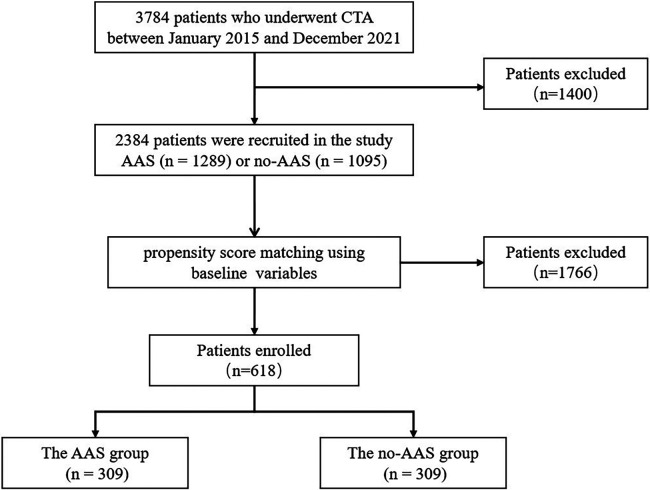 Figure 1
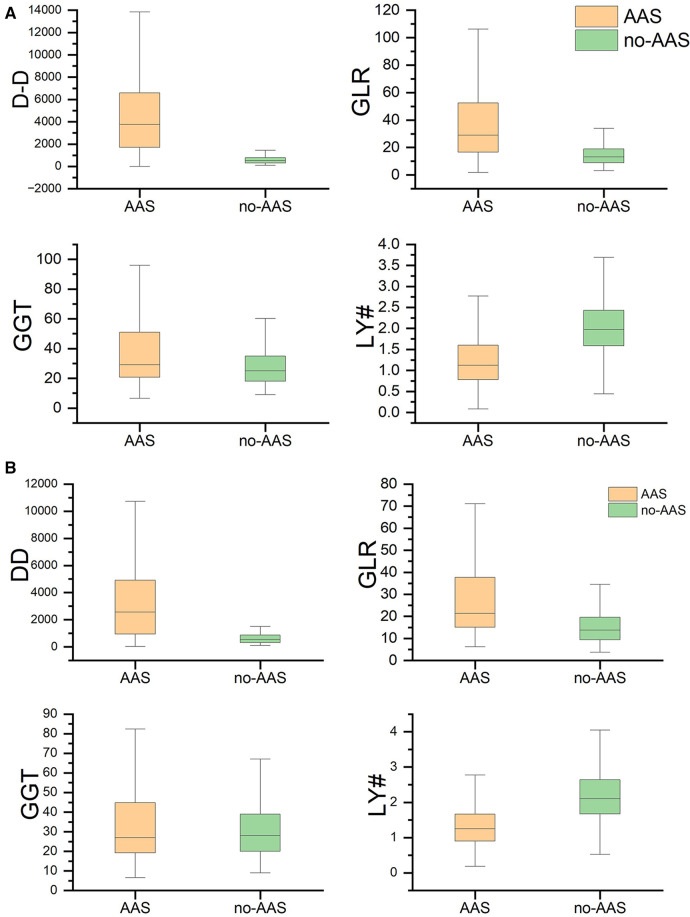 Figure 2
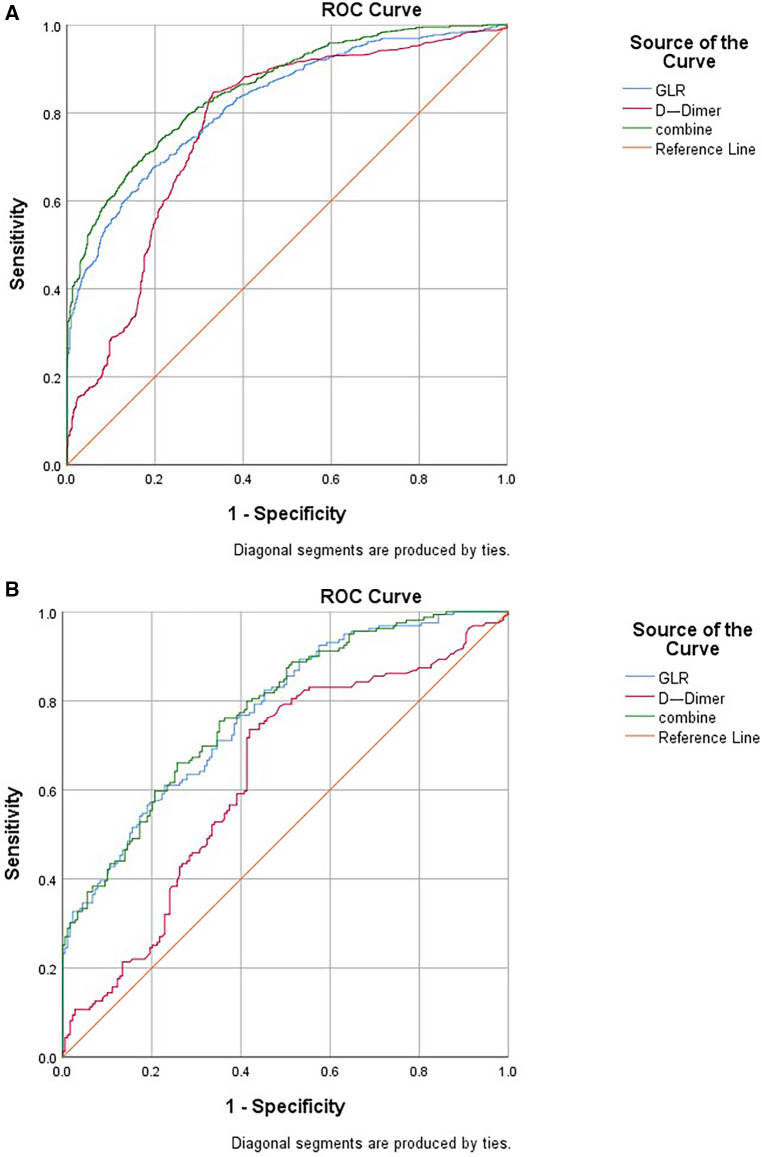 Figure 3
Peer Reviews
No public reviews on file for this paper yet. If you reviewed it on a platform where reviews are public (OpenReview, ICLR, NeurIPS, ICML), you can paste yours below so the community can read it here.
Videos
No videos yet. Explain this paper in a talk, walkthrough, or lecture? Add one.
Taxonomy
TopicsAortic Disease and Treatment Approaches · Aortic aneurysm repair treatments · Abdominal vascular conditions and treatments