Statistical modeling and significance estimation of multi-way chromatin contacts with HyperloopFinder
Weibing Wang, Yusen Ye, Lin Gao

TL;DR
This paper introduces HyperloopFinder, a new method to identify and analyze complex chromatin interactions involving multiple genes and regulatory elements.
Contribution
HyperloopFinder jointly models random polymer looping and technical biases to accurately estimate the significance of multi-way chromatin contacts.
Findings
Most multi-way chromatin contacts can be explained by random linking of adjacent pairwise contacts.
Hyperloops spatially colocalize and may act as scaffolds for gene and regulatory element cooperation.
The method improves understanding of higher-order chromatin structures and transcriptional regulation.
Abstract
Recent advances in chromatin conformation capture technologies, such as SPRITE and Pore-C, have enabled the detection of simultaneous contacts among multiple chromatin loci. This has made it possible to investigate the cooperative transcriptional regulation involving multiple genes and regulatory elements at the resolution of a single molecule. However, these technologies are unavoidably subject to the random polymer looping effect and technical biases, making it challenging to distinguish genuine regulatory relationships directly from random polymer interactions. Here, we present HyperloopFinder, a method for identifying regulatory multi-way chromatin contacts (hyperloops) by jointly modeling the random polymer looping effect and technical biases to estimate the statistical significance of multi-way contacts. The results show that our model can accurately estimate the expected…
Click any figure to enlarge with its caption.
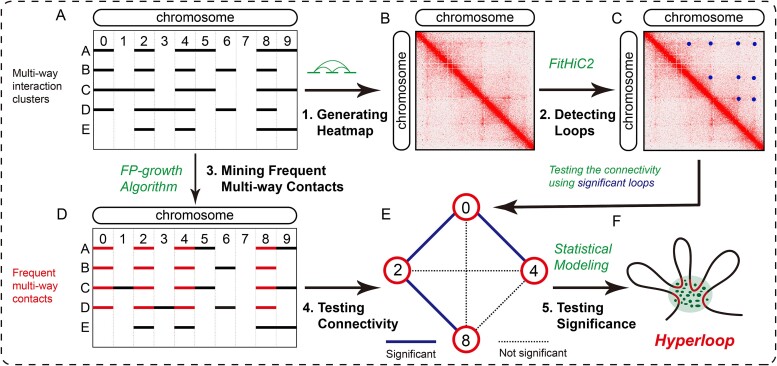 Figure 1
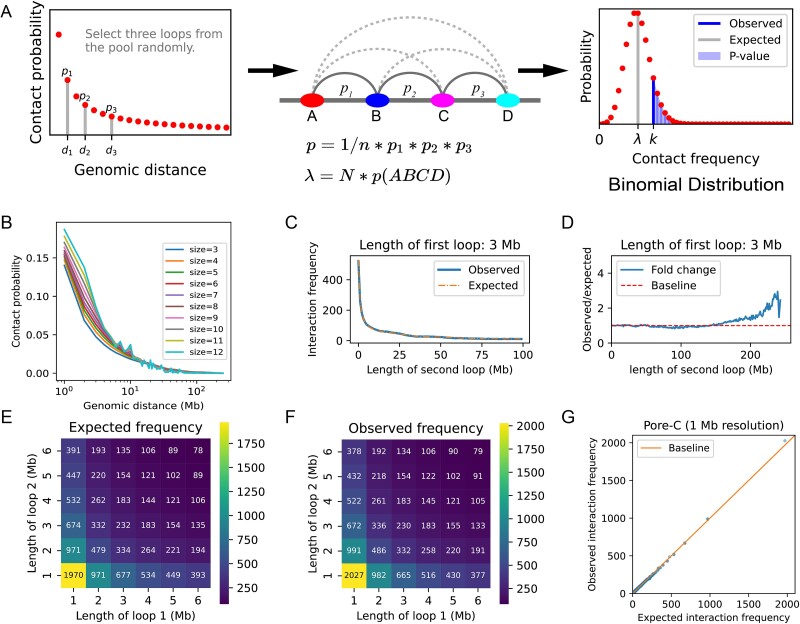 Figure 2
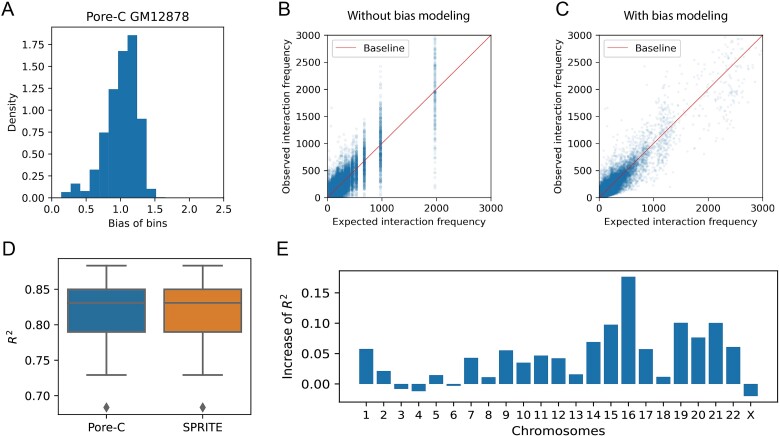 Figure 3
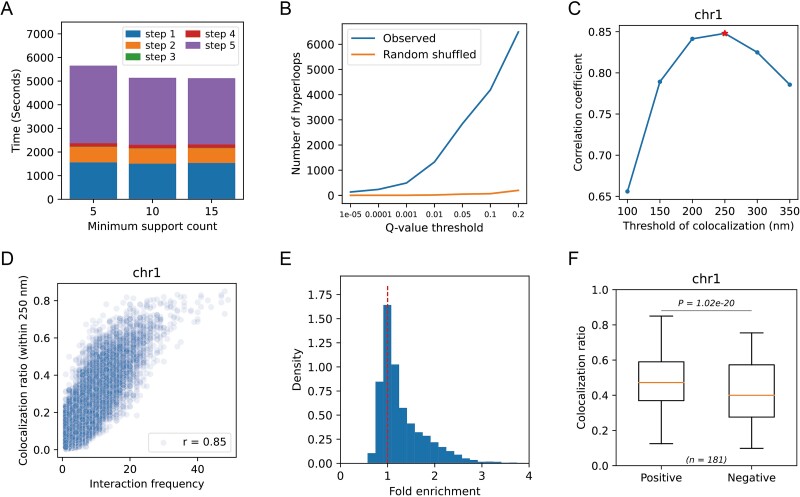 Figure 4
 Figure 5
 Figure 6
Peer Reviews
No public reviews on file for this paper yet. If you reviewed it on a platform where reviews are public (OpenReview, ICLR, NeurIPS, ICML), you can paste yours below so the community can read it here.
Videos
No videos yet. Explain this paper in a talk, walkthrough, or lecture? Add one.
Taxonomy
TopicsGenomics and Chromatin Dynamics · Gene expression and cancer classification · Chromosomal and Genetic Variations