The Rendezvous Technique: A Minimally Invasive Non-Surgical Approach for the Management of Iatrogenic Ureteral Injuries
Eliodoro Faiella, Giuseppina Pacella, Elva Vergantino, Domiziana Santucci, Carlo De Cicco Nardone, Corrado Terranova, Francesco Plotti, Roberto Angioli, Bruno Beomonte Zobel, Rosario Francesco Grasso

TL;DR
This study shows that the rendezvous technique is a safe and effective minimally invasive method to treat ureteral injuries caused by medical procedures, avoiding the need for open surgery.
Contribution
The paper demonstrates the efficacy of the rendezvous technique as a non-surgical alternative for managing iatrogenic ureteral injuries.
Findings
The rendezvous technique was successful in all 29 cases with complete resolution of ureteral leaks.
No major complications were observed, and all patients had their nephrostomy tubes removed after 30 days.
Only three patients developed post-treatment stenosis, which was managed with surgical reimplantation.
Abstract
Background/Objectives: The aim of our study is to evaluate the feasibility and efficacy of the rendezvous technique for the treatment of iatrogenic ureteral injuries. Methods: From 2014 to 2019, 29 patients treated with the rendezvous technique for mono- or bilateral iatrogenic ureteral injuries were enrolled in this retrospective study. All the leaks were previously assessed by CT-urography and antegrade pyelography. Ureteral continuity was restored by performing the rendezvous technique, combining antegrade trans-nephrostomic access and a retrograde trans-cystostomic approach. A double J stent was antegradely inserted, and a nephrostomy tube was kept in place at the end of the procedure. A post-procedure CT-urography and a 30-day nephrostogram follow-up were performed. In the absence of a contrast leak, the nephrostomy tube was removed. Patient follow-up was set with CT-urography at…
Genes, proteins, chemicals, diseases, species, mutations and cell lines named across the full text — each resolved to its canonical identifier and authoritative record.
Click any figure to enlarge with its caption.
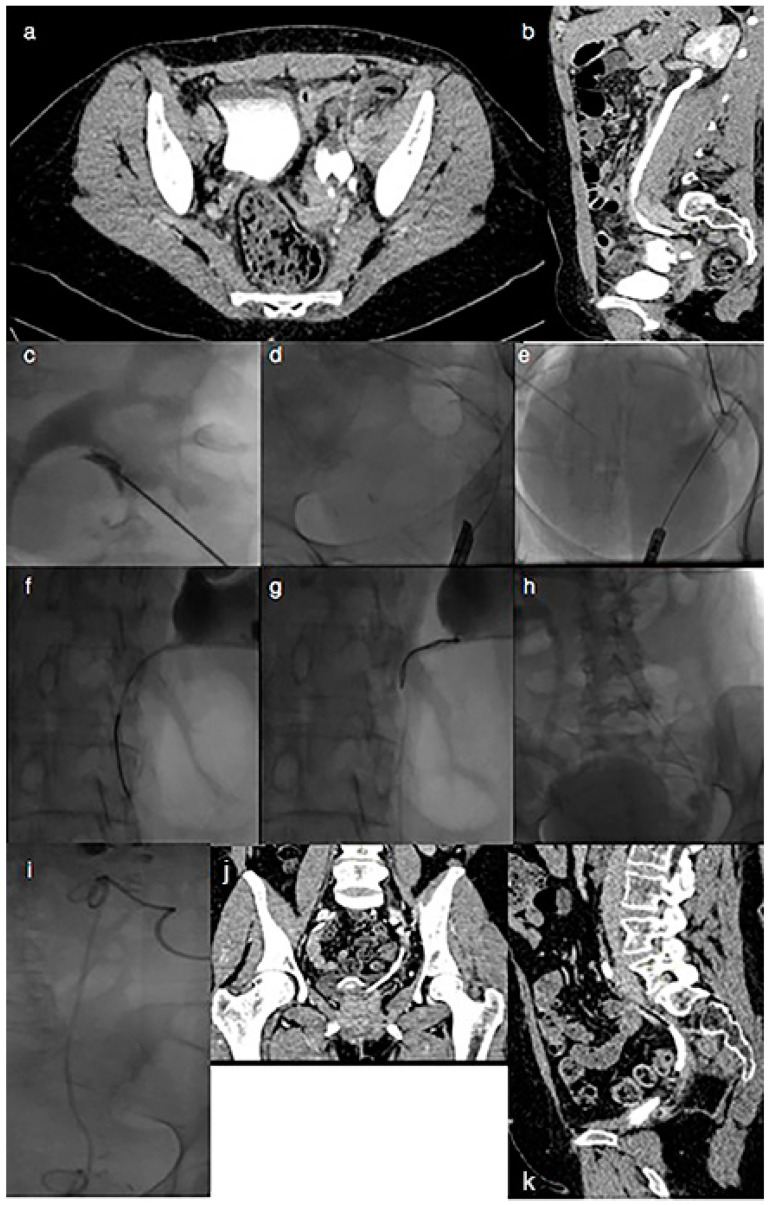 Figure 1
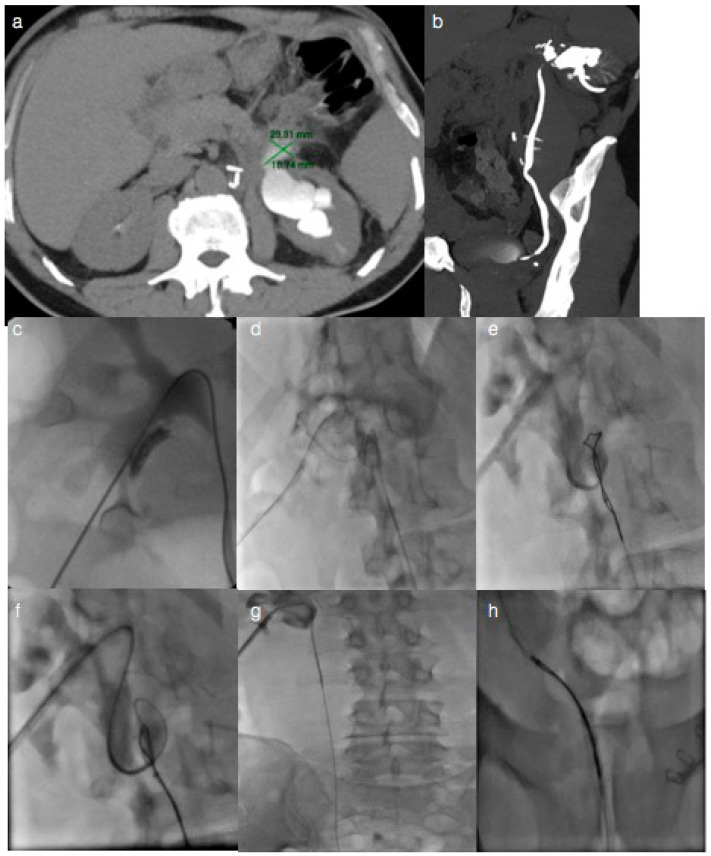 Figure 2
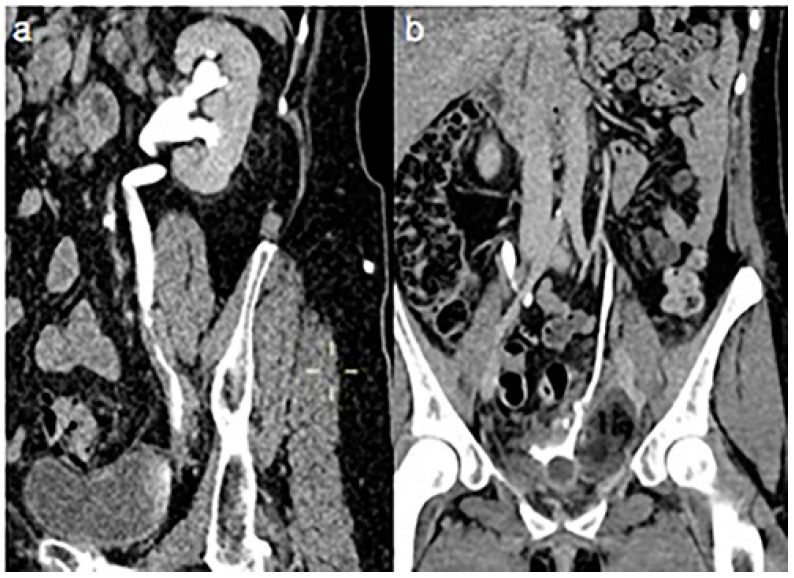 Figure 3
Peer Reviews
No public reviews on file for this paper yet. If you reviewed it on a platform where reviews are public (OpenReview, ICLR, NeurIPS, ICML), you can paste yours below so the community can read it here.
Videos
No videos yet. Explain this paper in a talk, walkthrough, or lecture? Add one.
Taxonomy
TopicsUreteral procedures and complications · Urological Disorders and Treatments · Kidney Stones and Urolithiasis Treatments