Genomic Alterations Correlated to Trastuzumab Resistance and Clinical Outcomes in HER2+/HR- Breast Cancers of Patients Living in Northwestern China
Gang Ma, Binliang Huo, Yanwei Shen, Xulong Zhu, Chong Cheng, Wensheng Li, Wei Cao, Jianhui Li

TL;DR
This study identifies genomic mutations linked to trastuzumab resistance and poor outcomes in HER2+/HR- breast cancer patients from Northwest China.
Contribution
The study reveals a unique mutation profile in HER2+/HR- breast cancer patients from Northwest China, linking specific mutations to trastuzumab resistance and early relapse.
Findings
TP53 and PIK3CA were the most frequently mutated genes in HER2+/HR- breast cancer samples.
NF1 and ATM mutations were associated with trastuzumab resistance and early relapse in patients.
The cohort showed higher genetic variation rates in multiple cancer-related genes compared to other HER2+/HR- cohorts.
Abstract
Anti-HER2 therapy has significantly improved the survival rates of patients with HER2+ breast cancer. However, a subset of these patients eventually experience treatment failure, and the underlying genetic mechanisms remain largely unexplored. This underscores the need to investigate the genomic heterogeneity of HER2+ breast cancer. In this study, we focus on HER2+/HR- breast cancer, as it differs from HER2+/HR+ breast cancer in terms of genetic and biological characteristics. We performed gene-targeted genome sequencing on 45 HER2+/HR- breast cancer samples and identified 650 mutations across 268 cancer-related genes. TP53 (71.1%) and PIK3CA (35.6%) were the most frequently mutated genes in our sample. Additionally, ERBB2 (77.8%), CDK12 (42.2%), and MYC (11.1%) exhibited a high frequency of copy number amplifications (CNAs). Comparative analysis with two other HER2+/HR- breast cancer…
Genes, proteins, chemicals, diseases, species, mutations and cell lines named across the full text — each resolved to its canonical identifier and authoritative record.
Click any figure to enlarge with its caption.
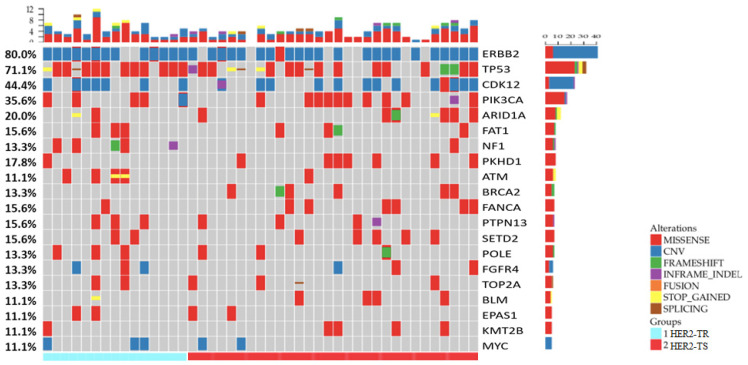 Figure 1
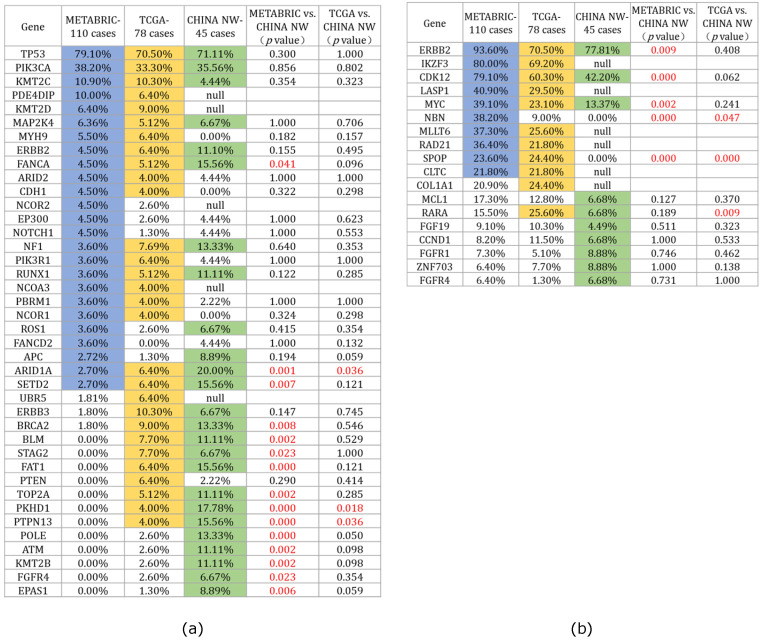 Figure 2
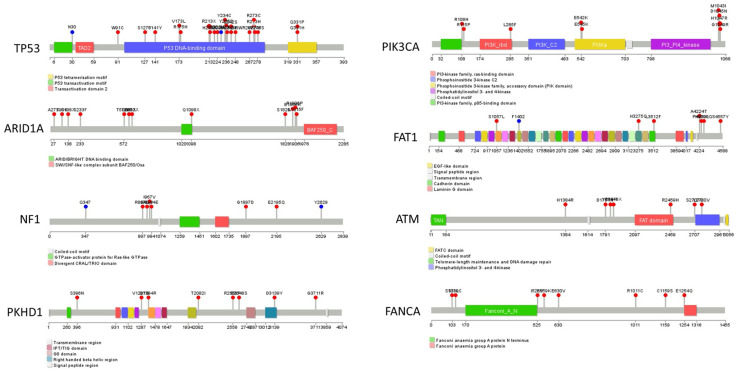 Figure 3
 Figure 4
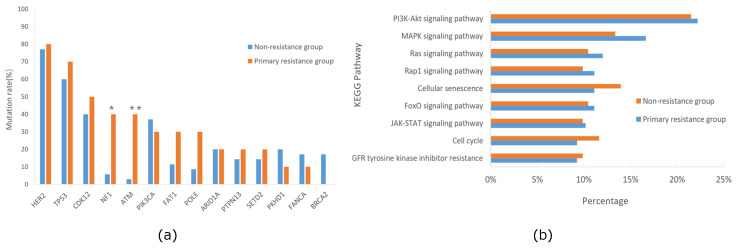 Figure 5
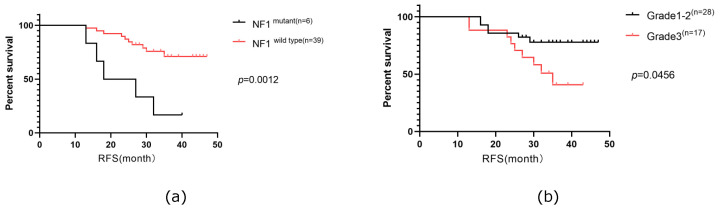 Figure 6
Peer Reviews
No public reviews on file for this paper yet. If you reviewed it on a platform where reviews are public (OpenReview, ICLR, NeurIPS, ICML), you can paste yours below so the community can read it here.
Videos
No videos yet. Explain this paper in a talk, walkthrough, or lecture? Add one.
Taxonomy
TopicsHER2/EGFR in Cancer Research · Breast Cancer Treatment Studies