Diabetes Mellitus as a Risk Factor for Spontaneous Preterm Birth in Women with a Short Cervix after Ultrasound-Indicated Cerclage
Kyong-No Lee, Youngmi Kim, Yeo Kyeong Bae, Jisong Hwang, Yejin Seo, Keun-Young Lee, Jae Jun Lee, Ga-Hyun Son

TL;DR
This study shows that diabetes, especially when combined with obesity, increases the risk of preterm birth in women with a short cervix who undergo a specific procedure to prevent it.
Contribution
The study identifies diabetes and obesity as independent risk factors for preterm birth after cervical cerclage in women with a short cervix.
Findings
Diabetes and obesity significantly increase the risk of spontaneous preterm birth after ultrasound-indicated cerclage.
Women with pregestational diabetes or insulin-treated diabetes are at higher risk of preterm delivery than those with diet-controlled gestational diabetes.
Optimizing glucose control and weight management is crucial for reducing preterm birth risk in this population.
Abstract
Background: Preterm birth (PTB) is a significant challenge in contemporary obstetrics, affecting over one in ten infants worldwide and accounting for 75% of perinatal mortality. Short cervical length during mid-trimester is well known to be associated with an increased risk of spontaneous preterm birth (sPTB). Ultrasound-indicated cerclage (UIC) is recommended to prevent sPTB in women with a short cervix at mid-trimester and a history of sPTB. Objectives: This retrospective observational study aimed to examine the impact of diabetes and obesity on the occurrence of sPTB in women who underwent UIC due to mid-trimester cervical shortening. Methods/Results: The analysis revealed that cervical length at the time of operation, preoperative erythrocyte sedimentation rate levels, and diabetes were independent risk factors for sPTB. Additionally, the presence of diabetes, particularly when…
Genes, proteins, chemicals, diseases, species, mutations and cell lines named across the full text — each resolved to its canonical identifier and authoritative record.
Click any figure to enlarge with its caption.
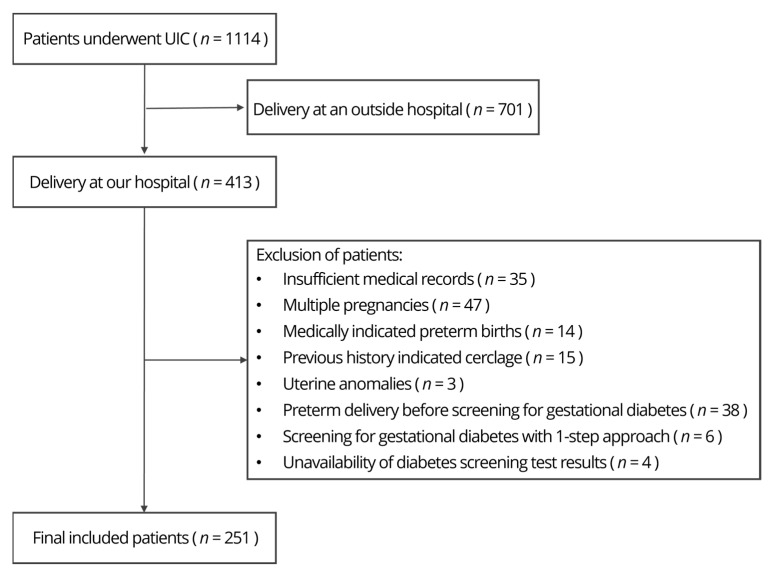 Figure 1
Peer Reviews
No public reviews on file for this paper yet. If you reviewed it on a platform where reviews are public (OpenReview, ICLR, NeurIPS, ICML), you can paste yours below so the community can read it here.
Videos
No videos yet. Explain this paper in a talk, walkthrough, or lecture? Add one.
Taxonomy
TopicsPreterm Birth and Chorioamnionitis · Pregnancy-related medical research · Gestational Diabetes Research and Management