Final Results from the First European Real-World Experience on Lusutrombopag Treatment in Cirrhotic Patients with Severe Thrombocytopenia: Insights from the REAl-World Lusutrombopag Treatment in ITalY Study
Paolo Gallo, Antonio De Vincentis, Francesca Terracciani, Andrea Falcomatà, Valeria Pace Palitti, Maurizio Russello, Anthony Vignone, Domenico Alvaro, Raffaella Tortora, Marco Biolato, Maurizio Pompili, Vincenza Calvaruso, Veneziano Marzia, Marco Tizzani, Alessandro Caneglias

TL;DR
This study evaluates the effectiveness and safety of lusutrombopag in European cirrhotic patients with severe thrombocytopenia, showing it is effective in most cases.
Contribution
The study provides the first real-world European data on lusutrombopag's efficacy and safety in cirrhotic patients with severe thrombocytopenia.
Findings
Lusutrombopag significantly increased platelet counts in 84% of patients, avoiding platelet transfusions.
Baseline platelet count ≤29,000/μL predicts non-response to lusutrombopag with 91% sensitivity.
De novo portal vein thrombosis occurred in 5% of patients, with no other safety issues observed.
Abstract
Background and aims: Management of severe thrombocytopenia poses significant challenges in patients with chronic liver disease. Here, we aimed to evaluate the first real-world European post-marketing cohort of cirrhotic patients treated with lusutrombopag, a thrombopoietin receptor agonist, verifying the efficacy and safety of the drug. Methods: In the REAl-world Lusutrombopag treatment in ITalY (REALITY) study, we collected data from consecutive cirrhotic patients treated with lusutrombopag in 19 Italian hepatology centers, mostly joined to the “Club Epatologi Ospedalieri” (CLEO). Primary and secondary efficacy endpoints were the ability of lusutrombopag to avoid platelet transfusions and to raise the platelet count to ≥50,000/μL, respectively. Treatment-associated adverse events were also collected. Results: A total of 66 patients and 73 cycles of treatment were included in the study,…
Genes, proteins, chemicals, diseases, species, mutations and cell lines named across the full text — each resolved to its canonical identifier and authoritative record.
Click any figure to enlarge with its caption.
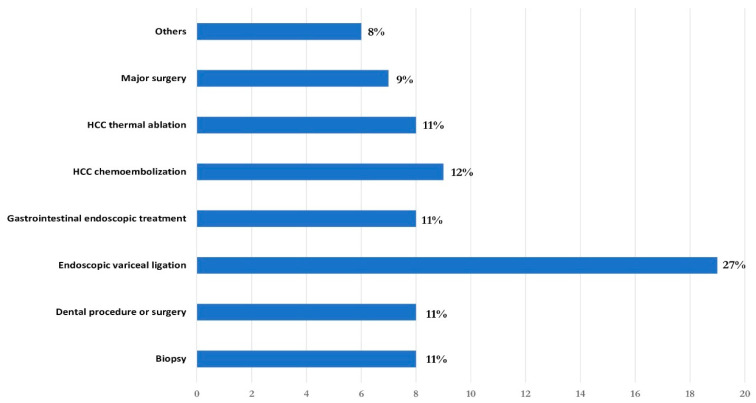 Figure 1
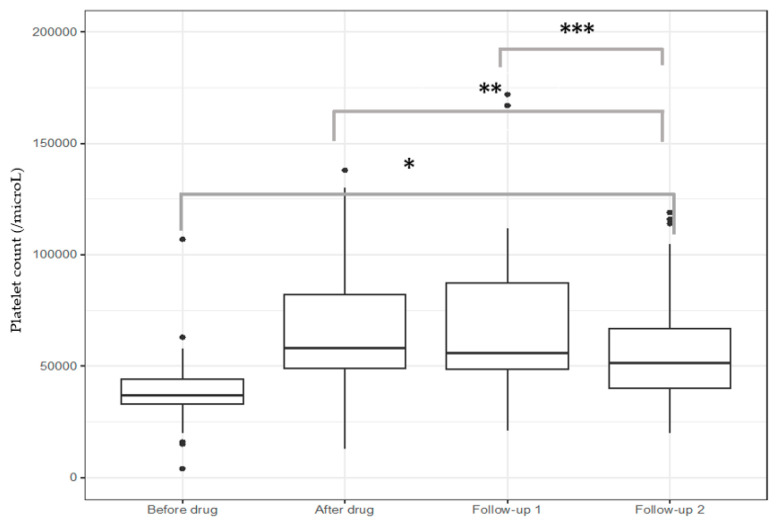 Figure 2
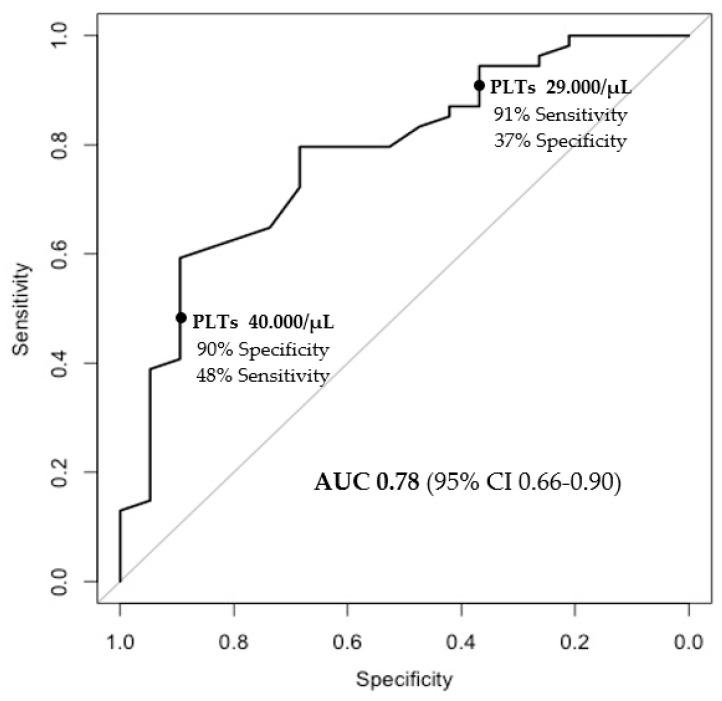 Figure 3
Peer Reviews
No public reviews on file for this paper yet. If you reviewed it on a platform where reviews are public (OpenReview, ICLR, NeurIPS, ICML), you can paste yours below so the community can read it here.
Videos
No videos yet. Explain this paper in a talk, walkthrough, or lecture? Add one.
Taxonomy
TopicsLiver Disease and Transplantation · Liver Disease Diagnosis and Treatment · Hepatocellular Carcinoma Treatment and Prognosis