Effects of Limbs’ Spasticity on Spinopelvic Alignment in Post-Stroke Patients: A Cross-Sectional Study
Luciano Bissolotti, Alice Brojka, Marika Vezzoli, Stefano Calza, Federico Nicoli, Carlos Romero-Morales, Jorge Hugo Villafañe

TL;DR
This study finds that spasticity and motor impairment in post-stroke patients are linked to spinal misalignment, suggesting targeted therapies could help.
Contribution
The study establishes novel associations between limb spasticity, motor impairment, and spinopelvic alignment in chronic post-stroke patients.
Findings
UL-MAS correlated with trunk rotation angle (ATR) in post-stroke patients.
5T-STS and FAST-UL showed significant correlations with frontal plane spinal alignment measures.
Spinal misalignment was associated with both strength impairment and upper limb spasticity.
Abstract
Objectives: This study aimed to determine the impacts of upper and lower limb (UL and LL) spasticity and impairment on spinal alignment in chronic post-stroke patients. Methods: A total of 45 consecutive chronic post-stroke patients, 18 women and 27 men, from 18 to 70 years old who presented post-stroke hemiparesis were recruited in this cross-sectional study. The clinical assessment included the Modified Ashworth Scale (UL-MAS and LL-MAS spasticity), Upper Limb Motricity Index (UL-MI), FAST-UL, and Five Times Sit-to-Stand Test (5T-STS); the Associated Reaction Rating Scale was used to measure associated reactions in the hemiparetic UL, the plumb line distance from the spinous process of C7 on the sagittal (PL-C7s) and frontal plane (Pl-C7f), the kyphosis apex (PL-AK), and the spinous process of L3 (PL-L3). Angular measures of spinal alignment were measured by a Bunnell scoliometer™…
Genes, proteins, chemicals, diseases, species, mutations and cell lines named across the full text — each resolved to its canonical identifier and authoritative record.
Click any figure to enlarge with its caption.
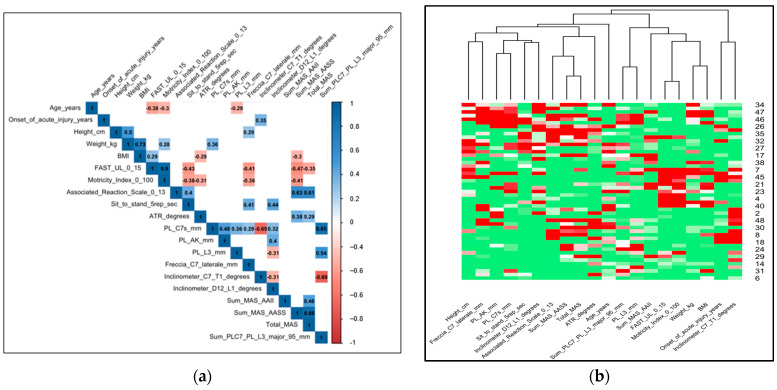 Figure 1
Peer Reviews
No public reviews on file for this paper yet. If you reviewed it on a platform where reviews are public (OpenReview, ICLR, NeurIPS, ICML), you can paste yours below so the community can read it here.
Videos
No videos yet. Explain this paper in a talk, walkthrough, or lecture? Add one.
Taxonomy
TopicsBotulinum Toxin and Related Neurological Disorders · Stroke Rehabilitation and Recovery · Cerebral Palsy and Movement Disorders