SARS-CoV-2 seropositivity in African women living with HIV and their infants
Taguma A. Matubu, Nonhlanhla Yende-Zuma, Sean S. Brummel, Lynda Stranix-Chibanda, Lillian Wambuzi Ogwang, Sufia Dadabhai, Patience Atuhaire, Felluna Chauwa, Luis Gadama, Reinaldo E. Fernandez, Jim Aizire, JBrooks Jackson, Aaron A. R. Tobian, Taha E. Taha, Mary Glenn Fowler

TL;DR
This study found that about 60% of HIV-positive mothers and 40% of their children in Africa had been infected with SARS-CoV-2 by late 2021, with breastfeeding and undetectable HIV viral load linked to infection risks.
Contribution
The study provides novel seropositivity data for SARS-CoV-2 in HIV-positive women and their infants in sub-Saharan Africa, highlighting risk factors like breastfeeding and maternal HIV control.
Findings
Maternal SARS-CoV-2 seropositivity was 60.1%, and children's was 41.5% in HIV-affected families in East/Southern Africa.
Non-breastfeeding mothers had a 31% higher risk of SARS-CoV-2 seropositivity compared to breastfeeding mothers.
Discordant serostatuses were observed in 43.1% of mother-infant pairs, suggesting varied household transmission dynamics.
Abstract
SARS-CoV-2 seropositivity data in women living with HIV (WLHIV), their infants and associated factors in this subpopulation remain limited. We retrospectively measured SARS-CoV-2 seropositivity from 07/2020-11/2021 among WLHIV and their children in the PROMOTE observational cohort in Uganda, Malawi, and Zimbabwe prior to widespread SARS-CoV-2 vaccination in those countries. Plasma stored during 3 waves of the COVID-19 pandemic in East/Southern Africa were tested for SARS-CoV-2 specific IgG antibodies (Ab) using serological assays that detect adaptive immune responses to SARS-CoV-2 spike protein. (EUROIMMUN, Mountain Lakes, New Jersey and Roche Diagnostics, Indianapolis, IN). Modified-Poisson regression models were used to calculate prevalence rate ratios (PRR) and 95% confidence intervals (CI) to identify sociodemographic and clinical risk factors. PROMOTE samples from 918 mothers and…
Genes, proteins, chemicals, diseases, species, mutations and cell lines named across the full text — each resolved to its canonical identifier and authoritative record.
Click any figure to enlarge with its caption.
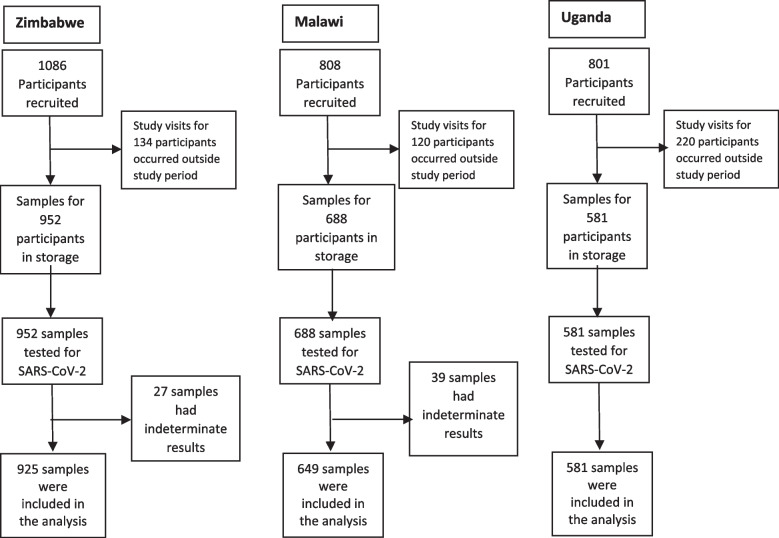 Figure 1
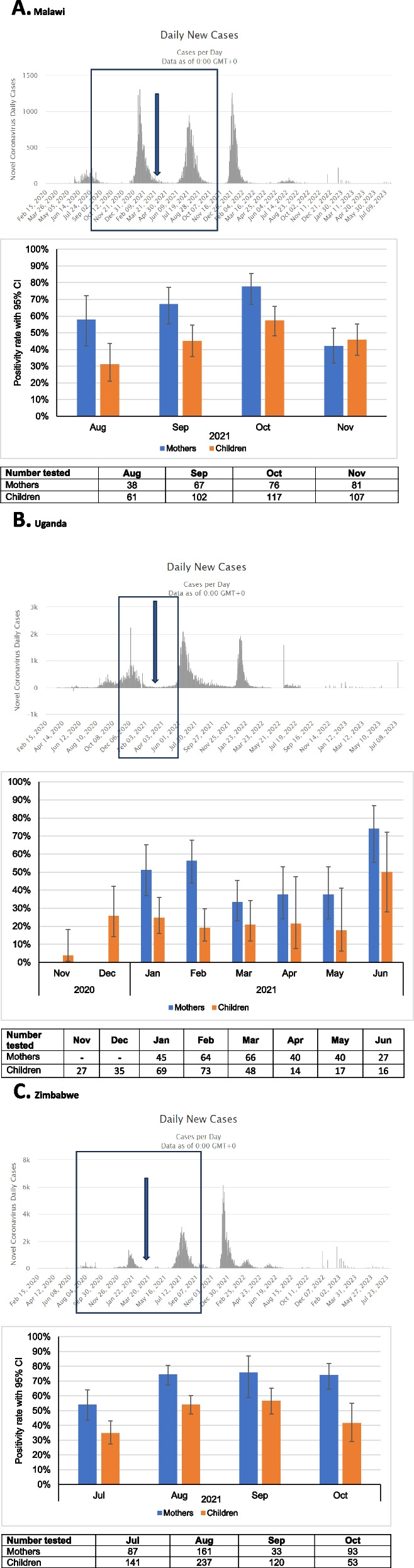 Figure 2
Peer Reviews
No public reviews on file for this paper yet. If you reviewed it on a platform where reviews are public (OpenReview, ICLR, NeurIPS, ICML), you can paste yours below so the community can read it here.
Videos
No videos yet. Explain this paper in a talk, walkthrough, or lecture? Add one.
Taxonomy
TopicsComparative Literary Analysis and Criticism · Spanish Literature and Culture Studies