Mesomelia-synostoses syndrome: contiguous deletion syndrome, SULF1 haploinsufficiency or enhancer adoption?
Ingrid Bendas Feres Lima, Lúcia de Fátima Marques de Moraes, Carlos Roberto da Fonseca, Juan Clinton Llerena Junior, Mana Mehrjouy, Niels Tommerup, Elenice Ferreira Bastos

TL;DR
This paper investigates the genetic basis of Mesomelia-Synostoses Syndrome, suggesting it may be caused by SULF1 haploinsufficiency or enhancer adoption due to TAD boundary disruption.
Contribution
The study proposes that MSS is caused by SULF1 haploinsufficiency or enhancer adoption, excluding SLCO5A1 as a candidate gene.
Findings
A 21 kb deletion in the 15q12 region was identified as likely pathogenic, involving GABRA5.
The chr8 translocation breakpoint truncates SLCO5A1, excluding it as a candidate for MSS.
MSS deletions remove a TAD boundary, suggesting SULF1 haploinsufficiency or enhancer adoption as possible causes.
Abstract
Mesomelia-Synostoses Syndrome (MSS)(OMIM 600,383) is a rare autosomal dominant disorder characterized by mesomelic limb shortening, acral synostoses and multiple congenital malformations which is described as a contiguous deletion syndrome involving the two genes SULF1 and SLCO5A1. The study of apparently balanced chromosomal rearrangements (BCRs) is a cytogenetic strategy used to identify candidate genes associated with Mendelian diseases or abnormal phenotypes. With the improved development of genomic technologies, new methods refine this search, allowing better delineation of breakpoints as well as more accurate genotype-phenotype correlation. We present a boy with a global development deficit, delayed speech development and an ASD (Asperger) family history, with an apparently balanced “de novo” reciprocal translocation [t(1;8)(p32.2;q13)dn]. The cytogenetic molecular study…
Genes, proteins, chemicals, diseases, species, mutations and cell lines named across the full text — each resolved to its canonical identifier and authoritative record.
Click any figure to enlarge with its caption.
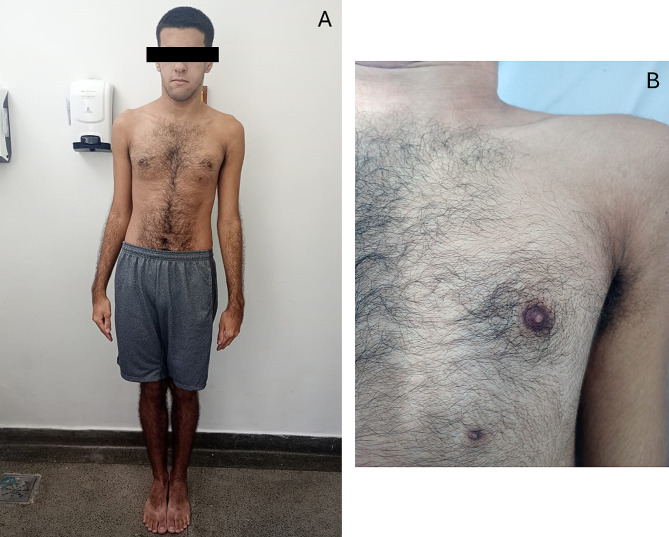 Figure 1
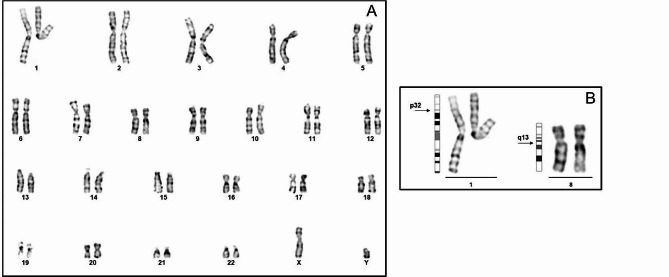 Figure 2
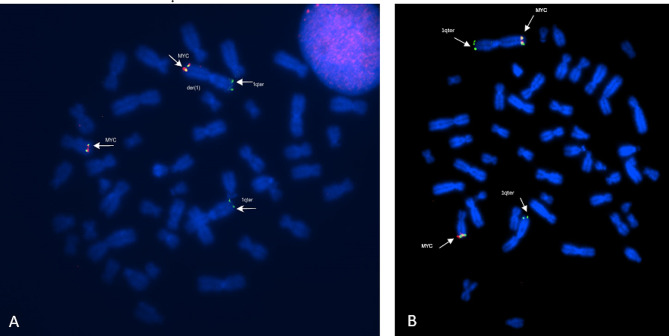 Figure 3
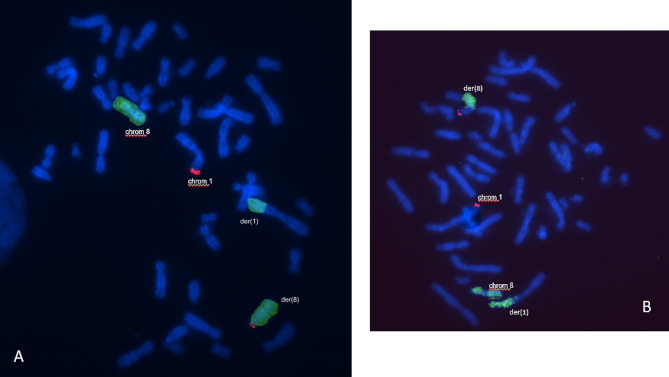 Figure 4
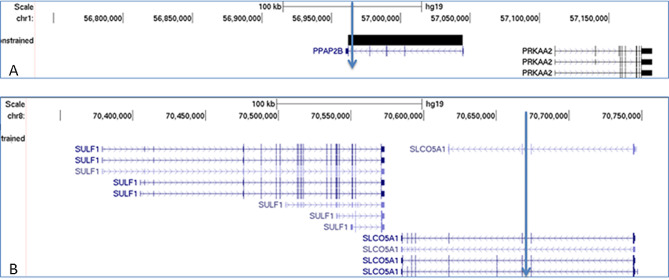 Figure 5
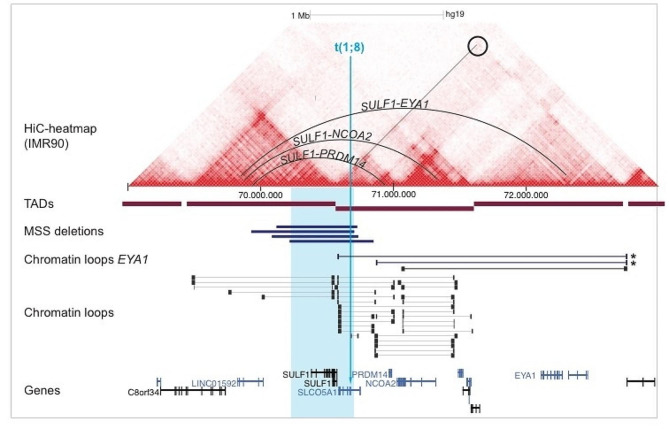 Figure 6
Peer Reviews
No public reviews on file for this paper yet. If you reviewed it on a platform where reviews are public (OpenReview, ICLR, NeurIPS, ICML), you can paste yours below so the community can read it here.
Videos
No videos yet. Explain this paper in a talk, walkthrough, or lecture? Add one.
Taxonomy
TopicsGenomics and Chromatin Dynamics · Genomic variations and chromosomal abnormalities · Congenital limb and hand anomalies