Long-Term In Vitro Culture Alters Gene Expression Pattern of Genes Involved in Ontological Groups Representing Cellular Processes
Wiktoria Zgórecka, Wiesława Kranc, Małgorzata Blatkiewicz, Kacper Kamiński, Maryam Farzaneh, Artur Bryja, Paul Mozdziak, Paweł Antosik, Maciej Zabel, Marzenna Podhorska-Okołów, Piotr Dzięgiel, Bartosz Kempisty, Dorota Bukowska

TL;DR
This study shows how long-term in vitro culture changes gene expression in porcine oviduct cells, which could impact reproductive biology and infertility treatments.
Contribution
The study provides new insights into the transcriptomic changes in porcine oviduct epithelial cells during long-term in vitro culture.
Findings
COL1A2 and LOX gene expression increased over time in cultured cells.
FGFBP1, SERPINB2, and OVGP1 gene expression decreased compared to the control group.
The findings suggest potential applications in assisted reproductive techniques and infertility treatments.
Abstract
The oviduct provides an optimal environment for the final preparation, transport, and survival of gametes, the fertilization process, and early embryonic development. Most of the studies on reproduction are based on in vitro cell culture models because of the cell’s accessibility. It creates opportunities to explore the complexity of directly linked processes between cells. Previous studies showed a significant expression of genes responsible for cell differentiation, maturation, and development during long-term porcine oviduct epithelial cells (POECs) in vitro culture. This study aimed at establishing the transcriptomic profile and comprehensive characteristics of porcine oviduct epithelial cell in vitro cultures, to compare changes in gene expression over time and deliver information about the expression pattern of genes highlighted in specific GO groups. The oviduct cells were…
Genes, proteins, chemicals, diseases, species, mutations and cell lines named across the full text — each resolved to its canonical identifier and authoritative record.
Click any figure to enlarge with its caption.
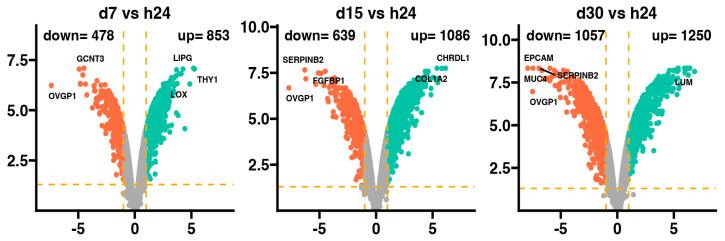 Figure 1
 Figure 2
 Figure 3
 Figure 4
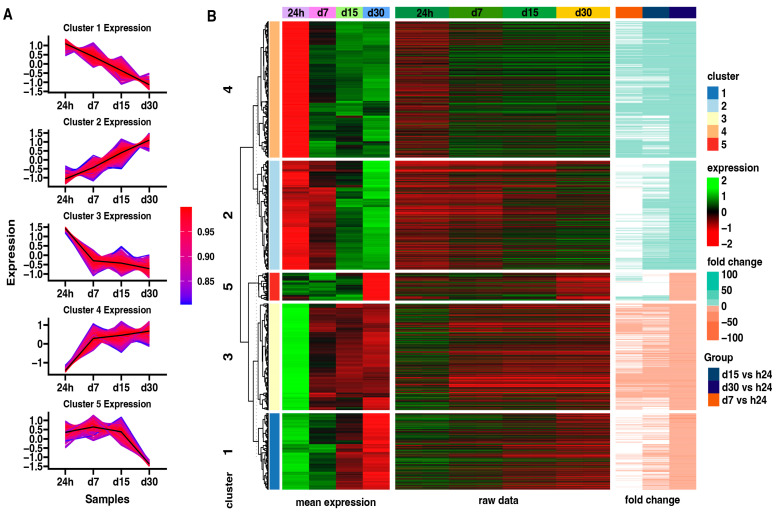 Figure 5
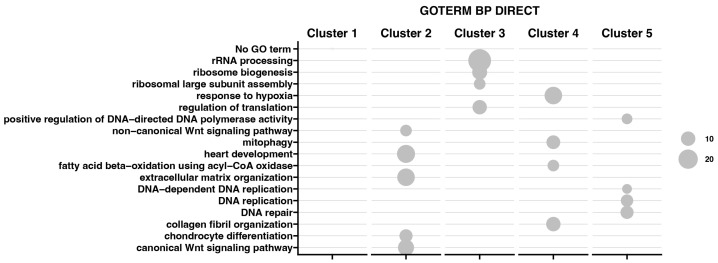 Figure 6
Peer Reviews
No public reviews on file for this paper yet. If you reviewed it on a platform where reviews are public (OpenReview, ICLR, NeurIPS, ICML), you can paste yours below so the community can read it here.
Videos
No videos yet. Explain this paper in a talk, walkthrough, or lecture? Add one.
Taxonomy
TopicsKruppel-like factors research · RNA Research and Splicing · FOXO transcription factor regulation