Histological and Histopathological Features of the Third Metacarpal/Tarsal Parasagittal Groove and Proximal Phalanx Sagittal Groove in Thoroughbred Horses with Racing History
Szu-Ting Lin, Alastair K. Foote, Nicholas M. Bolas, David R. Sargan, Rachel C. Murray

TL;DR
This study examines bone tissue damage in specific areas of racehorse legs, finding that fissures and certain anatomical regions show more severe damage, which could help understand how fractures develop.
Contribution
The study provides new histopathological insights into the P1 sagittal groove in racehorses, highlighting fissure-related damage and regional differences.
Findings
Histopathology in fissure locations was more severe in both the MC3/MT3 and P1 grooves.
SCB/TB damage was most severe in the palmar/plantar MC3/MT3 and the dorsal P1 sagittal groove.
Bone fatigue injury patterns were linked to fissure locations and specific anatomical regions.
Abstract
Information about the histological features of the proximal phalanx (P1) sagittal groove in racehorses is limited compared to the third metacarpal/metatarsal parasagittal groove. Fractures of the P1 sagittal groove are common in racehorses; therefore, it is important to improve the understanding of the histopathology of the P1 sagittal groove. This study aims to describe histopathological features of the third metacarpal/metatarsal parasagittal groove and the proximal phalanx sagittal groove in Thoroughbred racehorses. For third metacarpal/metatarsal parasagittal grooves, hyaline cartilage (HC), calcified cartilage (CC), and subchondral plate and trabecular bone (SCB/TB) histopathology including SCB collapse were most severe in locations with fissures (observed in a previous study) and the palmar/plantar aspect of the parasagittal groove. For P1 sagittal grooves, SCB/TB histopathology…
Genes, proteins, chemicals, diseases, species, mutations and cell lines named across the full text — each resolved to its canonical identifier and authoritative record.
Click any figure to enlarge with its caption.
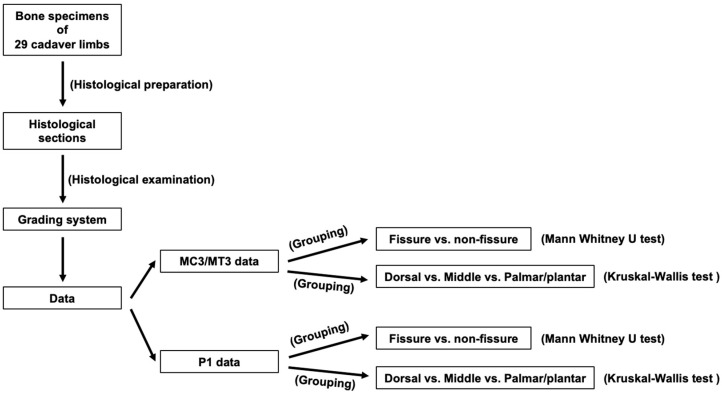 Figure 1
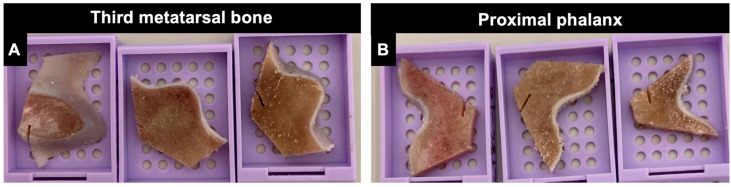 Figure 2
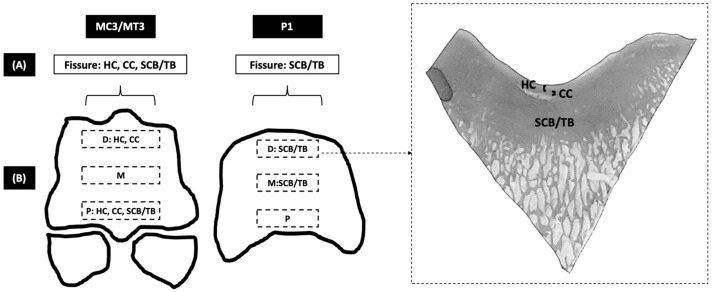 Figure 3
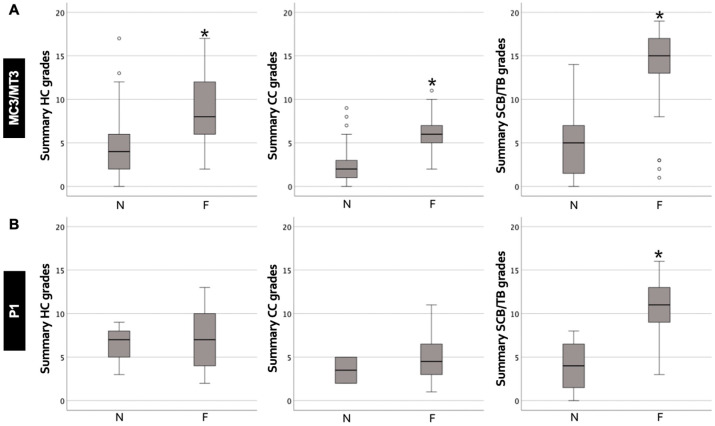 Figure 4
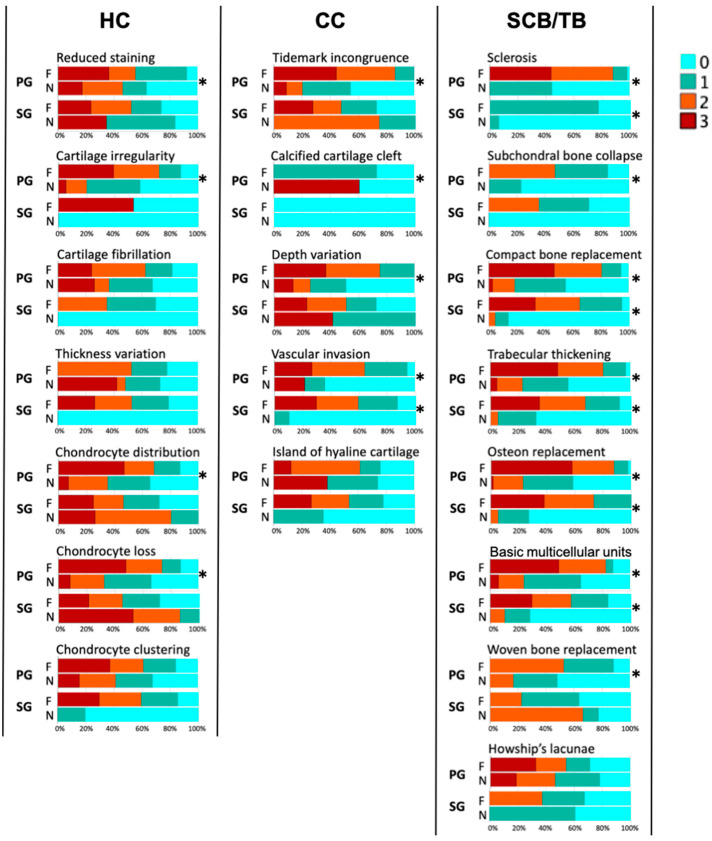 Figure 5
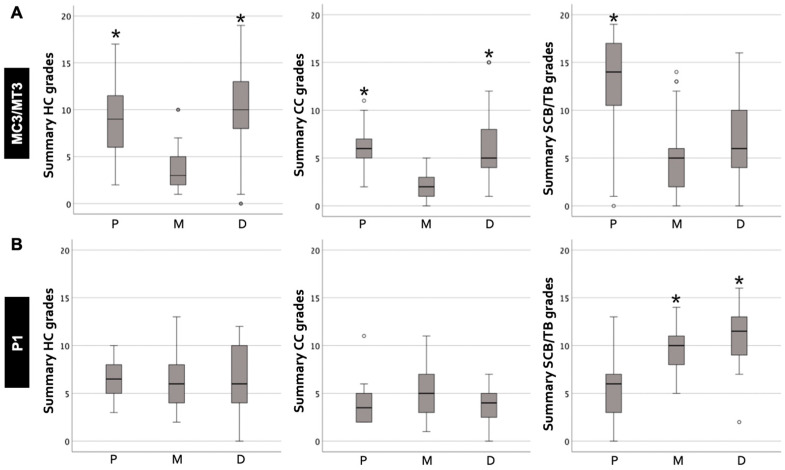 Figure 6
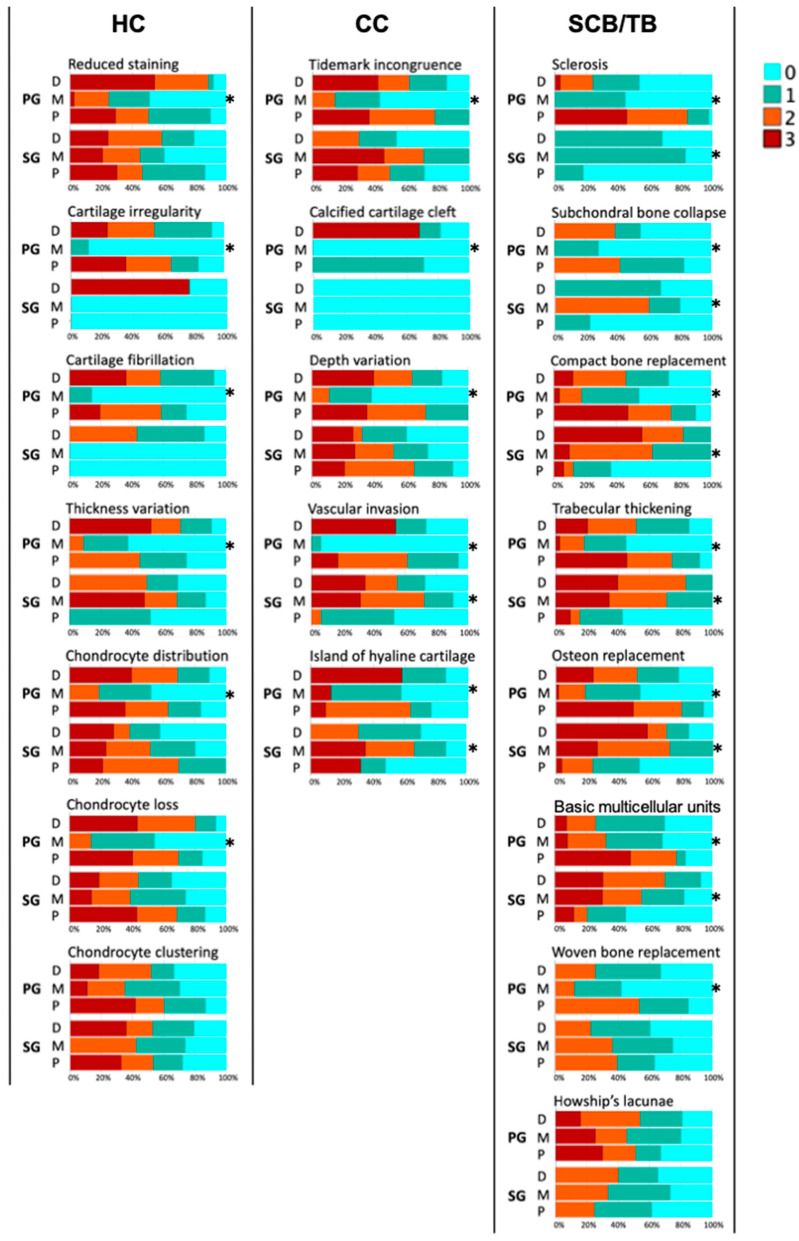 Figure 7
Peer Reviews
No public reviews on file for this paper yet. If you reviewed it on a platform where reviews are public (OpenReview, ICLR, NeurIPS, ICML), you can paste yours below so the community can read it here.
Videos
No videos yet. Explain this paper in a talk, walkthrough, or lecture? Add one.
Taxonomy
TopicsVeterinary Equine Medical Research · Shoulder Injury and Treatment · Sports injuries and prevention