Safety and efficacy of a feed additive consisting of Quillaja saponaria Molina and Yucca schidigera Roezl ex Ortgies (Magni‐PHI®) for all poultry species (to slaughter age/weight, or to the point of lay) and ornamental birds (Phibro Animal Health Corporation)
Vasileios Bampidis, Giovanna Azimonti, Maria de Lourdes Bastos, Henrik Christensen, Mojca Durjava, Birgit Dusemund, Maryline Kouba, Marta López‐Alonso, Secundino López Puente, Francesca Marcon, Baltasar Mayo, Alena Pechová, Mariana Petkova, Fernando Ramos, Roberto Edoardo Villa

TL;DR
This study evaluates the safety and effectiveness of a feed additive made from Quillaja saponaria and Yucca schidigera for poultry and ornamental birds.
Contribution
The study provides a scientific assessment of the safety of the feed additive for poultry and ornamental birds at a specific dosage.
Findings
The additive is safe for chickens at 250 mg/kg feed with a margin of safety of 20.
The additive is not a skin irritant but is irritating to the eyes and respiratory system.
The study could not confirm the additive's efficacy or its potential to cause skin sensitization.
Abstract
Following a request from the European Commission, EFSA was asked to deliver a scientific opinion on the safety and efficacy of a feed additive consisting of Quillaja saponaria powder and Yucca schidigera powder (Magni‐Phi®) for all avian species (to slaughter age/weight, or to the point of lay) and ornamental birds, as a zootechnical additive (digestibility enhancer and other zootechnical additives). The EFSA Panel on Additives and Products or Substances used in Animal Feed (FEEDAP) concluded that the additive is safe for chickens for fattening at the level of 250 mg/kg complete feed with a margin of safety of 20 assuming that the additive contains 3.58% of saponins. This conclusion was extrapolated to all growing poultry species and ornamental birds. The Panel concluded that the use of the feed additive in animal nutrition at 250 mg/kg complete feed is of no concern for the safety for…
Genes, proteins, chemicals, diseases, species, mutations and cell lines named across the full text — each resolved to its canonical identifier and authoritative record.
Click any figure to enlarge with its caption.
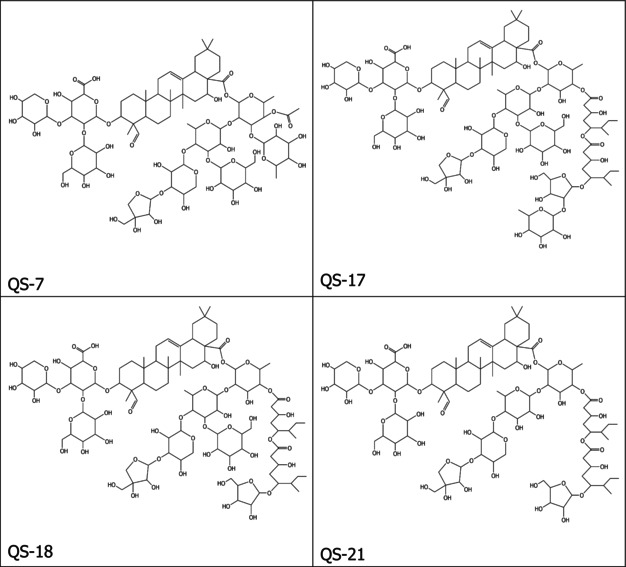 Figure 1
Peer Reviews
No public reviews on file for this paper yet. If you reviewed it on a platform where reviews are public (OpenReview, ICLR, NeurIPS, ICML), you can paste yours below so the community can read it here.
Videos
No videos yet. Explain this paper in a talk, walkthrough, or lecture? Add one.
Taxonomy
TopicsAgricultural safety and regulations · Pesticide Residue Analysis and Safety · Vitamin K Research Studies