Applying the Unified Theory of Acceptance and Use of Technology to Identify Factors Associated With Intention to Use Teledelivered Supportive Care Among Recently Diagnosed Breast Cancer Survivors During COVID-19 in Hong Kong: Cross-Sectional Survey
Nelson C Y Yeung, Stephanie T Y Lau, Winnie W S Mak, Cecilia Cheng, Emily Y Y Chan, Judy Y M Siu, Polly S Y Cheung

TL;DR
This study explores what influences breast cancer survivors in Hong Kong to use teledelivered cancer care during the pandemic, focusing on factors like perceived usefulness and education level.
Contribution
The study applies the Unified Theory of Acceptance and Use of Technology to identify factors influencing intentions to use teledelivered supportive care among breast cancer survivors during the pandemic.
Findings
Higher performance expectancy, social influence, and facilitating conditions were linked to stronger intentions to use teledelivered SCC.
Education level moderated the relationship between performance expectancy and intentions to use complementary care and peer support groups.
Participants with higher education showed stronger associations between telehealth perceptions and usage intentions.
Abstract
Many supportive cancer care (SCC) services were teledelivered during COVID-19, but what facilitates patients’ intentions to use teledelivered SCC is unknown. The study aimed to use the unified theory of acceptance and use of technology to investigate the factors associated with the intentions of breast cancer survivors (BCS) in Hong Kong to use various types of teledelivered SCC (including psychosocial care, medical consultation, complementary care, peer support groups). Favorable telehealth-related perceptions (higher performance expectancy, lower effort expectancy, more facilitating conditions, positive social influences), less technological anxiety, and greater fear of COVID-19 were hypothesized to be associated with higher intentions to use teledelivered SCC. Moreover, the associations between telehealth-related perceptions and intentions to use teledelivered SCC were hypothesized…
Genes, proteins, chemicals, diseases, species, mutations and cell lines named across the full text — each resolved to its canonical identifier and authoritative record.
Click any figure to enlarge with its caption.
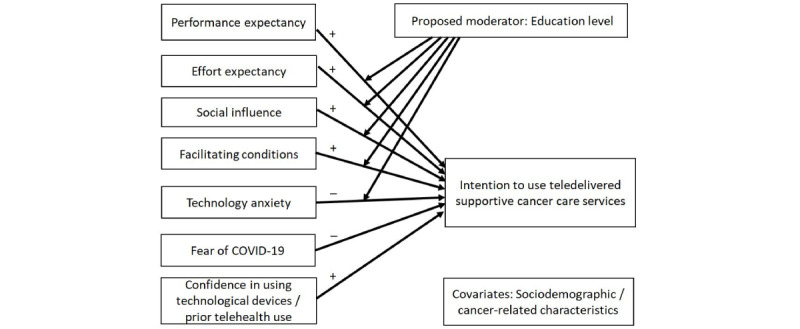 Figure 1
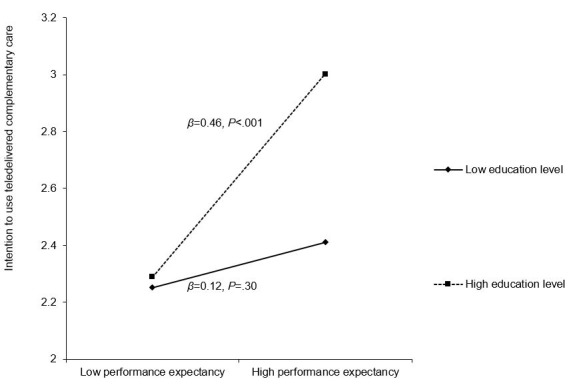 Figure 2
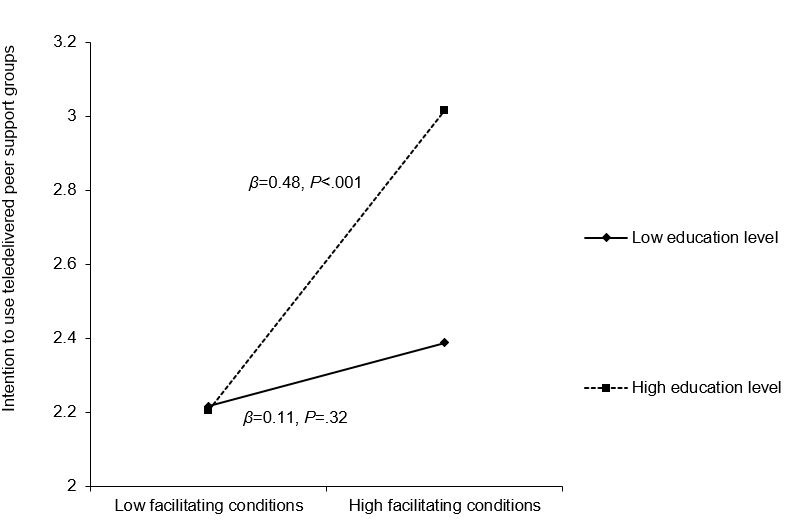 Figure 3
Peer Reviews
No public reviews on file for this paper yet. If you reviewed it on a platform where reviews are public (OpenReview, ICLR, NeurIPS, ICML), you can paste yours below so the community can read it here.
Videos
No videos yet. Explain this paper in a talk, walkthrough, or lecture? Add one.
Taxonomy
TopicsCancer survivorship and care · Telemedicine and Telehealth Implementation · Patient Satisfaction in Healthcare