The Utility of Sirolimus Eluting Balloons in the Setting of Chronic Limb Threatening Ischaemia in Asian Patients from Singapore – 12 Months Results of the PRISTINE Registry
T. Y. Tang, C. Yap, S. L. Chan, S. X. Y. Soon, C. Sivanathan, A. Gogna, A. K. Patel, T. T. Chong

TL;DR
This study shows that a sirolimus-coated balloon is safe and effective for treating severe leg artery blockages in Asian patients with diabetes and kidney failure.
Contribution
Demonstrates 12-month outcomes of sirolimus-eluting balloons in a high-risk Asian CLTI cohort with complex lesions.
Findings
100% technical success in treating complex lower limb occlusive lesions.
12-month amputation-free survival rate of 74% in high-risk patients.
Significant improvement in Rutherford score from 5.1 to 1.1 at one year.
Abstract
The aim of PRISTINE was to evaluate the 6 and 12 months safety and efficacy of the Selution Sustained Limus Release (SLR)™ sirolimus-coated balloon for treatment of complex lower limb occlusive lesions (TASC II C & D) in patients with chronic limb threatening ischemia (CLTI) from Singapore. PRISTINE was a prospective, non-randomized, single arm, observational, multi-investigator, single-center clinical study. Complication-free survival at 30 days was the safety clinical endpoint. Immediate technical success (ability to cross and dilate the lesion and achieve residual angiographic stenosis < 30%), 6-month primary vessel patency, limb salvage, clinically driven target lesion revascularization (TLR) and amputation free survival (AFS) were the efficacy endpoints of interest. Seventy five patients were included. There were 50 (68.0%) males; mean age, 69.0 ± 10.7 years. CLTI severity was…
Genes, proteins, chemicals, diseases, species, mutations and cell lines named across the full text — each resolved to its canonical identifier and authoritative record.
Click any figure to enlarge with its caption.
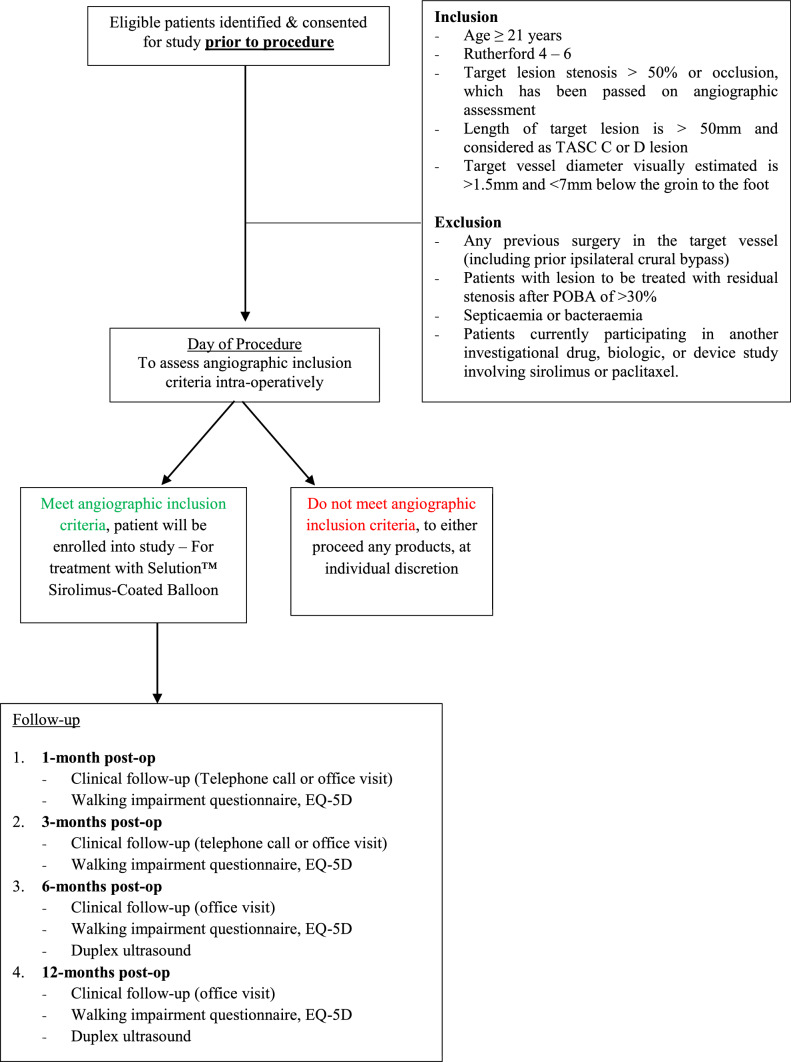 Figure 1
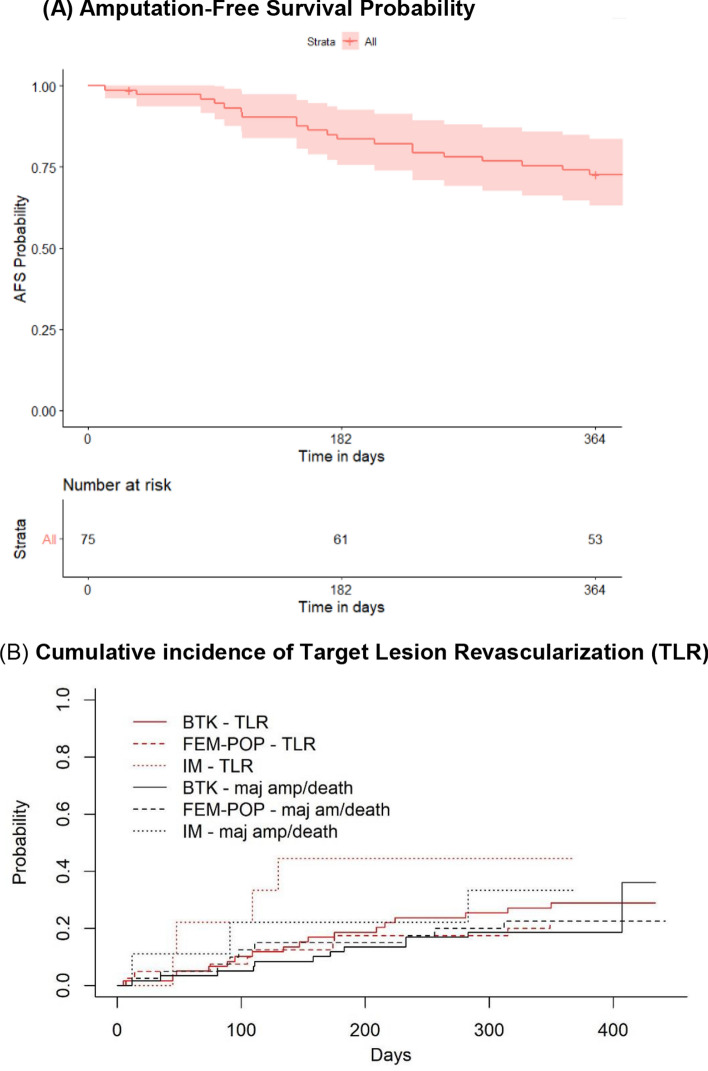 Figure 2
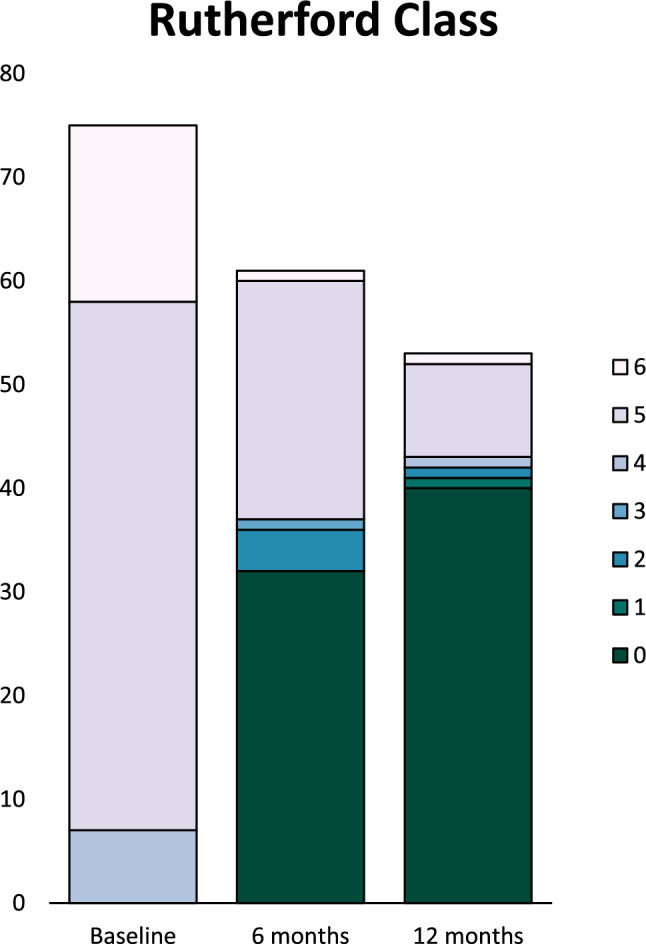 Figure 3
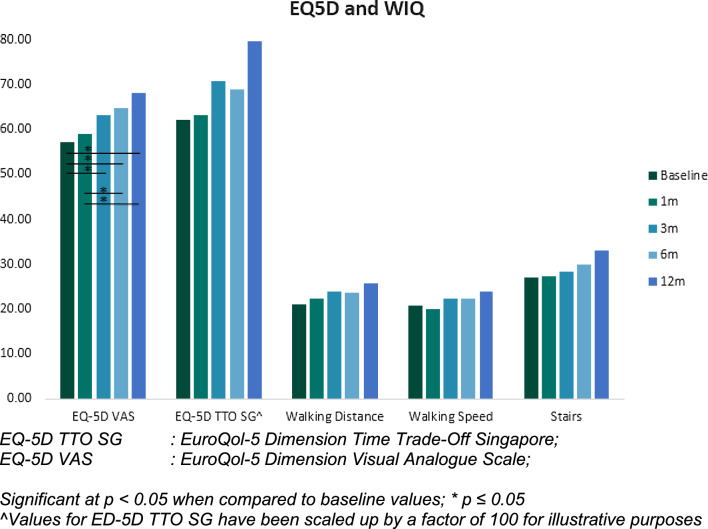 Figure 4
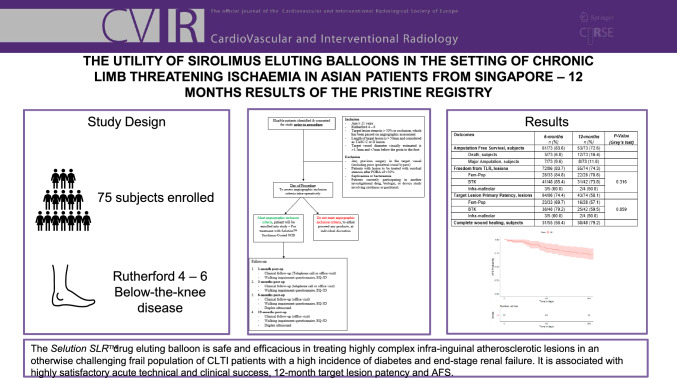 Figure 5
Peer Reviews
No public reviews on file for this paper yet. If you reviewed it on a platform where reviews are public (OpenReview, ICLR, NeurIPS, ICML), you can paste yours below so the community can read it here.
Videos
No videos yet. Explain this paper in a talk, walkthrough, or lecture? Add one.
Taxonomy
TopicsEarly Modern Spanish Literature