Data-driven regularization lowers the size barrier of cryo-EM structure determination
Dari Kimanius, Kiarash Jamali, Max E. Wilkinson, Sofia Lövestam, Vaithish Velazhahan, Takanori Nakane, Sjors H. W. Scheres

TL;DR
This paper introduces a new method using deep learning to improve cryo-EM imaging of small biological molecules.
Contribution
A novel regularization technique called Blush is introduced, using a pre-trained neural network to enhance cryo-EM reconstructions.
Findings
Blush regularization improves image alignment in cryo-EM for low signal-to-noise data.
The method successfully reconstructs a 40 kDa complex previously considered intractable.
Denoising neural networks expand the range of biological macromolecules suitable for cryo-EM.
Abstract
Macromolecular structure determination by electron cryo-microscopy (cryo-EM) is limited by the alignment of noisy images of individual particles. Because smaller particles have weaker signals, alignment errors impose size limitations on its applicability. Here, we explore how image alignment is improved by the application of deep learning to exploit prior knowledge about biological macromolecular structures that would otherwise be difficult to express mathematically. We train a denoising convolutional neural network on pairs of half-set reconstructions from the electron microscopy data bank (EMDB) and use this denoiser as an alternative to a commonly used smoothness prior. We demonstrate that this approach, which we call Blush regularization, yields better reconstructions than do existing algorithms, in particular for data with low signal-to-noise ratios. The reconstruction of a…
Genes, proteins, chemicals, diseases, species, mutations and cell lines named across the full text — each resolved to its canonical identifier and authoritative record.
Click any figure to enlarge with its caption.
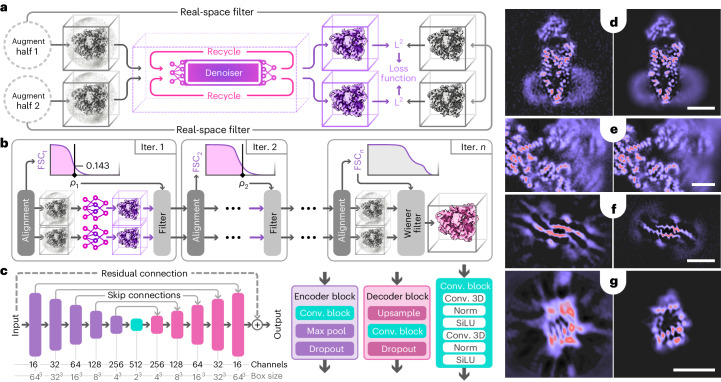 Figure 1
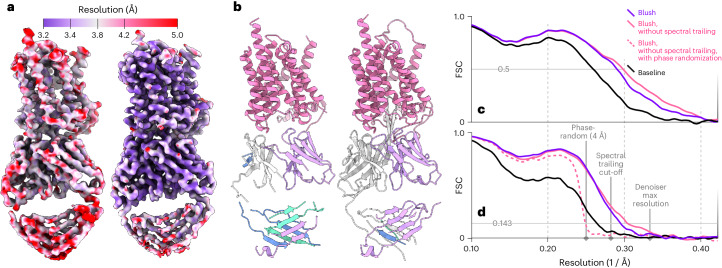 Figure 2
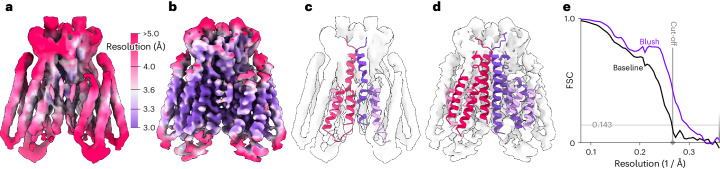 Figure 3
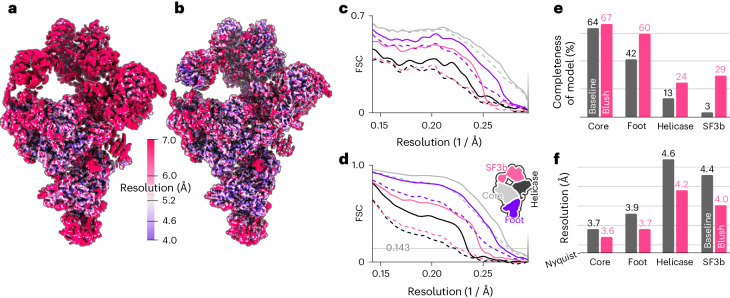 Figure 4
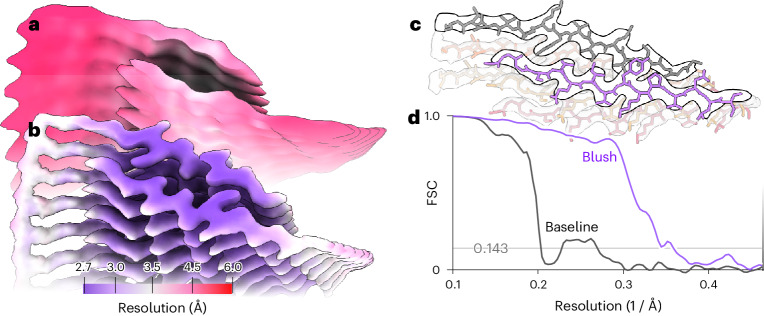 Figure 5
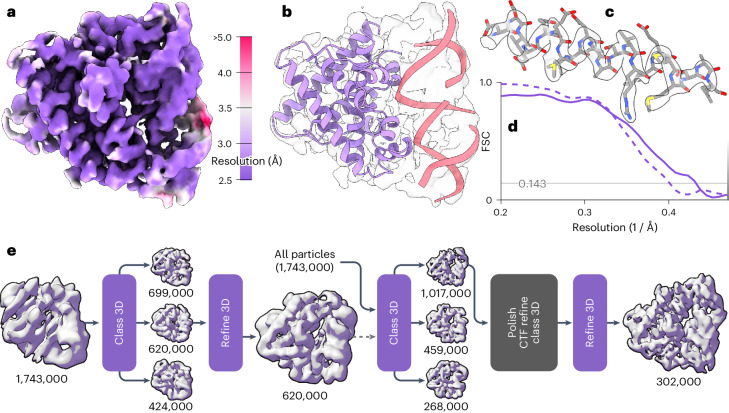 Figure 6
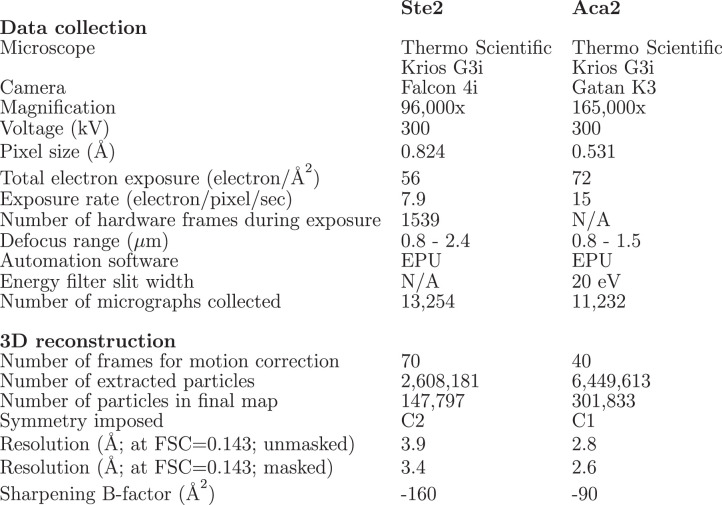 Figure 7
Peer Reviews
No public reviews on file for this paper yet. If you reviewed it on a platform where reviews are public (OpenReview, ICLR, NeurIPS, ICML), you can paste yours below so the community can read it here.
Videos
No videos yet. Explain this paper in a talk, walkthrough, or lecture? Add one.
Taxonomy
TopicsSynthesis and Characterization of Heterocyclic Compounds · Synthesis and Reactivity of Sulfur-Containing Compounds