Dataset on sperm quality parameters and NMR-detected changes in metabolic profile of fresh and frozen turkey spermatozoa related to two different reproductive period ages
Giusy Rusco, Gianluca Paventi, Michele Di Iorio, Mattia Spano, Silvia Cerolini, Nicolaia Iaffaldano

TL;DR
This study provides data on how turkey sperm quality and metabolism change with age and freezing, offering insights for improving sperm preservation techniques.
Contribution
The dataset reveals age-related metabolic changes in cryopreserved turkey sperm, adding new insights for improving freezing protocols.
Findings
Cryopreservation significantly affected sperm quality parameters at both 44 and 56 weeks of age.
Frozen semen at 56 weeks showed more metabolic changes in water and lipid-soluble metabolites than at 44 weeks.
The dataset could help develop better freezing strategies for older turkey sperm.
Abstract
Significant changes in the quality and metabolic profile of fresh turkey sperm as a result of both cryopreservation and reproductive age have already been individually confirmed in our previous studies. This new dataset adds a relevant piece to the tangled puzzle of changes in metabolite levels affecting cryopreserved turkey sperm quality, taking into consideration two different reproductive period ages. Fresh semen samples were collected at 44 and 56 weeks of age and exposed to the cryopreservation process. All fresh and frozen-thawed samples were subjected to analysis of mobility, viability and osmotic tolerance as parameters for evaluating the sperm quality, while NMR spectroscopy was used to assess the quantitative changes in water and lipid-soluble metabolites. Our results showed that the cryopreservation process significantly affected all of the measured qualitative parameters…
Genes, proteins, chemicals, diseases, species, mutations and cell lines named across the full text — each resolved to its canonical identifier and authoritative record.
Click any figure to enlarge with its caption.
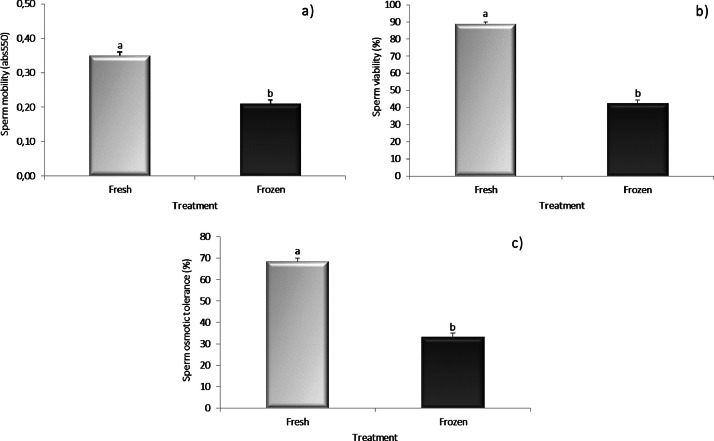 Figure 1
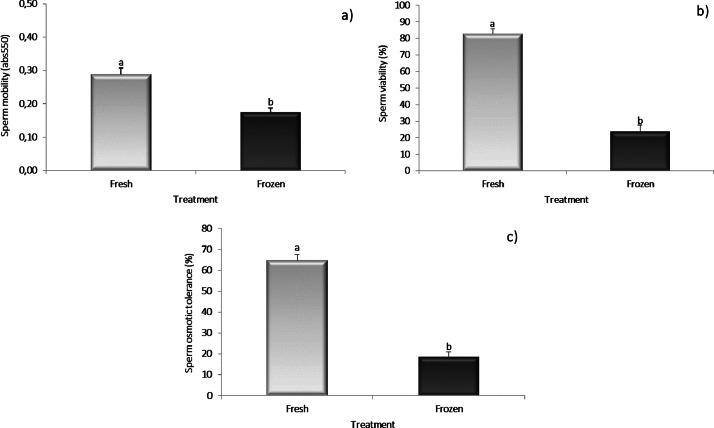 Figure 2
Peer Reviews
No public reviews on file for this paper yet. If you reviewed it on a platform where reviews are public (OpenReview, ICLR, NeurIPS, ICML), you can paste yours below so the community can read it here.
Videos
No videos yet. Explain this paper in a talk, walkthrough, or lecture? Add one.
Taxonomy
TopicsSperm and Testicular Function · Reproductive biology and impacts on aquatic species · Bee Products Chemical Analysis