A Small Epitope Tagging on the C-Terminus of a Target Protein Requires Extra Amino Acids to Enhance the Immune Responses of the Corresponding Antibody
Kyungha Lee, Man-Ho Cho, Mi-Ju Kim, Seong-Hee Bhoo

TL;DR
Adding small tags to the end of proteins can weaken antibody detection, but adding extra amino acids like serine can improve results.
Contribution
The study shows that adding extra amino acids, especially serine, improves antibody detection when using small C-terminal epitope tags.
Findings
C-terminal small epitope tags need extra amino acids to restore antibody detection.
Serine was the most effective amino acid for improving the 2B8 epitope tag's performance.
The need for extra amino acids is not unique to the 2B8 tag but also observed with the Myc tag.
Abstract
Protein-specific antibodies are essential for various aspects of protein research, including detection, purification, and characterization. When specific antibodies are unavailable, protein tagging is a useful alternative. Small epitope tags, typically less than 10 amino acids, are widely used in protein research due to the simple modification through PCR and reduced impact on the target protein's function compared to larger tags. The 2B8 epitope tag (RDPLPFFPP), reported by us in a previous study, has high specificity and sensitivity to the corresponding antibody. However, when attached to the C-terminus of the target protein in immunoprecipitation experiments, we observed a decrease in detection signal with reduced immunity and low protein recovery. This phenomenon was not unique to 2B8 and was also observed with the commercially available Myc tag. Our study revealed that C-terminal…
Genes, proteins, chemicals, diseases, species, mutations and cell lines named across the full text — each resolved to its canonical identifier and authoritative record.
Click any figure to enlarge with its caption.
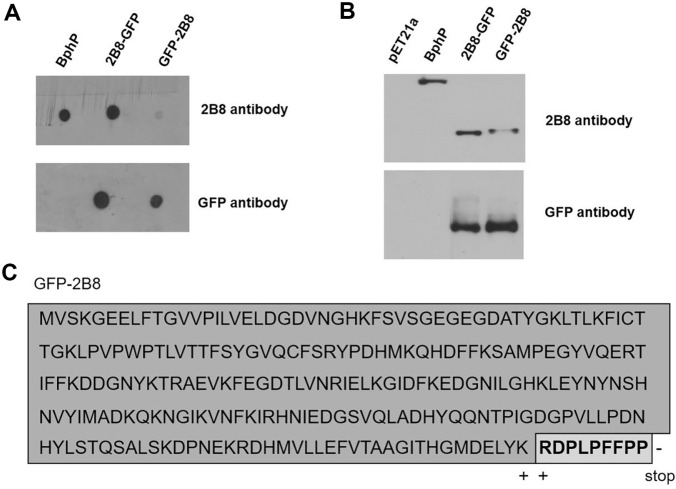 Figure 1
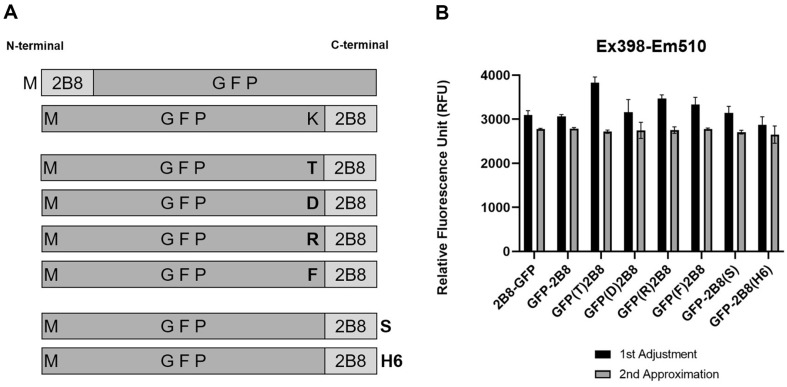 Figure 2
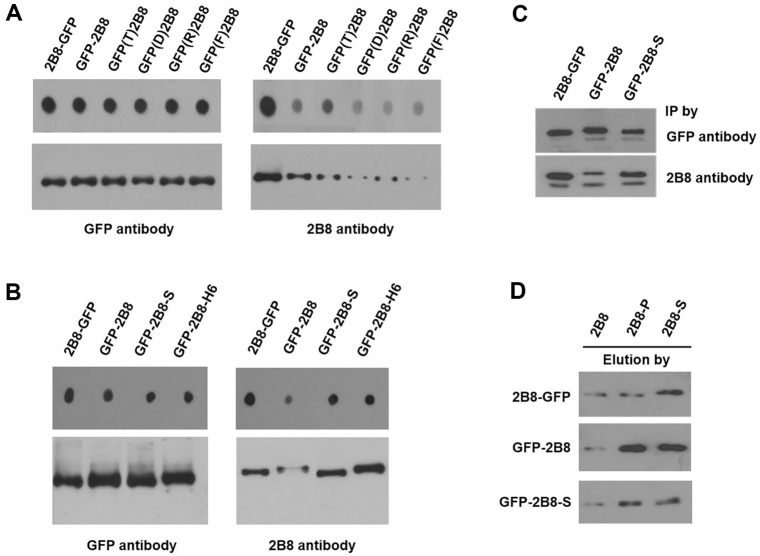 Figure 3
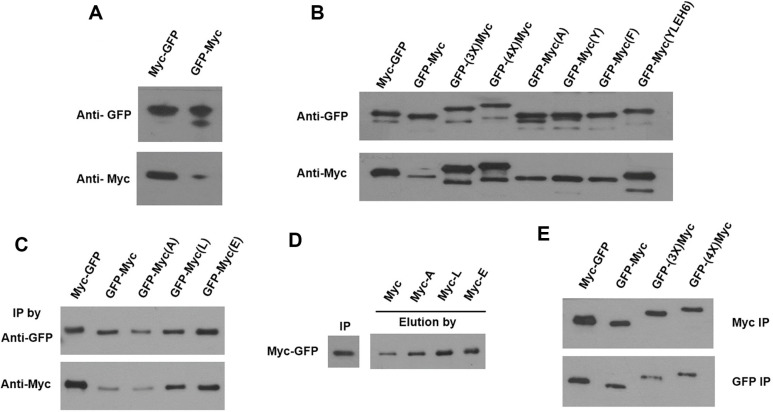 Figure 4
Peer Reviews
No public reviews on file for this paper yet. If you reviewed it on a platform where reviews are public (OpenReview, ICLR, NeurIPS, ICML), you can paste yours below so the community can read it here.
Videos
No videos yet. Explain this paper in a talk, walkthrough, or lecture? Add one.
Taxonomy
TopicsMonoclonal and Polyclonal Antibodies Research · Glycosylation and Glycoproteins Research · vaccines and immunoinformatics approaches