Effects of weight loss rate on myostatin and follistatin dynamics in patients with obesity
Satoshi Kurose, Katsuko Onishi, Takumi Miyauchi, Kazuhisa Takahashi, Yutaka Kimura

TL;DR
This study explores how different weight loss rates affect myostatin and follistatin levels in obese patients, revealing their connection to body composition and physical activity.
Contribution
The study identifies how weight loss rate influences myostatin and follistatin dynamics, linking them to changes in body composition and physical activity.
Findings
Serum myostatin levels increased significantly in all weight loss groups, independent of the rate of weight loss.
Follistatin levels decreased significantly only in the middle weight loss group (3–10%).
Changes in peak oxygen intake and follistatin levels were key factors influencing myostatin changes in the low weight loss group.
Abstract
Exercise-induced cytokines involved in controlling body composition include myostatin (MST) and follistatin (FST), both of which are influenced by physical activity. This study investigated changes in body composition and physical activity during a weight loss program, as well as the impact on serum MST and FST levels at various weight loss rates. A total of 126 patients with obesity who completed a 6-month weight loss program were divided into three groups based on weight loss rate (%): low (< 3%), middle (3–10%), and high (≥10%). The International Physical Activity Questionnaire was used for assessing physical activity, whereas dual X-ray absorptiometry was used to determine body composition. Serum MST and FST levels were measured using the enzyme-linked immunosorbent assay. The middle and high groups showed a significant decrease in percent body fat and a significant increase in…
Genes, proteins, chemicals, diseases, species, mutations and cell lines named across the full text — each resolved to its canonical identifier and authoritative record.
Click any figure to enlarge with its caption.
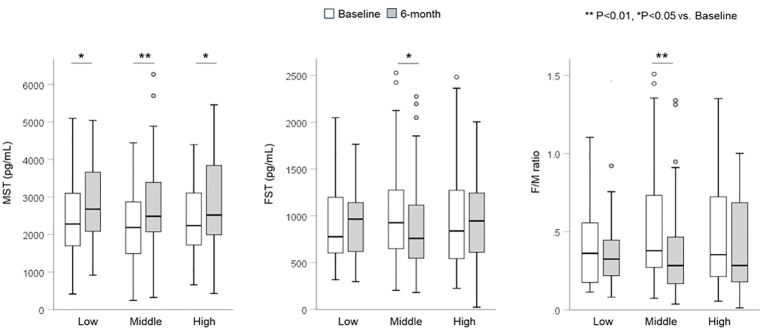 Figure 1
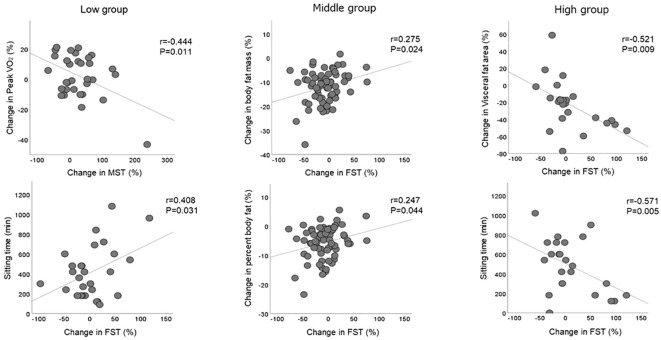 Figure 2
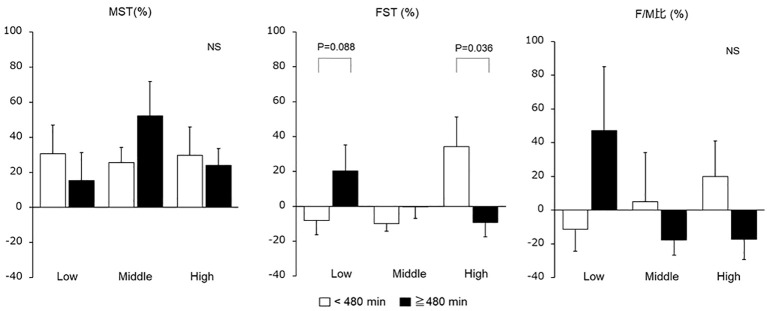 Figure 3
Peer Reviews
No public reviews on file for this paper yet. If you reviewed it on a platform where reviews are public (OpenReview, ICLR, NeurIPS, ICML), you can paste yours below so the community can read it here.
Videos
No videos yet. Explain this paper in a talk, walkthrough, or lecture? Add one.
Taxonomy
TopicsMuscle Physiology and Disorders · Nutrition and Health in Aging · Muscle metabolism and nutrition