Nijmegen breakage syndrome: 25-year experience of diagnosis and treatment in Ukraine
Oksana Boyarchuk, Larysa Kostyuchenko, Hayane Akopyan, Anastasiia Bondarenko, Alla Volokha, Anna Hilfanova, Ihor Savchak, Liliia Nazarenko, Nataliia Yarema, Olha Urbas, Iryna Hrabovska, Oleksandr Lysytsia, Andrii Budzyn, Oksana Tykholaz, Mariana Ivanchuk, Olha Bastanohova

TL;DR
This paper summarizes 25 years of diagnosing and treating Nijmegen breakage syndrome in Ukraine, highlighting trends in patient outcomes and treatment.
Contribution
The study provides a comprehensive 25-year analysis of NBS in Ukraine, including regional prevalence and treatment effectiveness.
Findings
Most NBS patients in Ukraine come from western regions, with increasing diagnoses in central and southeastern areas.
Malignancies, especially lymphomas, are the leading cause of death among NBS patients.
Immunoglobulin replacement therapy reduced the frequency and severity of infections in treated patients.
Abstract
Nijmegen breakage syndrome (NBS) is an autosomal recessive disorder, characterized by microcephaly, immunodeficiency, and impaired DNA repair. NBS is most prevalent among Slavic populations, including Ukraine. Our study aimed to comprehensively assess the prevalence, diagnosis, clinical data, immunological parameters, and treatment of NBS patients in Ukraine. We conducted a retrospective review that included 84 NBS patients from different regions of Ukraine who were diagnosed in 1999-2023. Data from the Ukrainian Registry of NBS and information from treating physicians, obtained using a developed questionnaire, were utilized for analysis. Among 84 NBS patients, 55 (65.5%) were alive, 25 (29.8%) deceased, and 4 were lost to follow-up. The median age of patients was 11 years, ranging from 1 to 34 years. Most patients originate from western regions of Ukraine (57.8%), although in recent…
Genes, proteins, chemicals, diseases, species, mutations and cell lines named across the full text — each resolved to its canonical identifier and authoritative record.
Click any figure to enlarge with its caption.
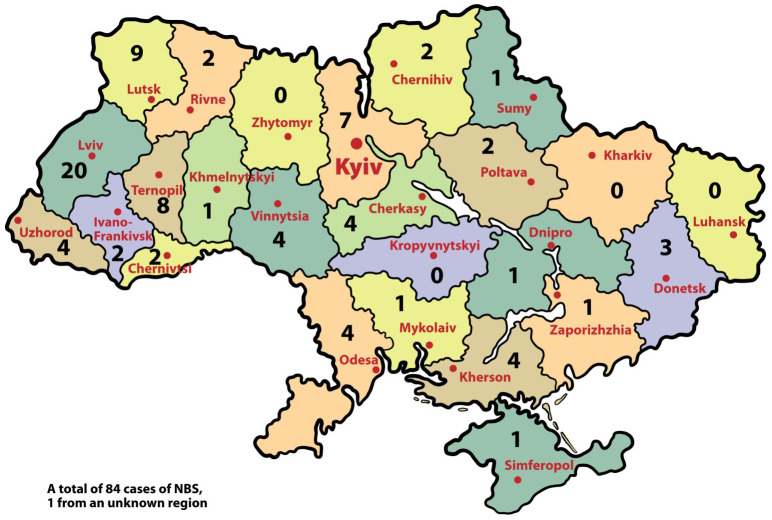 Figure 1
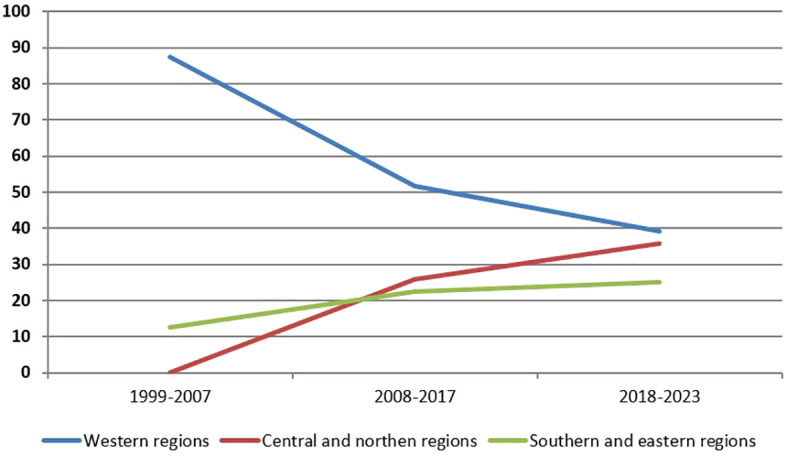 Figure 2
Peer Reviews
No public reviews on file for this paper yet. If you reviewed it on a platform where reviews are public (OpenReview, ICLR, NeurIPS, ICML), you can paste yours below so the community can read it here.
Videos
No videos yet. Explain this paper in a talk, walkthrough, or lecture? Add one.
Taxonomy
TopicsSocial Sciences and Governance · French Urban and Social Studies