Seroepidemiological assessment of the spread of SARS-CoV-2 among 25 and 28 year-old adult women in Finland between March 2020-June 2022
Penelope Gray, Tiina Eriksson, Lovisa Skoglund, Camilla Lagheden, Ceke Hellström, Elisa Pin, Anna Suomenrinne-Nordvik, Ville N. Pimenoff, Peter Nilsson, Joakim Dillner, Matti Lehtinen

TL;DR
This study tracks how SARS-CoV-2 spread among young women in Finland from 2020 to 2022, showing the impact of vaccination and regional differences in infection rates.
Contribution
The study provides detailed seroprevalence data among young Finnish women, highlighting regional disparities and the shift from vaccination-induced to infection-induced immunity.
Findings
SARS-CoV-2 spike-WT seropositivity in young women reached 96.3% by mid-2022 due to high vaccination rates.
Nucleocapsid IgG seropositivity increased more in the Helsinki region compared to other areas, indicating higher infection rates.
Low infection-related seroprevalence in 2020-2021 suggests effective infection control before widespread vaccination.
Abstract
Serological surveys of the prevalence of SARS-CoV-2 are instrumental to understanding the course of the COVID-19 epidemic. We evaluate the seroprevalence of SARS-CoV-2 among young adult Finnish females residing in 25 communities all over Finland from 2020 until 2022. Between 1st March 2020 and 30th June 2022, 3589 blood samples were collected from 3583 women born in 1992–95 when aged 25 or 28 years old attending the follow-up of an ongoing population-based trial of cervical screening strategies. The crude and population standardized SARS-CoV-2 seroprevalence was measured using nucleocapsid (induced by infection) and spike wild-type (WT) protein (induced both by infection and by vaccination) antigens over time and stratified by place of residence (inside or outside the Helsinki metropolitan region). During 2020 (before vaccinations), spike-WT and nucleocapsid IgG antibodies followed…
Genes, proteins, chemicals, diseases, species, mutations and cell lines named across the full text — each resolved to its canonical identifier and authoritative record.
Click any figure to enlarge with its caption.
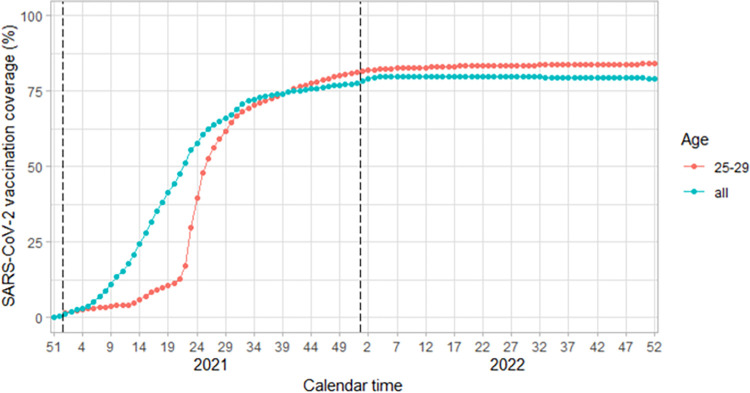 Figure 1
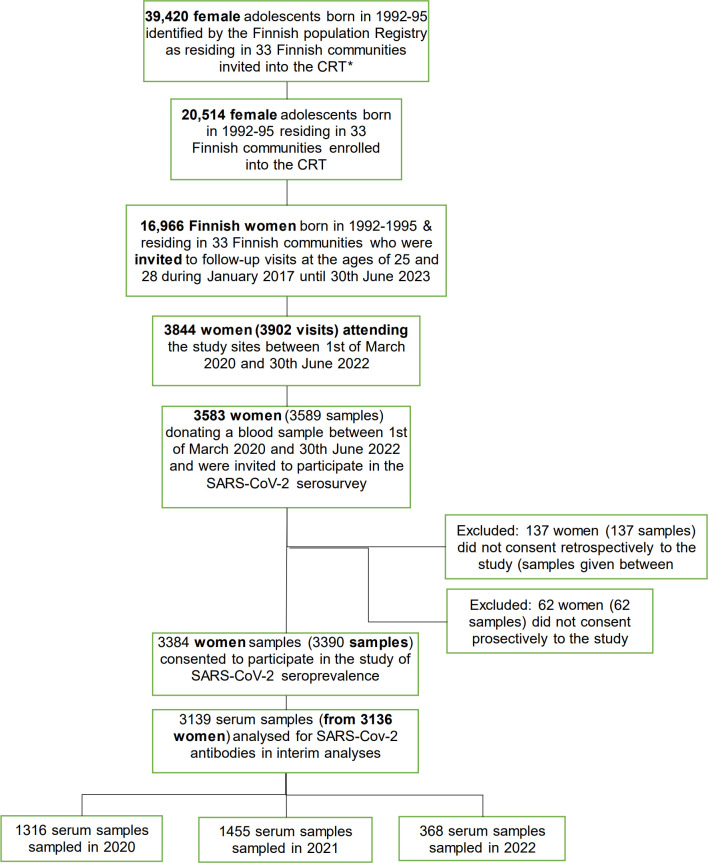 Figure 2
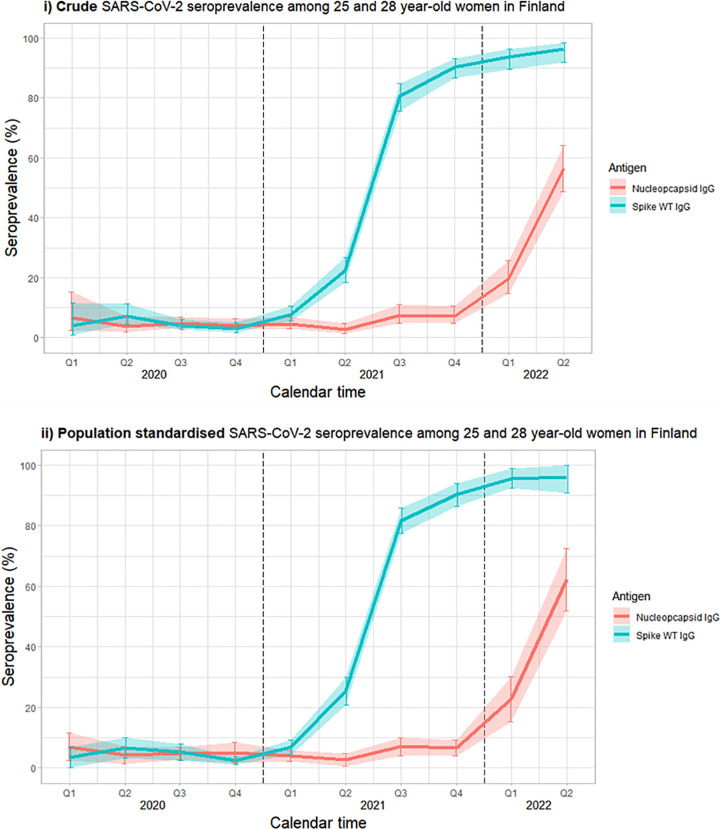 Figure 3
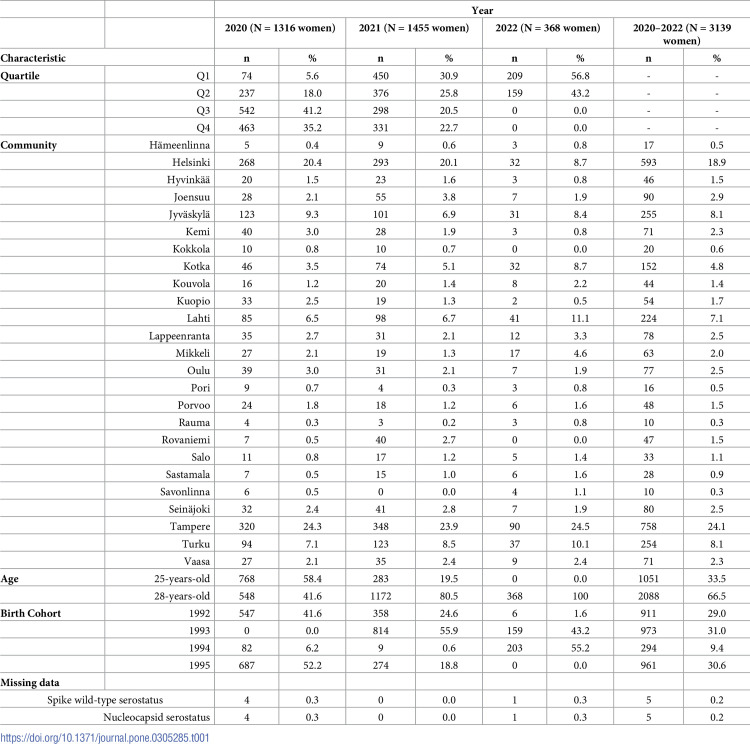 Figure 4
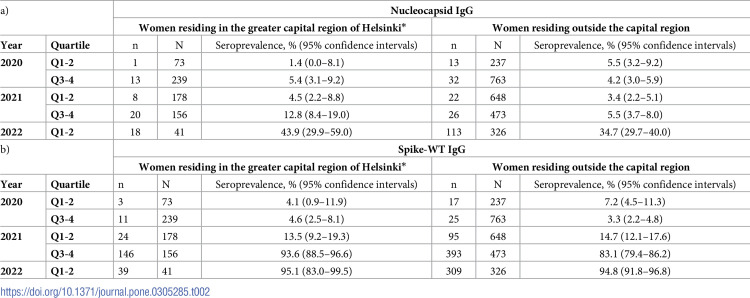 Figure 5
Peer Reviews
No public reviews on file for this paper yet. If you reviewed it on a platform where reviews are public (OpenReview, ICLR, NeurIPS, ICML), you can paste yours below so the community can read it here.
Videos
No videos yet. Explain this paper in a talk, walkthrough, or lecture? Add one.
Taxonomy
TopicsSARS-CoV-2 and COVID-19 Research · COVID-19 epidemiological studies · COVID-19 Impact on Reproduction