Discharge teaching quality positively predicts quality of life in colorectal cancer patients with temporary enterostomy: The mediating role of readiness for hospital discharge and stoma self-efficacy
Liying Lin, Yifang Fang, Feifei Huang, Xiaoying Zhang, Jianwei Zheng, Huimin Xiao

TL;DR
Better discharge teaching improves quality of life for colorectal cancer patients with temporary enterostomies, partly through increased self-efficacy and readiness for discharge.
Contribution
Identifies stoma self-efficacy and readiness for discharge as key mediators linking discharge teaching quality to quality of life in colorectal cancer patients.
Findings
Quality of discharge teaching directly and indirectly improves health-related quality of life through stoma self-efficacy and readiness for discharge.
Both QDT-T and QDT-R predict HRQOL via multiple mediating pathways.
Mediating effects are consistent in male patients with temporary enterostomies.
Abstract
This study aimed to examine the mediating role of readiness for hospital discharge (RHD) and stoma self-efficacy (SSE) in the relationship between quality of discharge teaching (QDT) and health-related quality of life (HRQOL) in colorectal cancer patients with temporary enterostomy, and the gender difference of mediating effect. It is not clear how RHD, QDT, SSE and HRQOL interact in colorectal cancer patients with temporary enterostomy. This was a prospective follow-up survey. 221 colorectal cancer patients with temporary enterostomy were conveniently recruited from a general hospital in Southeast China. The Quality of Discharge Teaching Scale, Readiness for Hospital Discharge Scale, Stoma Self-Efficacy Scale, and Stoma Quality of Life Scale were used to collect data. Pearson’s correlation and structural equation models were used to analyze the data. SPSS 26.0 and Amos 28.0 software…
Genes, proteins, chemicals, diseases, species, mutations and cell lines named across the full text — each resolved to its canonical identifier and authoritative record.
Click any figure to enlarge with its caption.
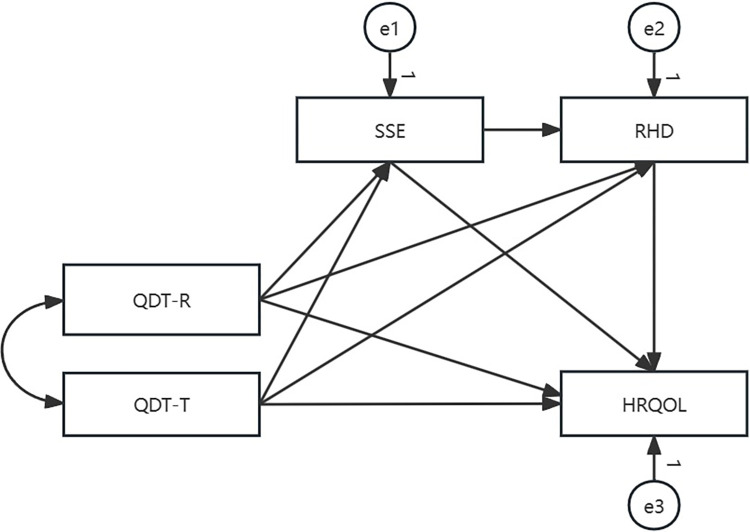 Figure 1
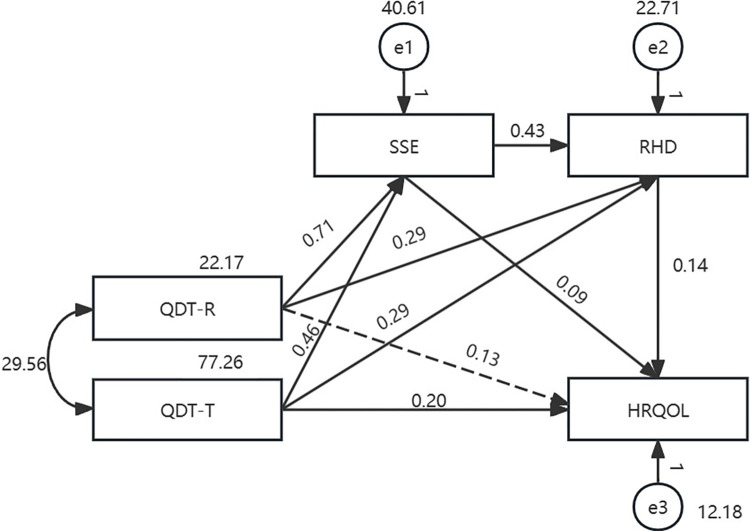 Figure 2
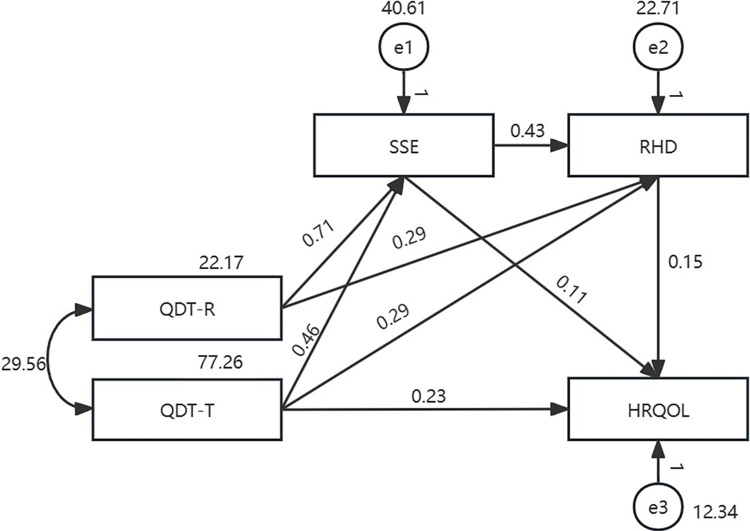 Figure 3
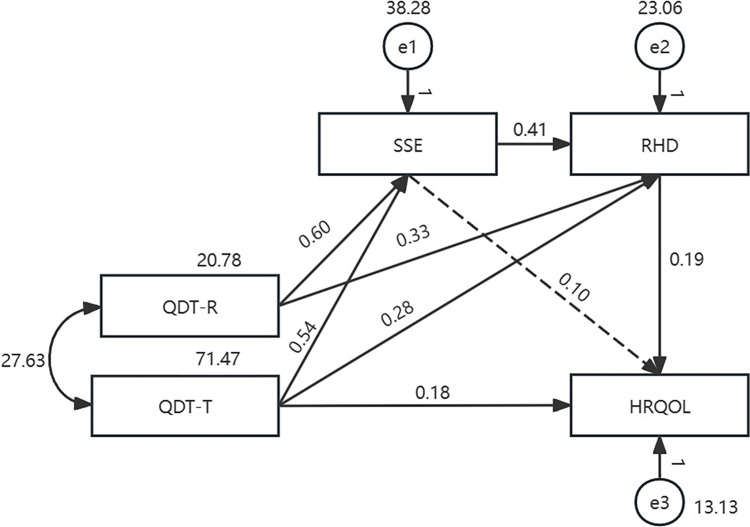 Figure 4
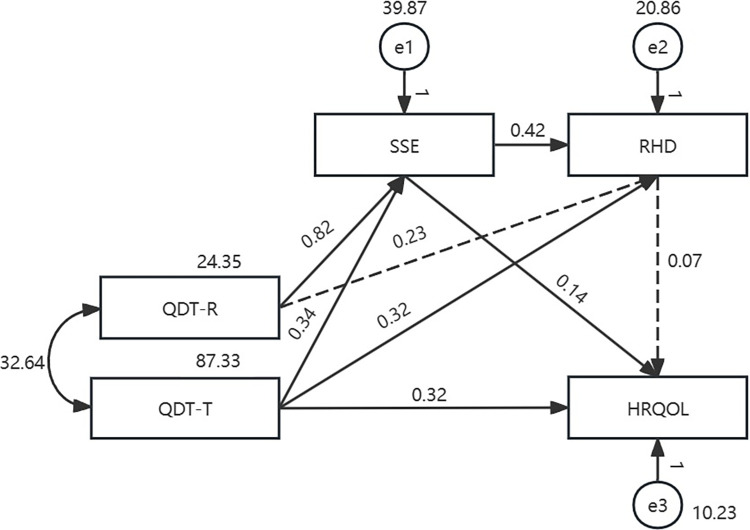 Figure 5
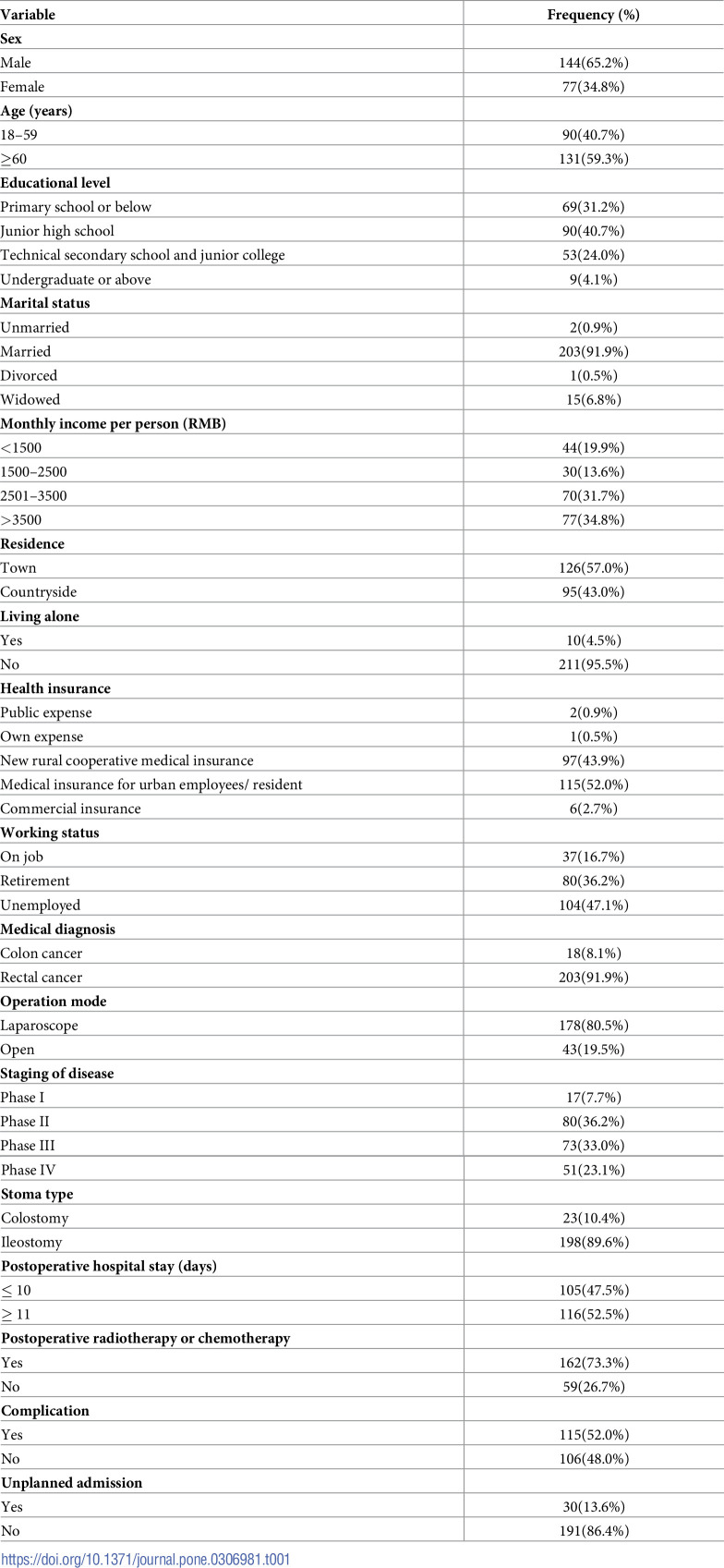 Figure 6
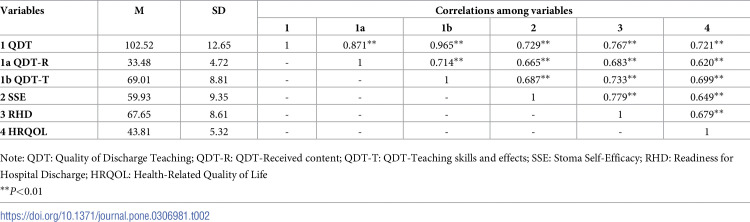 Figure 7
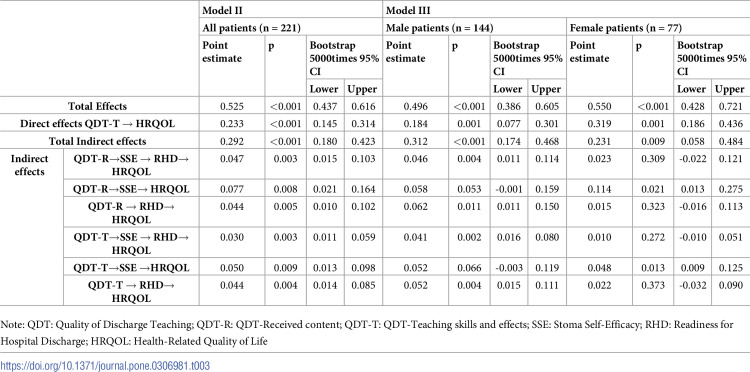 Figure 8
Peer Reviews
No public reviews on file for this paper yet. If you reviewed it on a platform where reviews are public (OpenReview, ICLR, NeurIPS, ICML), you can paste yours below so the community can read it here.
Videos
No videos yet. Explain this paper in a talk, walkthrough, or lecture? Add one.
Taxonomy
TopicsStoma care and complications · Surgical site infection prevention · Enhanced Recovery After Surgery