Atypical Presentation of Foster Kennedy Syndrome due to Neurocysticercosis: A Rare Case Report
Aparajita Chaudhary, Ruchi Agarwal

TL;DR
A 13-year-old boy with Neurocysticercosis showed atypical Foster Kennedy Syndrome symptoms, including abnormal body movements and optic disc changes.
Contribution
This case report presents a rare and atypical clinical manifestation of Foster Kennedy Syndrome caused by Neurocysticercosis.
Findings
The patient exhibited unilateral optic disc atrophy and contralateral disc edema without typical ocular complaints.
Neurocysticercosis was diagnosed using clinical and radiological findings in a pediatric patient.
Treatment included a combination of anticonvulsants, corticosteroids, antiparasitic drugs, and supplements.
Abstract
This case highlights the atypical presentation of Foster-Kennedy syndrome (FKS) associated with Neurocysticercosis (NCC), a prevalent cause of space-occupying lesions in areas endemic to the parasite. We report a newly diagnosed case of NCC in a 13-year-old boy who presented with a one-day history of abnormal movements of the left side of the body and no ocular complaints. Fundus examination of the patient revealed temporal disc pallor and a cup disc ratio (CDR) of 0.6 in the right eye suggesting unilateral optic disc atrophy and a hyperaemic disc with CDR 0.3 and blood vessel tortuosity in the left eye suggesting contralateral impending disc edema, mimicking the classic triad of FKS. He was diagnosed with NCC based on clinical features and radiological findings and was started on Carbamazepine (400 mg), Prednisolone (60 mg), Albendazole (400 mg), Acetazolamide (750 mg), and Vitamin B12…
Genes, proteins, chemicals, diseases, species, mutations and cell lines named across the full text — each resolved to its canonical identifier and authoritative record.
Click any figure to enlarge with its caption.
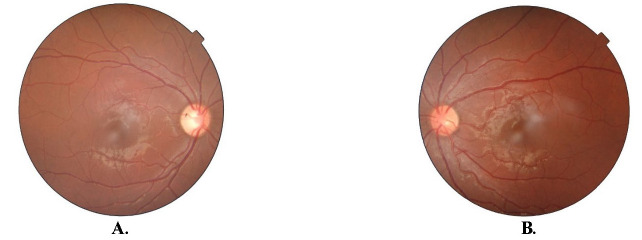 Figure 1
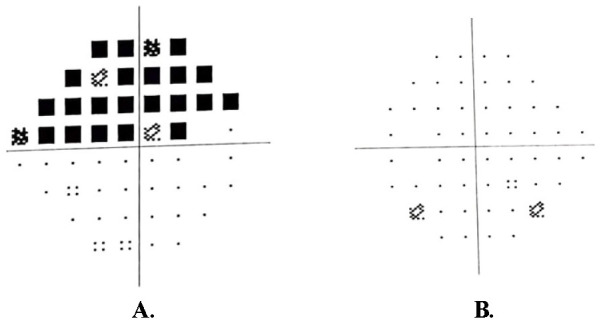 Figure 2
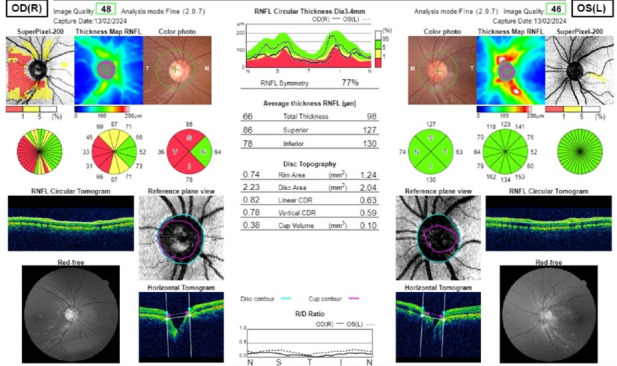 Figure 3
Peer Reviews
No public reviews on file for this paper yet. If you reviewed it on a platform where reviews are public (OpenReview, ICLR, NeurIPS, ICML), you can paste yours below so the community can read it here.
Videos
No videos yet. Explain this paper in a talk, walkthrough, or lecture? Add one.
Taxonomy
TopicsParasitic infections in humans and animals · Polyomavirus and related diseases · Cerebrospinal fluid and hydrocephalus