Conditional essentiality of the 11-subunit complex I-like enzyme in strict anaerobes: the case of Desulfitobacterium hafniense strain DCB-2
Mathilde Stéphanie Willemin, Florence Armand, Romain Hamelin, Julien Maillard, Christof Holliger

TL;DR
This study explores the role of a complex I-like enzyme in the energy metabolism of a strict anaerobe, showing it is essential for certain growth conditions.
Contribution
The study reveals the conditional essentiality of a complex I-like enzyme in a strict anaerobe using experimental and proteomic approaches.
Findings
The complex I-like enzyme is essential for growth with lactate and pyruvate but not with H2 as an electron donor.
Seven potential redox partners were identified with expression patterns similar to Nuo homologues.
A model is proposed where the enzyme serves as an electron entry point for cytoplasmic substrates like lactate or pyruvate.
Abstract
In oxidative phosphorylation, respiratory complex I serves as an entry point in the electron transport chain for electrons generated in catabolic processes in the form of NADH. An ancestral version of the complex, lacking the NADH-oxidising module, is encoded in a significant number of bacterial genomes. Amongst them is Desulfitobacterium hafniense, a strict anaerobe capable of conserving energy via organohalide respiration. This study investigates the role of the complex I-like enzyme in D. hafniense energy metabolism using rotenone as a specific complex I inhibitor under different growth conditions. The investigation revealed that the complex I-like enzyme was essential for growth with lactate and pyruvate but not in conditions involving H2 as an electron donor. In addition, a previously published proteomic dataset of strain DCB-2 was analysed to reveal the predominance of the complex…
Genes, proteins, chemicals, diseases, species, mutations and cell lines named across the full text — each resolved to its canonical identifier and authoritative record.
Click any figure to enlarge with its caption.
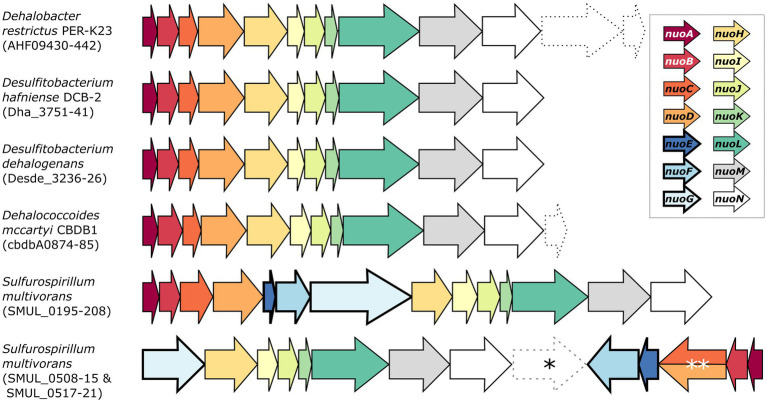 Figure 1
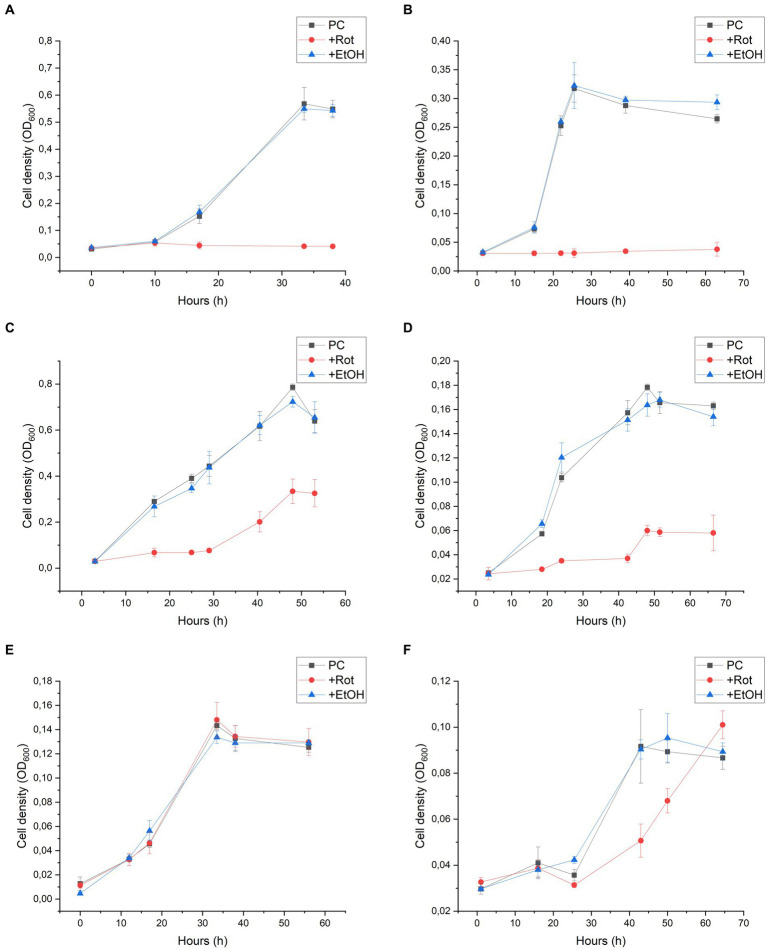 Figure 2
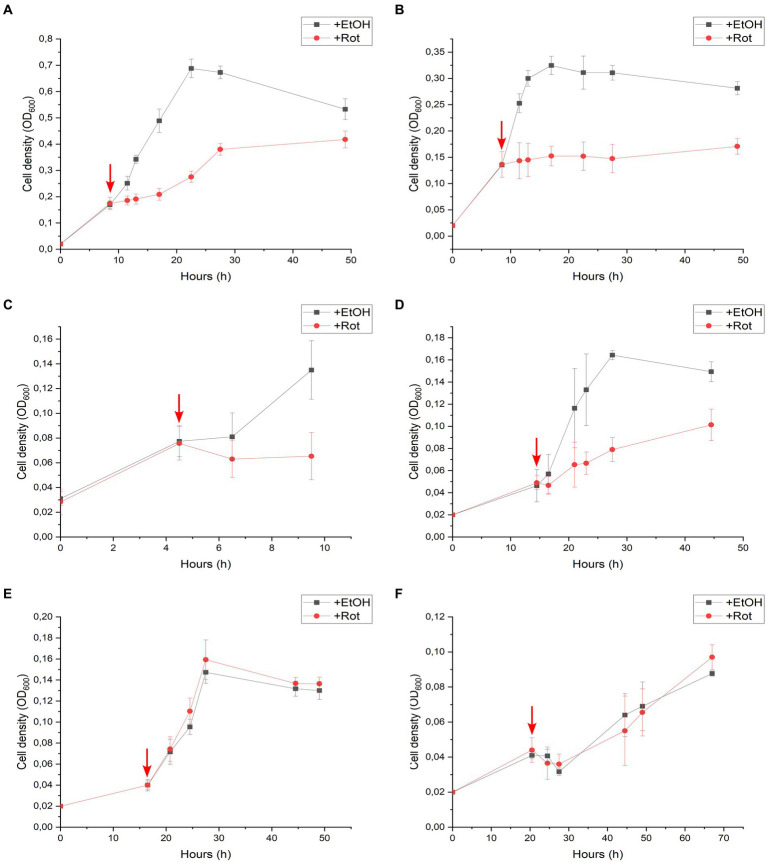 Figure 3
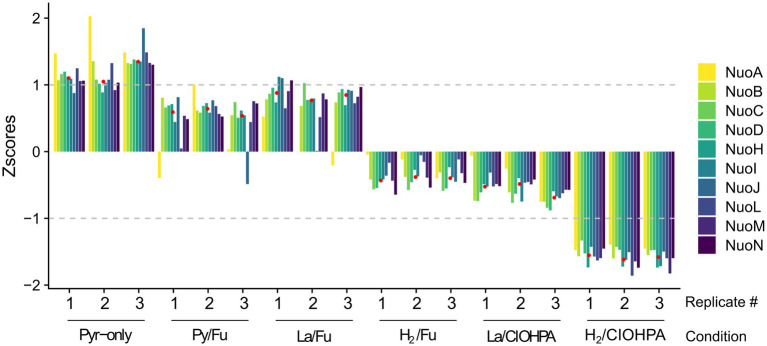 Figure 4
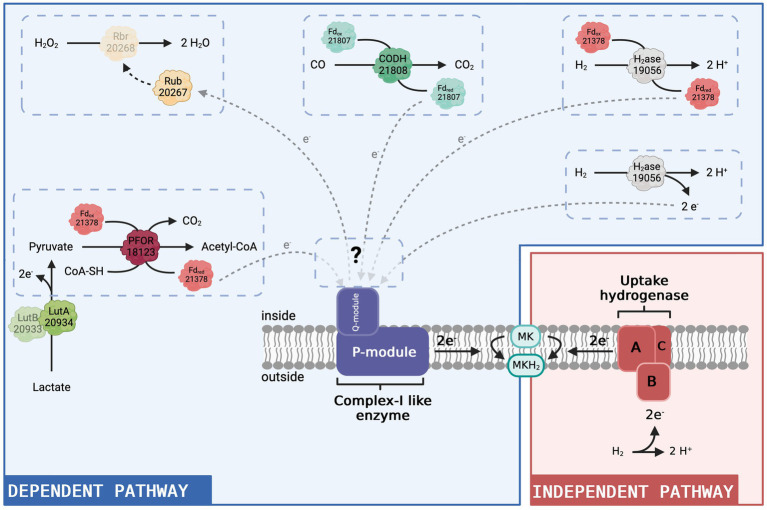 Figure 5
Peer Reviews
No public reviews on file for this paper yet. If you reviewed it on a platform where reviews are public (OpenReview, ICLR, NeurIPS, ICML), you can paste yours below so the community can read it here.
Videos
No videos yet. Explain this paper in a talk, walkthrough, or lecture? Add one.
Taxonomy
TopicsGenomics and Phylogenetic Studies · Microbial Community Ecology and Physiology · Hydrocarbon exploration and reservoir analysis