Fecal microbiota composition is a better predictor of recurrent Clostridioides difficile infection than clinical factors in a prospective, multicentre cohort study
Tessel M. van Rossen, Yvette H. van Beurden, Johannes A. Bogaards, Andries E. Budding, Chris J.J. Mulder, Christina M.J.E. Vandenbroucke-Grauls

TL;DR
This study finds that gut microbiota composition is a better predictor of recurrent Clostridioides difficile infection than clinical factors, suggesting potential for improved treatment strategies.
Contribution
The study demonstrates that gut microbiota composition outperforms clinical factors in predicting recurrent Clostridioides difficile infection.
Findings
Microbiota composition variables were better predictors of reCDI than clinical factors.
Bacteroidetes abundance and diversity after CDI treatment were robust predictors of reCDI.
Proteobacteria diversity increase relative to baseline was a strong predictor of reCDI.
Abstract
Clostridioides difficile infection (CDI) is the most common cause of antibiotic-associated diarrhoea. Fidaxomicin and fecal microbiota transplantation (FMT) are effective, but expensive therapies to treat recurrent CDI (reCDI). Our objective was to develop a prediction model for reCDI based on the gut microbiota composition and clinical characteristics, to identify patients who could benefit from early treatment with fidaxomicin or FMT. Multicentre, prospective, observational study in adult patients diagnosed with a primary episode of CDI. Fecal samples and clinical data were collected prior to, and after 5 days of CDI treatment. Follow-up duration was 8 weeks. Microbiota composition was analysed by IS-pro, a bacterial profiling technique based on phylum- and species-specific differences in the 16–23 S interspace regions of ribosomal DNA. Bayesian additive regression trees (BART) and…
Genes, proteins, chemicals, diseases, species, mutations and cell lines named across the full text — each resolved to its canonical identifier and authoritative record.
Click any figure to enlarge with its caption.
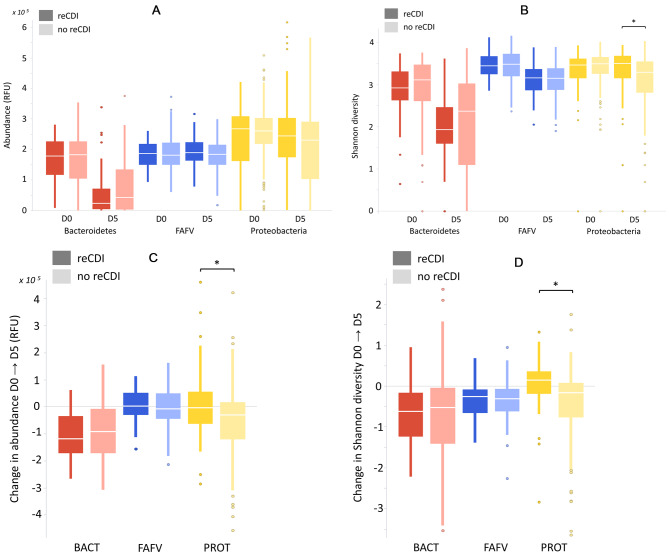 Figure 1
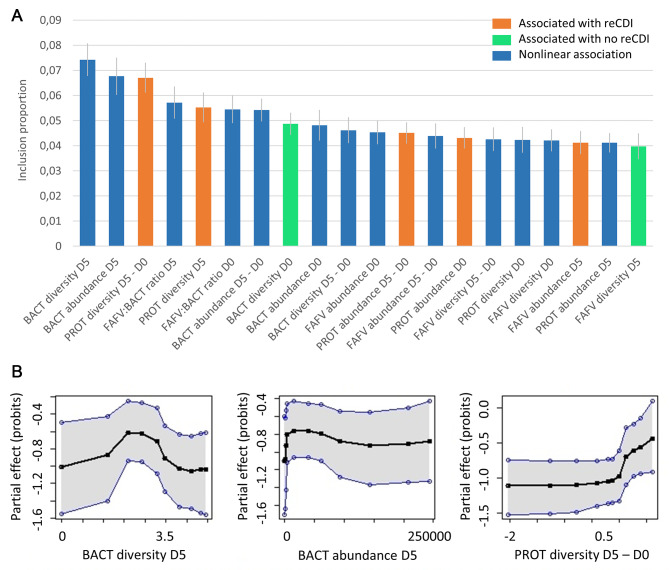 Figure 3
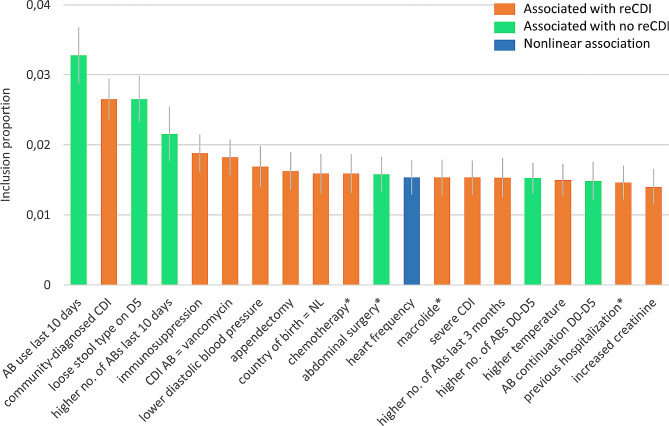 Figure 3
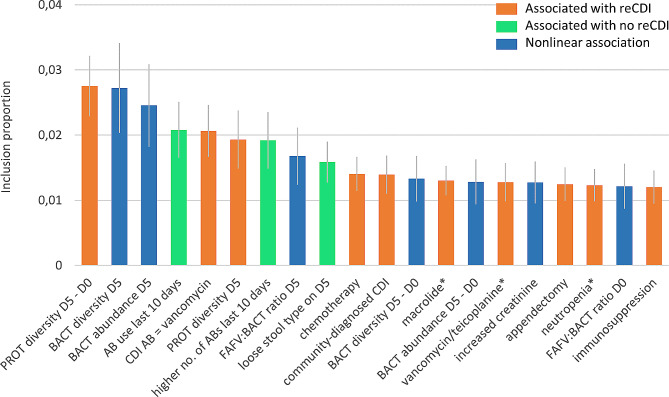 Figure 4
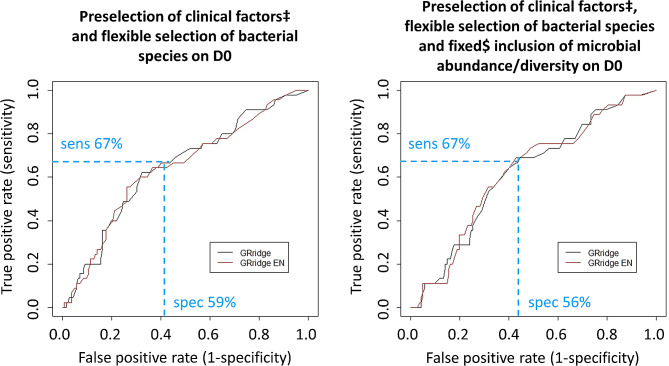 Figure 5
Peer Reviews
No public reviews on file for this paper yet. If you reviewed it on a platform where reviews are public (OpenReview, ICLR, NeurIPS, ICML), you can paste yours below so the community can read it here.
Videos
No videos yet. Explain this paper in a talk, walkthrough, or lecture? Add one.
Taxonomy
TopicsClostridium difficile and Clostridium perfringens research · Gastrointestinal motility and disorders · Gut microbiota and health