Evaluation of Fluorescence-Based Screening Assays for the Detection and Quantification of Silyl Hydrolase Activity
Jason Z. He, Yuqing Lu, Neha Jain, David G. Churchill, Lu Shin Wong

TL;DR
Researchers developed a new fluorescence-based method to detect and measure silyl hydrolase enzyme activity using a stable and effective substrate called MycoF.
Contribution
The novel contribution is the development of a stable fluorogenic substrate, MycoF, for high-throughput and quantitative detection of silyl hydrolase activity.
Findings
MycoF showed good differentiation between enzyme-catalyzed and background hydrolysis in aqueous media.
MycoF enabled detection of enzyme activity in cell lysates and identified positive hits in high-throughput screening.
Michaelis–Menten parameters were successfully determined using MycoF in kinetic assays.
Abstract
This study reports the development of fluorometric assays for the detection and quantification of silyl hydrolase activity using silicatein as a model enzyme. These assays employed a series of organosilane substrates containing either mycophenolate or umbelliferone moieties, which become fluorescent upon hydrolysis of a scissile Si–O bond. Among these substrates, the mycophenolate-derived molecule MycoF, emerged as the most promising candidate due to its relative stability in aqueous media, which resulted in good differentiation between the enzyme-catalyzed and uncatalyzed background hydrolysis. The utility of MycoF was also demonstrated in the detection of enzyme activity in cell lysates and was found to be capable of qualitative identification of positive “hit” candidates in a high-throughput format. These fluorogenic substrates were also suitable for use in quantitative kinetic…
Genes, proteins, chemicals, diseases, species, mutations and cell lines named across the full text — each resolved to its canonical identifier and authoritative record.
Click any figure to enlarge with its caption.
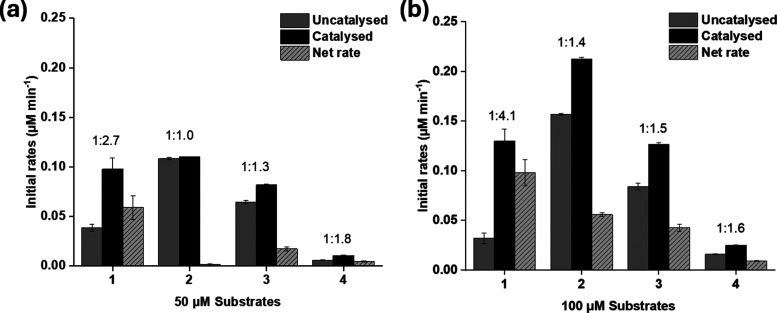 Figure 1
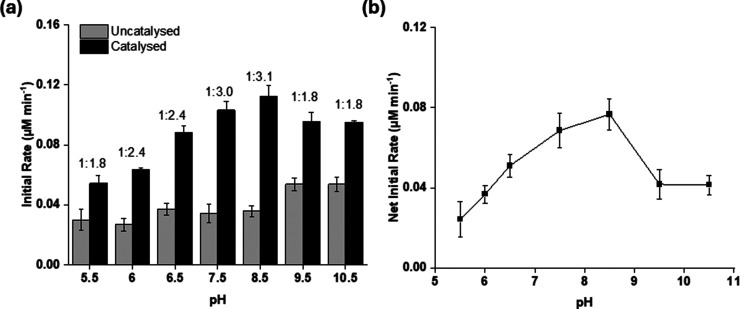 Figure 2
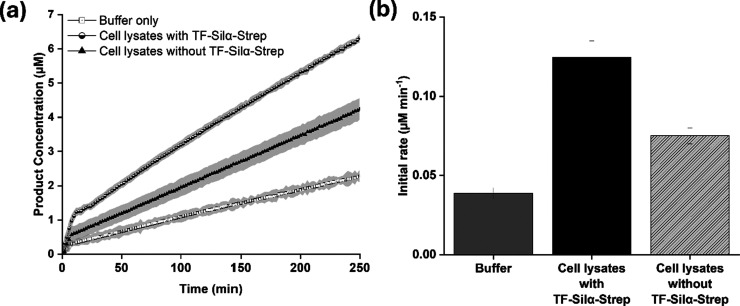 Figure 3
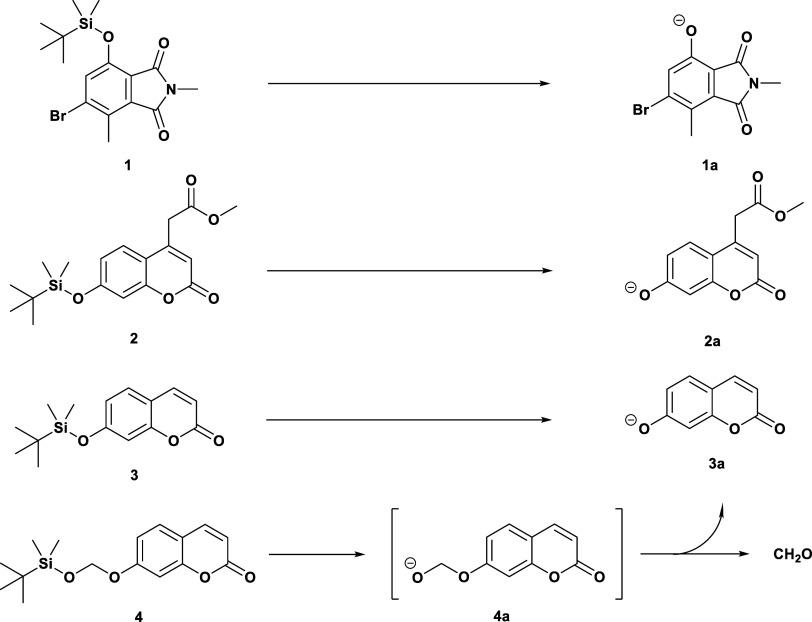 Figure 4
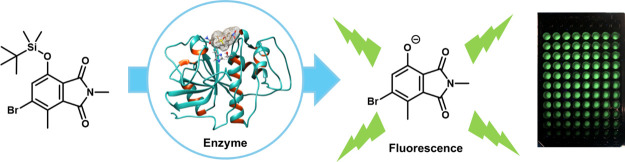 Figure 5
Peer Reviews
No public reviews on file for this paper yet. If you reviewed it on a platform where reviews are public (OpenReview, ICLR, NeurIPS, ICML), you can paste yours below so the community can read it here.
Videos
No videos yet. Explain this paper in a talk, walkthrough, or lecture? Add one.
Taxonomy
TopicsDiatoms and Algae Research · Analytical chemistry methods development · Chromium effects and bioremediation