The relationship between social and psychological factors with cognitive impairment after stroke: a prospective study
Yao Li, Aijie Tang, Lili Ge, Lin Zhang, Ling Chen, Yuhua Xu, Li Wang, Xiaoping Zhu, Qian Wu

TL;DR
This study finds that psychological factors like depression and self-perceived burden are linked to cognitive impairment after stroke, suggesting early screening could help recovery.
Contribution
The study identifies specific psychological factors significantly associated with cognitive impairment after stroke, offering new insights for clinical decision-making.
Findings
Higher self-perceived burden and depression scores are strongly linked to increased risk of cognitive impairment after stroke.
Early screening for these psychological factors can aid clinicians in improving cognitive recovery outcomes.
Social support scores did not show a significant association with cognitive impairment.
Abstract
To investigate the association between social and psychological factors and the risk of cognitive impairment following acute ischemic stroke. A prospective study was conducted at Shanghai Tenth People’s Hospital from June 2021 to July 2022. The study focused on social and psychological factors, which were assessed using the Social Support Rating Scale (SSRS), Self-Perceived Burden Scale (SPBS), and Hamilton Depression Scale (HAMD) within 3 days after admission to the hospital. Cognitive function was evaluated using the Montreal Cognitive Assessment at 3 months post-stroke. Logistic hierarchical regression models were used to examine the association between these three indicators and cognitive impairment following a stroke. Among these patients, cognitive function was assessed in 211 cases at the 3-month follow-up after the initial stroke event. At 3 months post-stroke, 118(55.9%) of…
Genes, proteins, chemicals, diseases, species, mutations and cell lines named across the full text — each resolved to its canonical identifier and authoritative record.
Click any figure to enlarge with its caption.
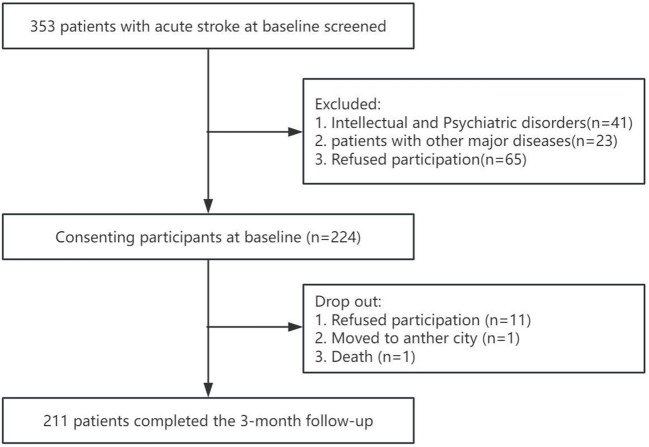 Figure 1
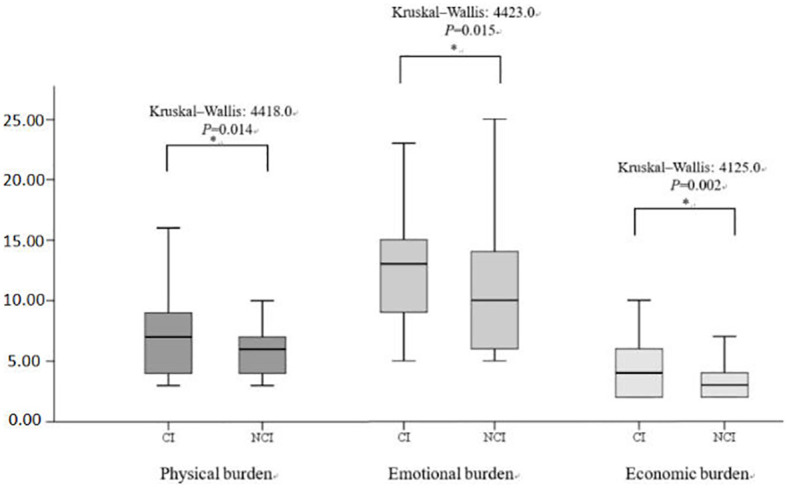 Figure 2
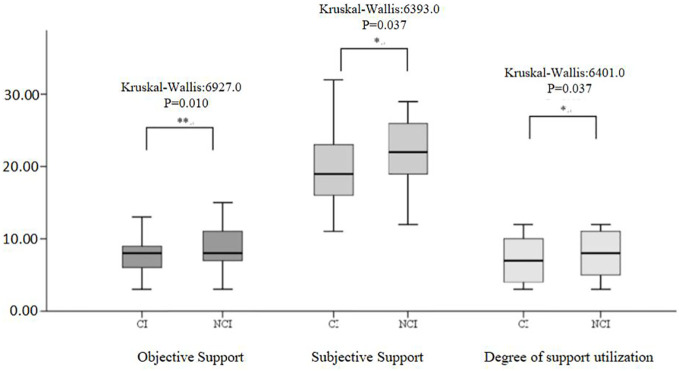 Figure 3
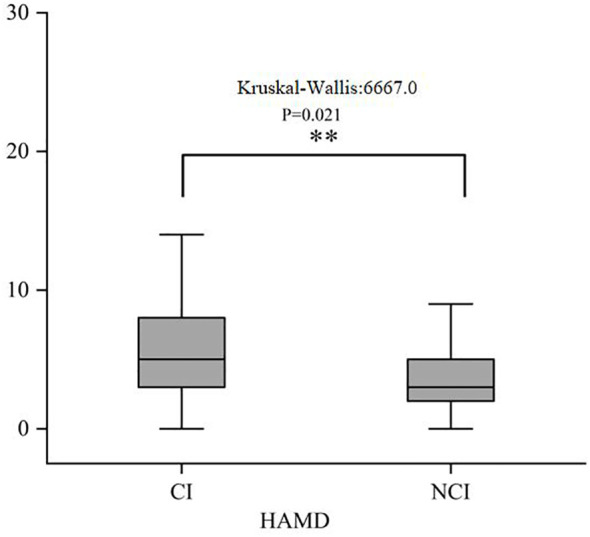 Figure 4
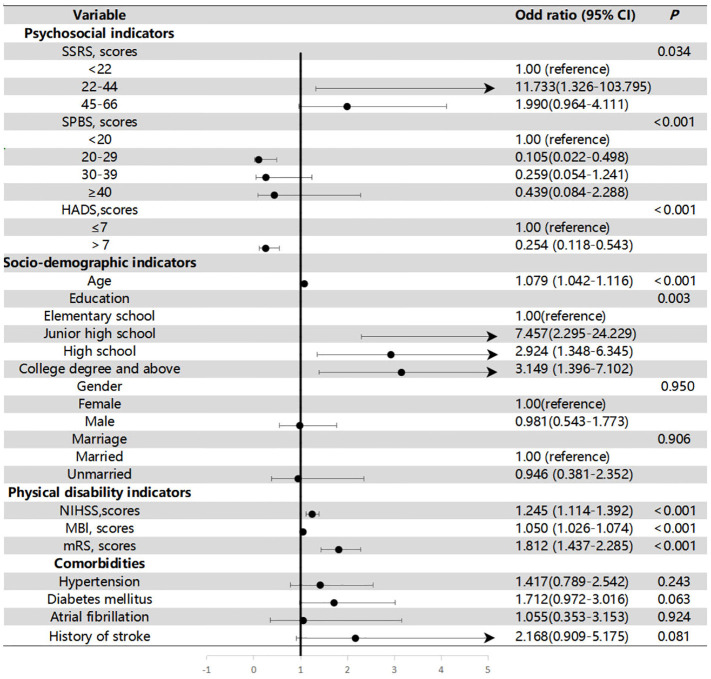 Figure 5
Peer Reviews
No public reviews on file for this paper yet. If you reviewed it on a platform where reviews are public (OpenReview, ICLR, NeurIPS, ICML), you can paste yours below so the community can read it here.
Videos
No videos yet. Explain this paper in a talk, walkthrough, or lecture? Add one.
Taxonomy
TopicsStatistical Mechanics and Entropy · Theoretical and Computational Physics · Nuclear physics research studies