Evaluating the Impact of Emergency Department Length of Stay in a Military Training Hospital Following the Implementation of a Standardized Paging System
Steven Siemieniak, Skylar Dehaan, Aaron Matlock

TL;DR
A new paging system was introduced in a military hospital's emergency department to reduce delays, but it only improved callback times, not overall patient stay times.
Contribution
The study introduces a standardized paging system to improve emergency department efficiency.
Findings
The standardized paging system reduced the time to initial consultant callback.
There was no significant reduction in total ED length of stay for admitted patients.
Abstract
Emergency department (ED) lengths of stay (LOS) may be unnecessarily extended by inefficient consulting processes. Delays in initiating consultations, returning calls, consultant evaluation of patients, and communication of recommendations can contribute to potentially avoidable increases in LOS. Prolonged ED LOS has been shown to increase patient morbidity and mortality and to decrease patient satisfaction. We created a standardized procedure for ED-initiated consultations, with the goal of reducing the time to initial consultant callback, time to admission, and total ED LOS. Following our intervention, time to consultant callback was decreased; however, there was no reduction in total ED LOS for admitted patients.
Genes, proteins, chemicals, diseases, species, mutations and cell lines named across the full text — each resolved to its canonical identifier and authoritative record.
Click any figure to enlarge with its caption.
 Figure 1
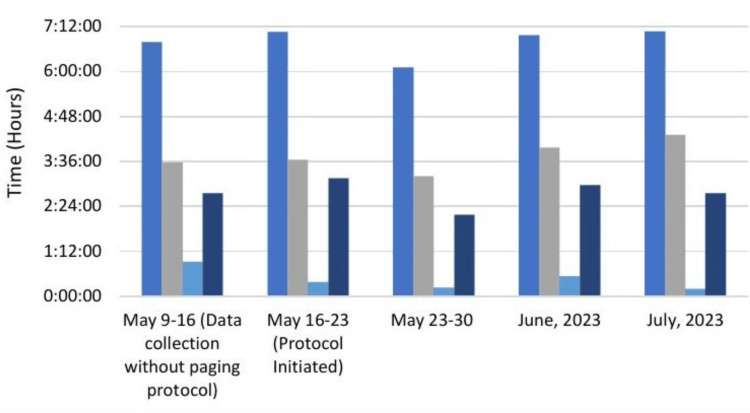 Figure 2
Peer Reviews
No public reviews on file for this paper yet. If you reviewed it on a platform where reviews are public (OpenReview, ICLR, NeurIPS, ICML), you can paste yours below so the community can read it here.
Videos
No videos yet. Explain this paper in a talk, walkthrough, or lecture? Add one.
Taxonomy
TopicsEmergency and Acute Care Studies · Trauma and Emergency Care Studies · Hospital Admissions and Outcomes