Do Varroa destructor (Acari: Varroidae) mite flows between Apis mellifera (Hymenoptera: Apidae) colonies bias colony infestation evaluation for resistance selection?
Matthieu Guichard, Adrien von Virag, Benoît Droz, Benjamin Dainat

TL;DR
This study investigates how mite movement between honey bee colonies affects infestation levels and challenges efforts to breed mite-resistant bees.
Contribution
The study reveals that mite immigration significantly influences colony infestation levels, challenging assumptions in resistance selection.
Findings
Mite immigration contributed 17–48% to infestation levels in experimental colonies.
Mite immigration was not linked to local colony density or nearby infestation levels.
Beekeeping management practices strongly impact mite infestation levels.
Abstract
Since the global invasion of the ectoparasitic mite Varroa destructor (Anderson and Trueman), selection of mite-resistant honey bee (Apis mellifera L.) colonies appears challenging and has to date not broadly reduced colony mortality. The low published estimated heritability values for mite infestation levels could explain the limited genetic progresses obtained so far. We hypothesize that intercolonial horizontal mite transmission could differentially affect the single colonies located in a given apiary and therefore invisibly bias colony infestation phenotypes. This bias may be lower in regions with lower colony density, providing suitable conditions to set up evaluation apiaries. To verify these hypotheses, we monitored mite infestation and reinvasion in experimental colonies, as well as infestation in neighboring colonies belonging to beekeepers in three areas with variable colony…
Genes, proteins, chemicals, diseases, species, mutations and cell lines named across the full text — each resolved to its canonical identifier and authoritative record.
Click any figure to enlarge with its caption.
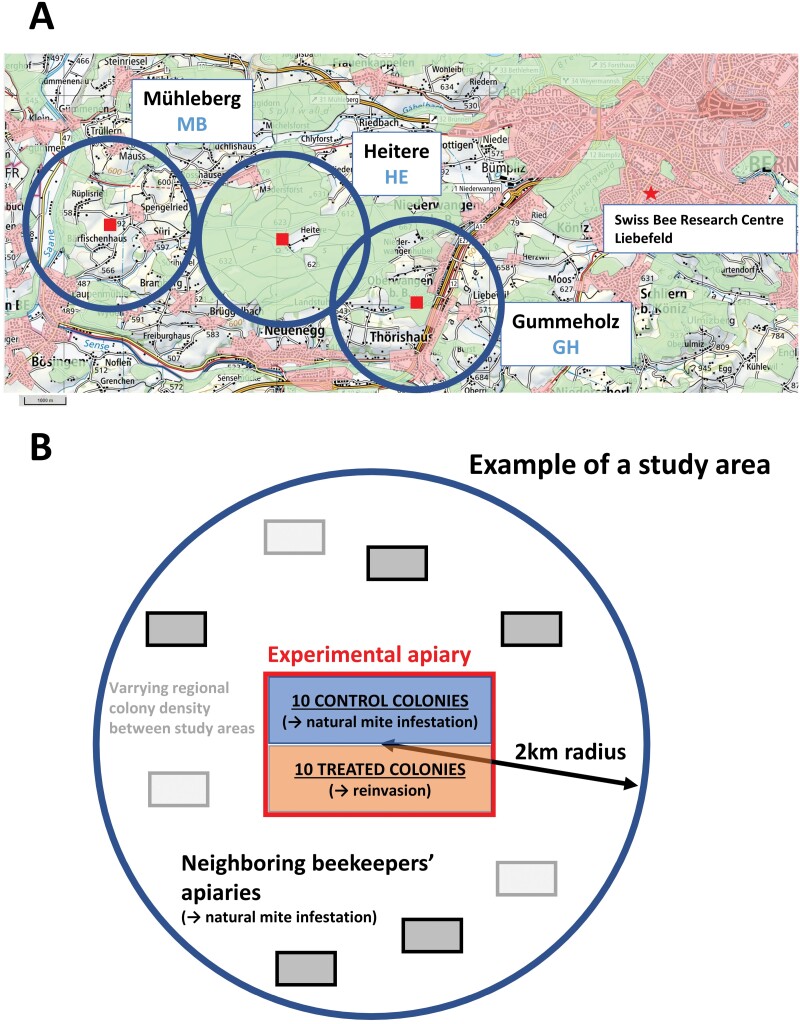 Figure 1
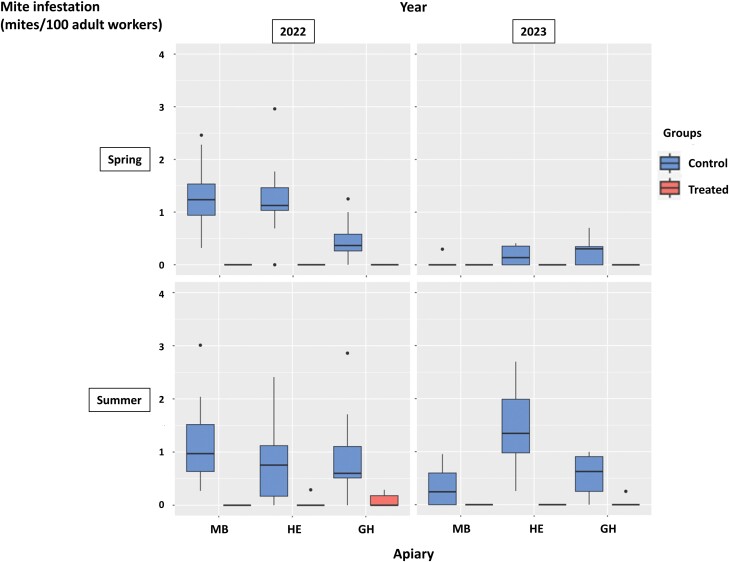 Figure 2
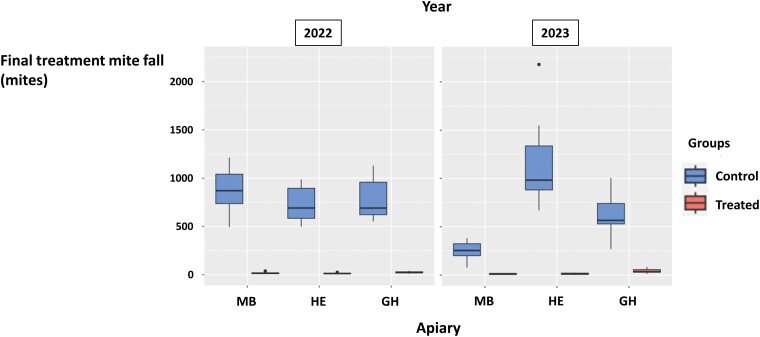 Figure 3
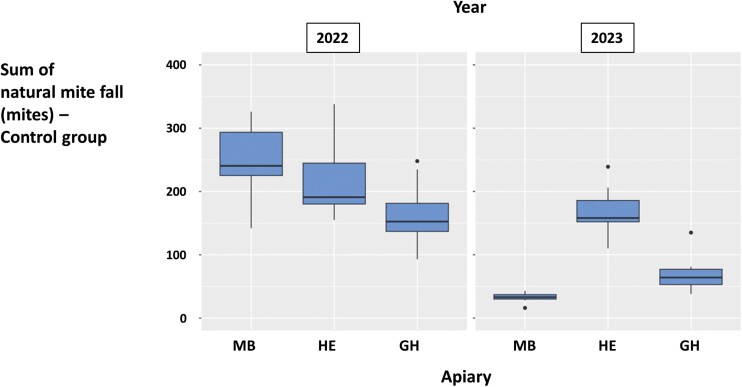 Figure 4
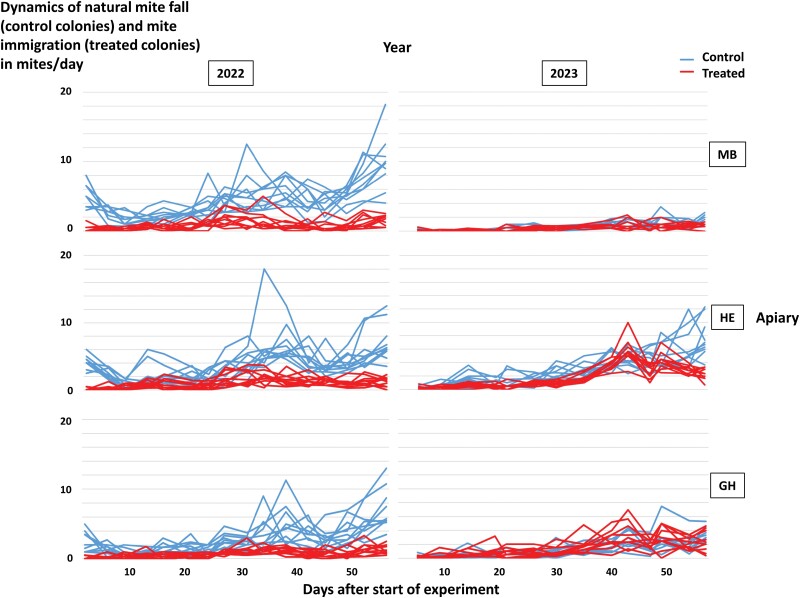 Figure 5
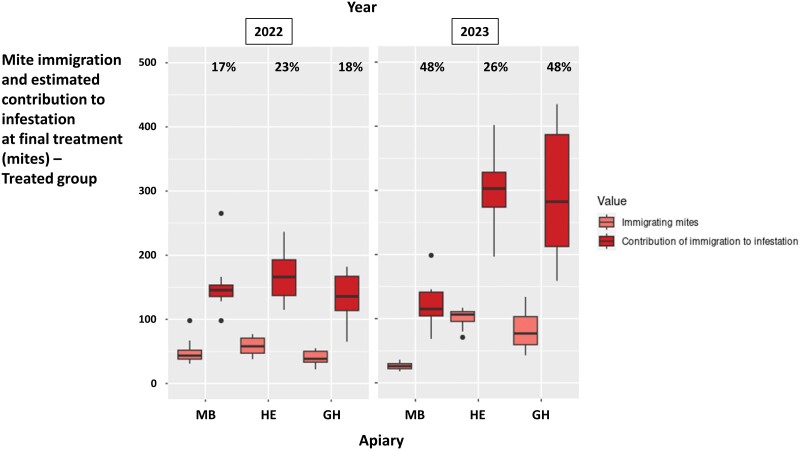 Figure 6
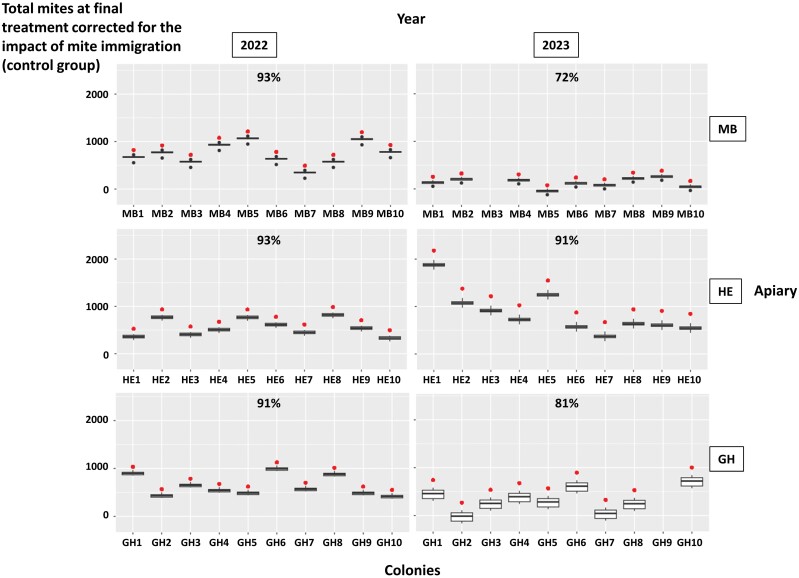 Figure 7
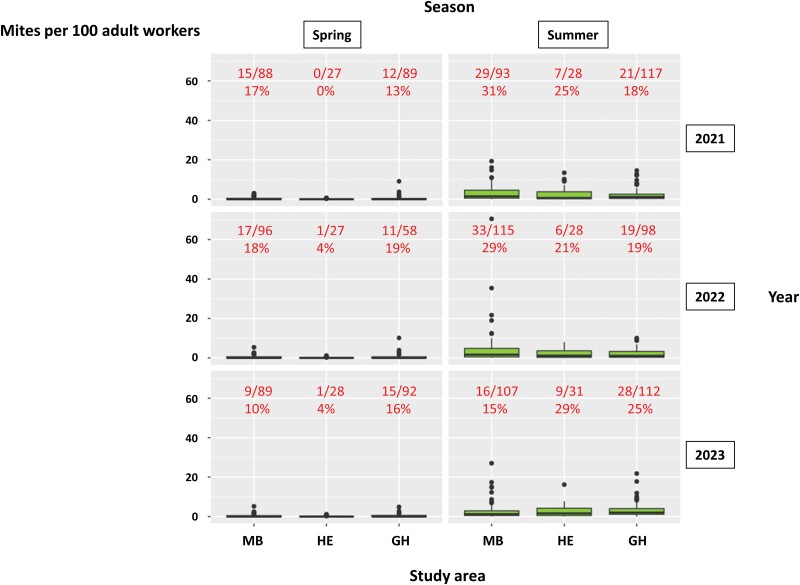 Figure 8
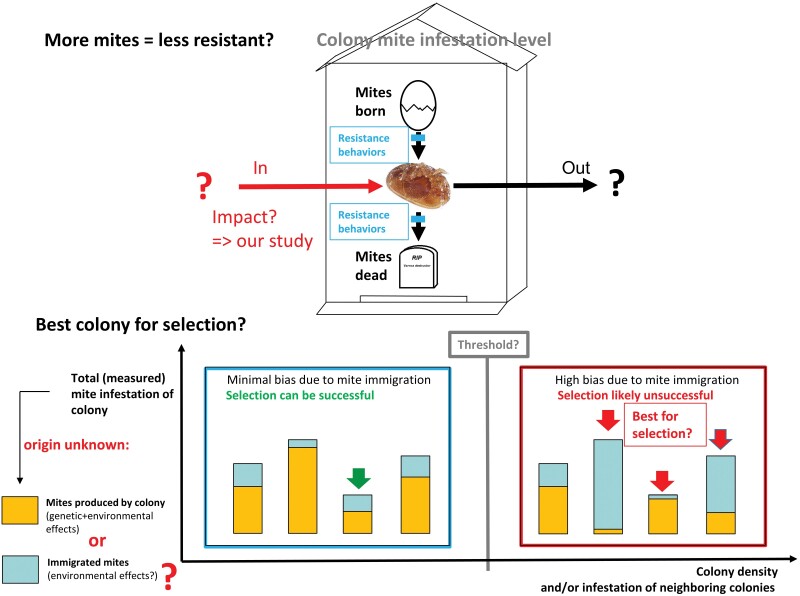 Figure 9
Peer Reviews
No public reviews on file for this paper yet. If you reviewed it on a platform where reviews are public (OpenReview, ICLR, NeurIPS, ICML), you can paste yours below so the community can read it here.
Videos
No videos yet. Explain this paper in a talk, walkthrough, or lecture? Add one.
Taxonomy
TopicsInsect and Pesticide Research · Plant and animal studies · Insect and Arachnid Ecology and Behavior