A molecular approach to unravel trophic interactions between parasitoids and hyperparasitoids associated with pecan aphids
Eddie K Slusher, Ted Cottrell, Tara Gariepy, Angelita Acebes-Doria, Marina Querejeta Coma, Pedro F S Toledo, Jason M Schmidt

TL;DR
This study uses DNA barcoding and metabarcoding to uncover complex food web interactions among aphids, parasitoids, and hyperparasitoids in pecan agroecosystems.
Contribution
The study is the first to characterize multiple hyperparasitoid species attacking a single primary parasitoid in pecan aphid systems using molecular methods.
Findings
Three aphid species, two primary parasitoids, and up to eight hyperparasitoid species were identified in pecan food webs.
Multiple hyperparasitoid species attack a single primary parasitoid, potentially reducing biological control effectiveness.
Molecular approaches revealed a complex trophic network previously unknown in pecan agroecosystems.
Abstract
Advances in molecular ecology can overcome many challenges in understanding host–parasitoid interactions. Genetic characterization of the key-players in systems helps to confirm species and identify trophic linkages essential for ecological service delivery by biological control agents; however, relatively few agroecosystems have been explored using this approach. Pecan production consists of a large tree perennial system containing an assortment of seasonal pests and natural enemies. As a first step to characterizing host–parasitoid associations in pecan food webs, we focus on aphid species and their parasitoids. Based on DNA barcoding of field-collected and reared specimens, we confirmed the presence of 3 species of aphid, one family of primary parasitoids, and 5 species of hyperparasitoids. By applying metabarcoding to field-collected aphid mummies, we were able to identify multiple…
Genes, proteins, chemicals, diseases, species, mutations and cell lines named across the full text — each resolved to its canonical identifier and authoritative record.
Click any figure to enlarge with its caption.
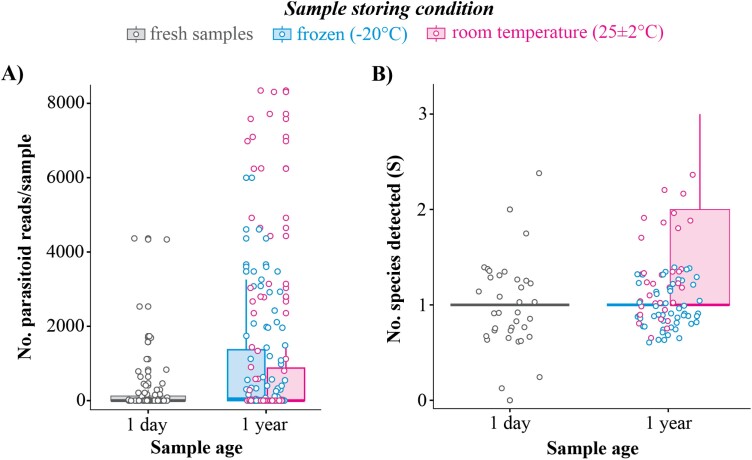 Figure 1
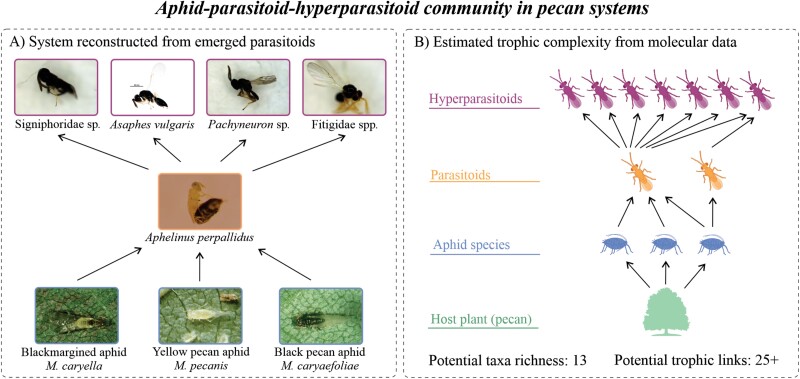 Figure 2
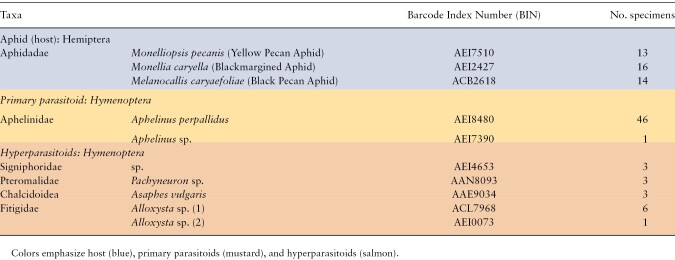 Figure 3
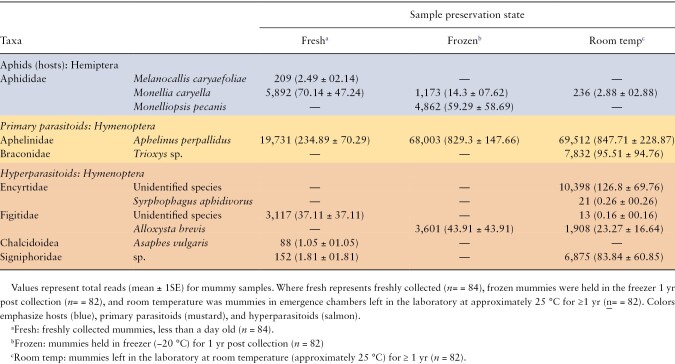 Figure 4
Peer Reviews
No public reviews on file for this paper yet. If you reviewed it on a platform where reviews are public (OpenReview, ICLR, NeurIPS, ICML), you can paste yours below so the community can read it here.
Videos
No videos yet. Explain this paper in a talk, walkthrough, or lecture? Add one.
Taxonomy
TopicsInsect-Plant Interactions and Control · Insect symbiosis and bacterial influences · Plant Virus Research Studies