Burden and frequency of viral testing of kidney and non-kidney transplant recipients
Hema Kapoor, Caixia Bi, Martin H. Kroll, Ann E. Salm, Edward A. Dominguez

TL;DR
This study examines how often transplant patients are tested for viruses and finds that testing frequency often does not follow recommended guidelines.
Contribution
The paper provides new insights into the adherence of post-transplant viral testing to published guidelines using national reference laboratory data.
Findings
Kidney transplant recipients were most frequently tested for blood BK virus and cytomegalovirus.
Non-kidney transplant recipients showed the highest positivity rates for urine BK virus and Epstein-Barr virus.
Testing intervals for many patients deviated from recommended guidelines, especially for EBV and bBKV in kidney transplant recipients.
Abstract
Transplant patients are at risk of infections due to long-term immunosuppression contributing to morbidity and mortality in this population. Post-transplant testing guidelines were established to monitor and guide therapeutic interventions in transplant recipients. We hypothesize that there are gaps in adherence to the recommended frequency of laboratory testing in post-transplant patients. We analyzed national reference laboratory data to compare viral post-transplant infection (PTI) testing frequency with their respective published guidelines to understand patient uptake and compliance. We evaluated the ordering patterns, positivity rates, and frequency of molecular infectious disease tests (MIDTs). We included 345 patients with International Classification of Diseases (ICD)-10 codes for transplant (Z940-Z942, Z944, Z9481, Z9483, Z9484) with at least two tests (within 7 days) in…
Genes, proteins, chemicals, diseases, species, mutations and cell lines named across the full text — each resolved to its canonical identifier and authoritative record.
Click any figure to enlarge with its caption.
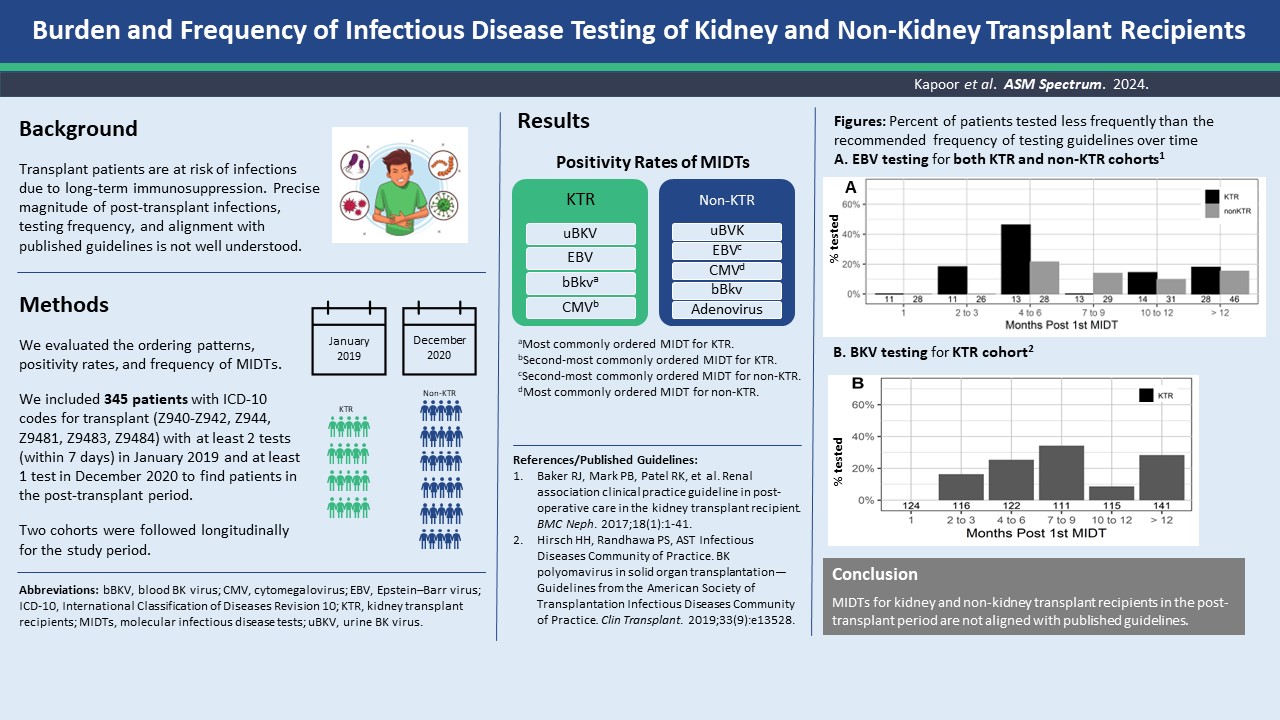 Figure 1
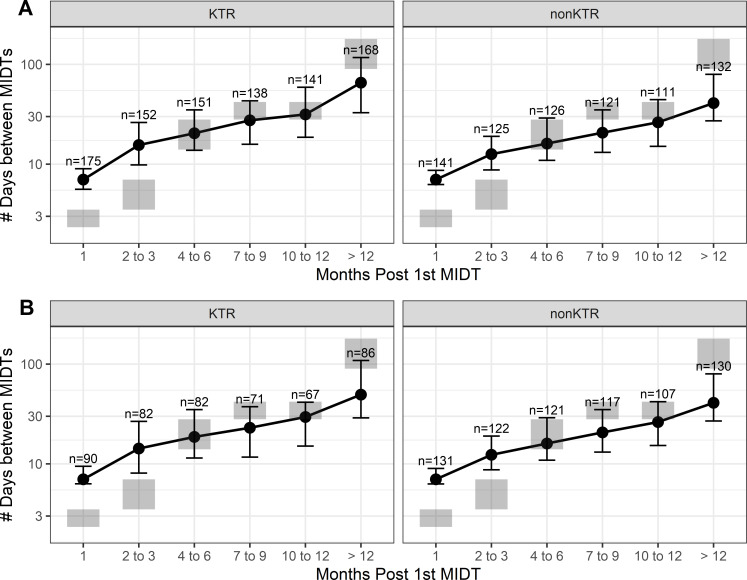 Figure 2
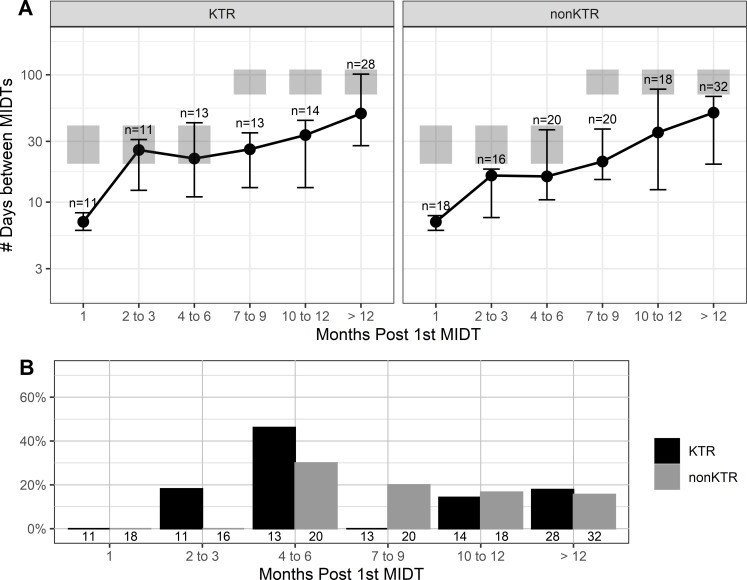 Figure 3
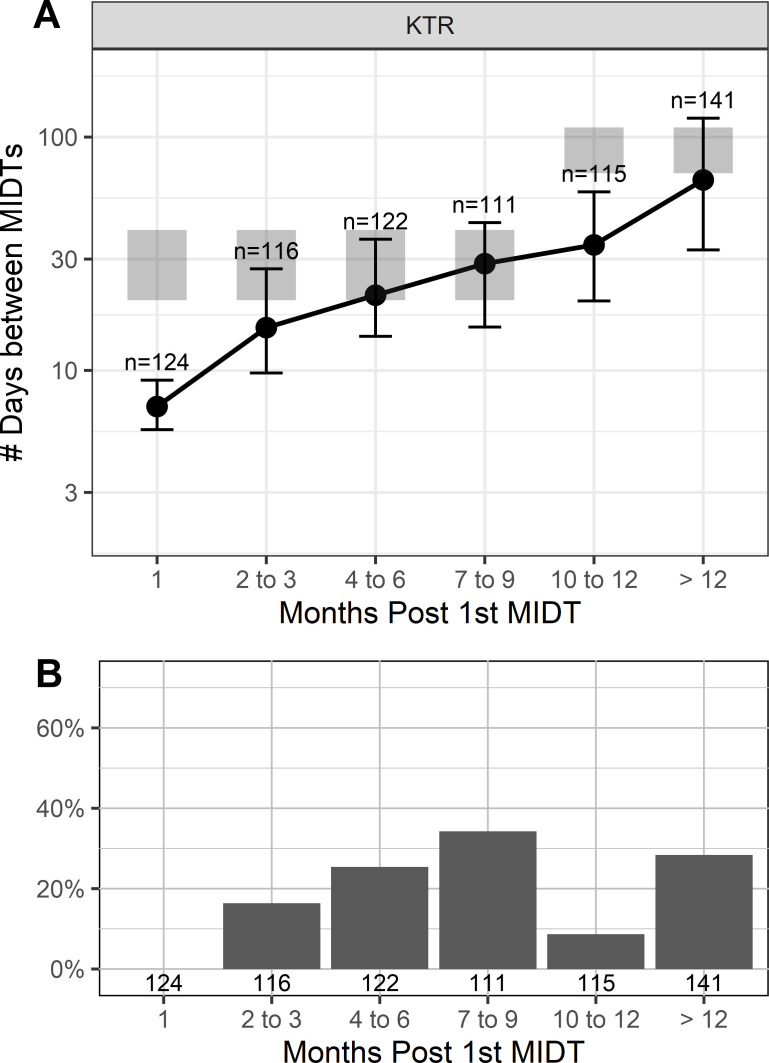 Figure 4
Peer Reviews
No public reviews on file for this paper yet. If you reviewed it on a platform where reviews are public (OpenReview, ICLR, NeurIPS, ICML), you can paste yours below so the community can read it here.
Videos
No videos yet. Explain this paper in a talk, walkthrough, or lecture? Add one.
Taxonomy
TopicsPolyomavirus and related diseases · Cytomegalovirus and herpesvirus research · Parvovirus B19 Infection Studies