Ecological and evolutionary processes involved in shaping microbial habitat generalists and specialists in urban park ecosystems
Shuzhen Li, Xue Yan, Mamun Abdullah Al, Kexin Ren, Christopher Rensing, Anyi Hu, Andrey N. Tsyganov, Yuri Mazei, Alexey Smirnov, Natalia Mazei, Jun Yang

TL;DR
This study explores how ecological and evolutionary processes shape microbial generalists and specialists in urban parks, revealing differences in their roles and diversity.
Contribution
The paper provides new insights into the joint ecological and evolutionary drivers of microbial diversity in urban park ecosystems.
Findings
Habitat specialists showed higher deterministic processes and diversification potential compared to generalists.
Microbial specialists acted as key hubs in interaction networks across different habitats.
Generalists had shorter phylogenetic branch lengths and larger genomes than specialists.
Abstract
Microbiomes are integral to ecological health and human well-being; however, their ecological and evolutionary drivers have not been systematically investigated, especially in urban park ecosystems. As microbes have different levels of tolerance to environmental changes and habitat preferences, they can be categorized into habitat generalists and specialists. Here, we explored the ecological and evolutionary characteristics of both prokaryotic and microeukaryotic habitat generalists and specialists from six urban parks across five habitat types, including moss, soil, tree hole, water, and sediment. Our results revealed that different ecological and evolutionary processes maintained and regulated microbial diversity in urban park ecosystems. Under ecological perspective, community assembly of microbial communities was mainly driven by stochastic processes; however, deterministic…
Genes, proteins, chemicals, diseases, species, mutations and cell lines named across the full text — each resolved to its canonical identifier and authoritative record.
Click any figure to enlarge with its caption.
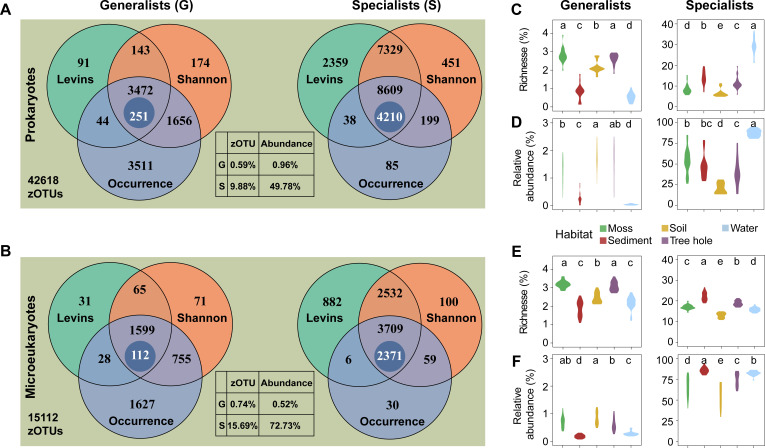 Figure 1
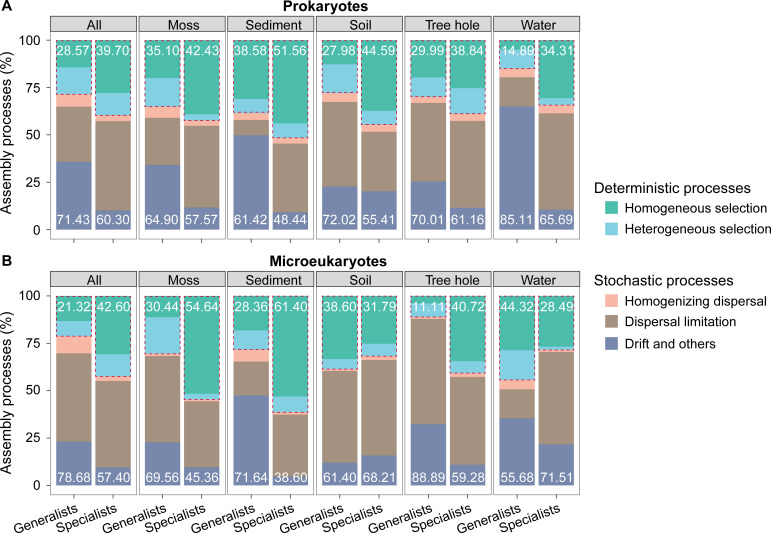 Figure 2
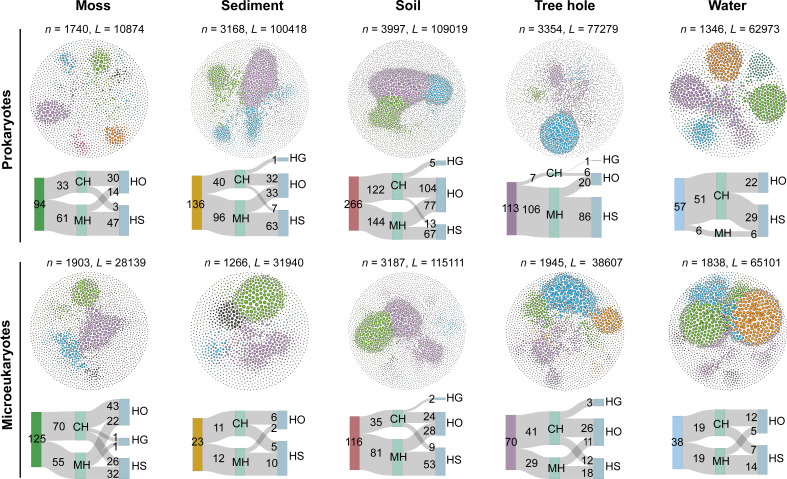 Figure 3
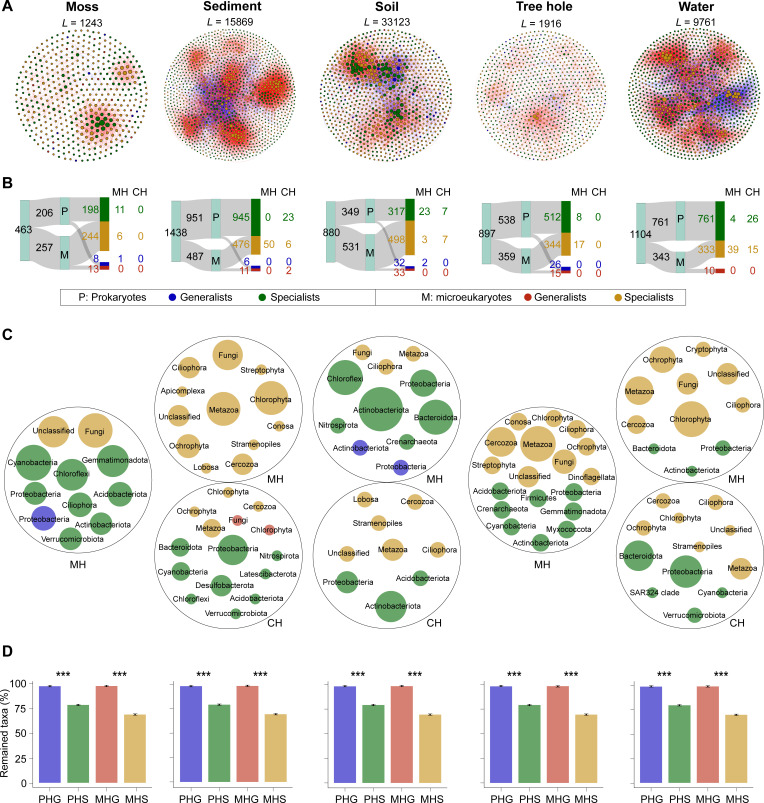 Figure 4
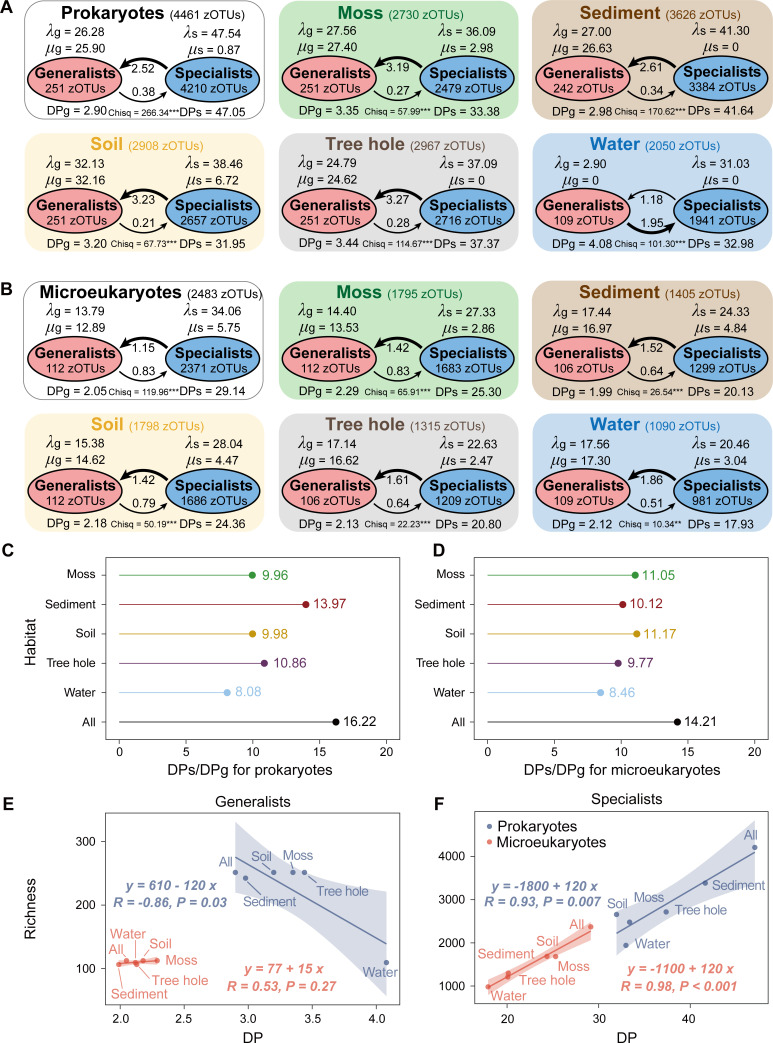 Figure 5
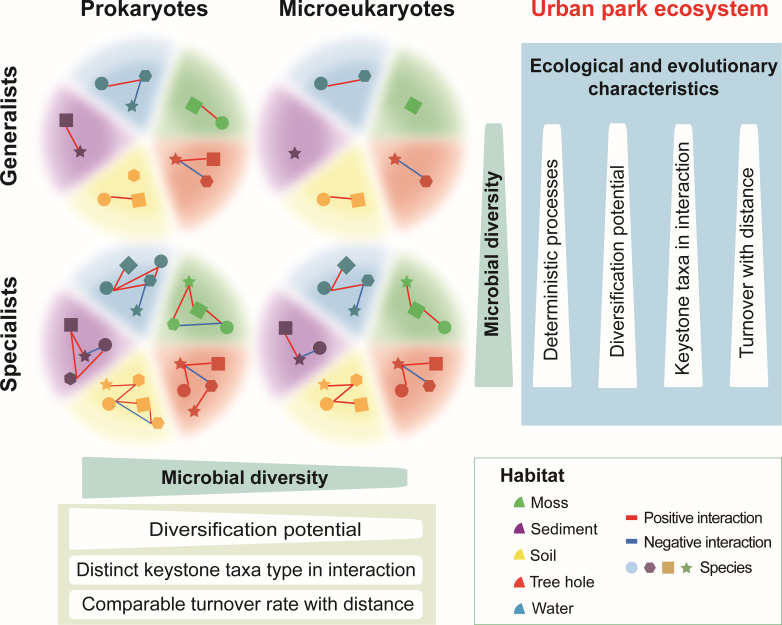 Figure 6
 Figure 7
 Figure 8
Peer Reviews
No public reviews on file for this paper yet. If you reviewed it on a platform where reviews are public (OpenReview, ICLR, NeurIPS, ICML), you can paste yours below so the community can read it here.
Videos
No videos yet. Explain this paper in a talk, walkthrough, or lecture? Add one.
Taxonomy
TopicsMicrobial Community Ecology and Physiology · Alexander von Humboldt Studies · Gut microbiota and health