Spearmint targets microtubules by (−)-carvone
Nathalie Hering, Anne-Catherine Schmit, Etienne Herzog, Louis-Thibault Corbin, Leona Schmidt-Speicher, Ralf Ahrens, Marie-Laure Fauconnier, Peter Nick

TL;DR
Spearmint's compound (−)-carvone inhibits plant growth by disrupting cell structures like microtubules and actin filaments, leading to cell death.
Contribution
The paper reveals that (−)-carvone from Spearmint targets plant microtubules and actin filaments, causing cytoskeletal disruption and cell death.
Findings
Very low concentrations of (−)-carvone inhibit germination and root growth in plants.
Exposure to (−)-carvone causes rapid degradation of microtubules and actin filament remodeling in plant cells.
Cytoskeletal disruption by (−)-carvone leads to cell-type dependent programmed cell death in roots.
Abstract
Allelopathy can provide sustainable alternatives to herbicides because it is based on specific signals rather than generic toxicity. We show that the allelopathic activity of Spearmint and Watermint is linked with their main compounds, (−)-carvone and (+)-menthofuran, both deriving from (−)-limonene. Germination of Poppy and Cress, and root growth of Arabidopsis thaliana are inhibited by very low concentrations of (−)-carvone, acting even through the gas phase. (+)-Menthofuran is active as well, but at lower efficacy. Using fluorescently tagged marker lines in tobacco BY-2 cells and Arabidopsis roots, we demonstrate a rapid degradation of microtubules and a remodeling of actin filaments in response to (−)-carvone and, to a milder extent, to (+)-menthofuran. This cytoskeletal response is followed by cell death. By means of a Root Chip system, we can follow the tissue dependent response…
Genes, proteins, chemicals, diseases, species, mutations and cell lines named across the full text — each resolved to its canonical identifier and authoritative record.
Click any figure to enlarge with its caption.
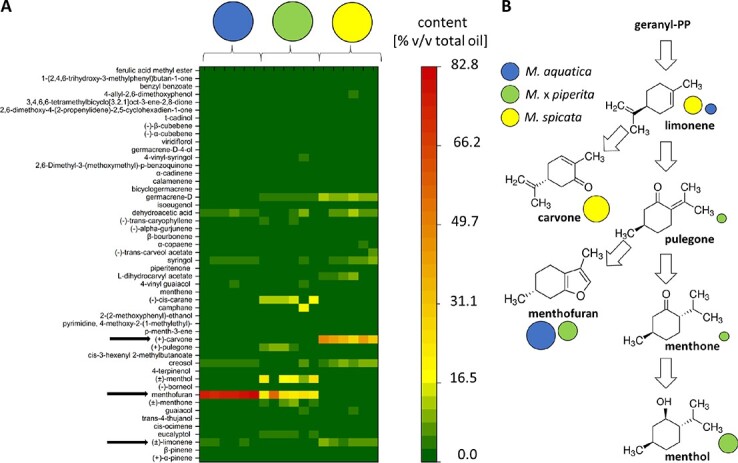 Figure 1
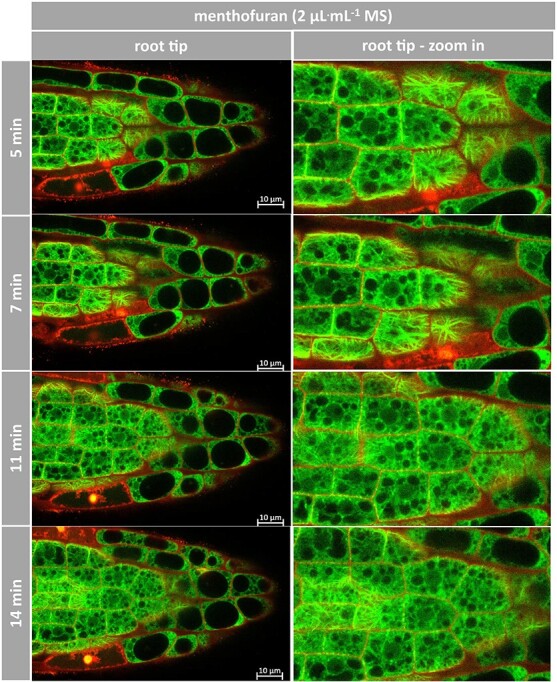 Figure 2
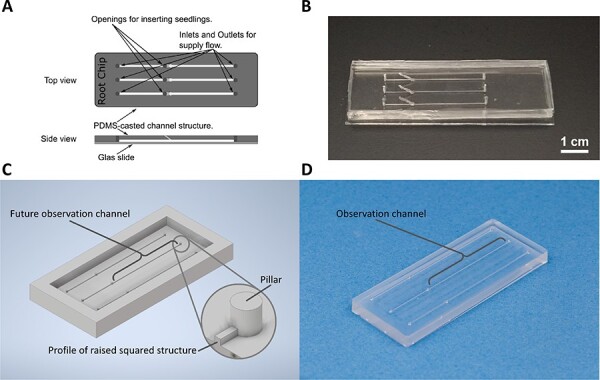 Figure 3
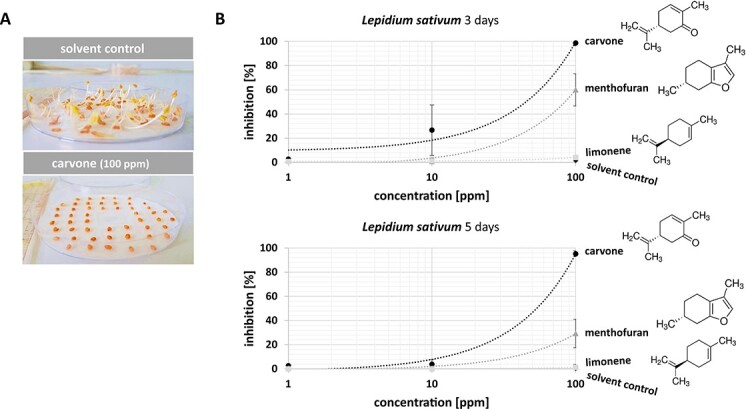 Figure 4
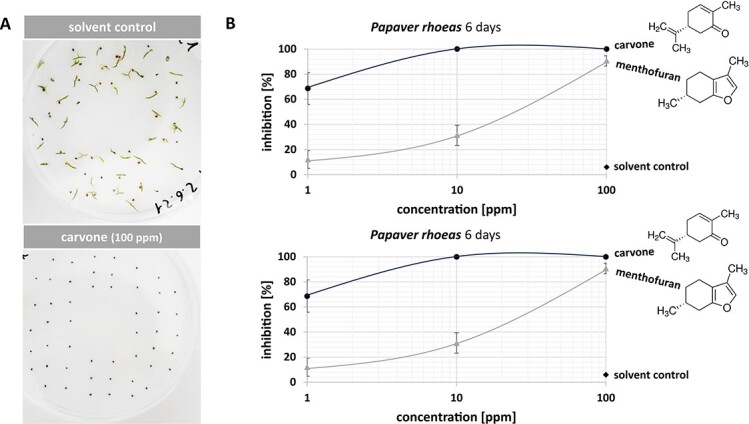 Figure 5
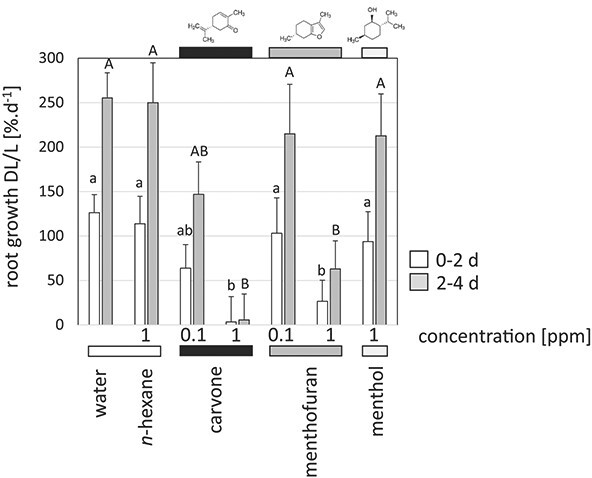 Figure 6
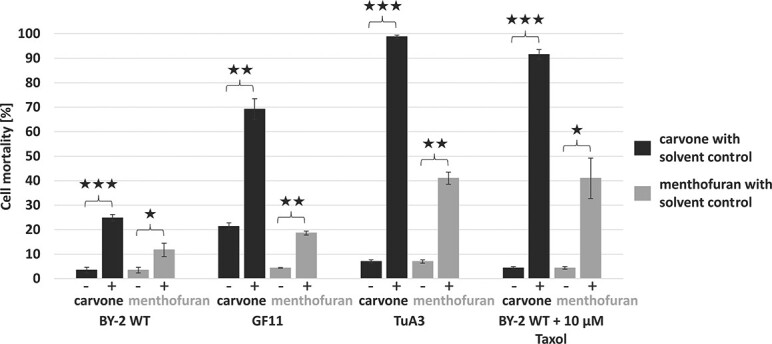 Figure 7
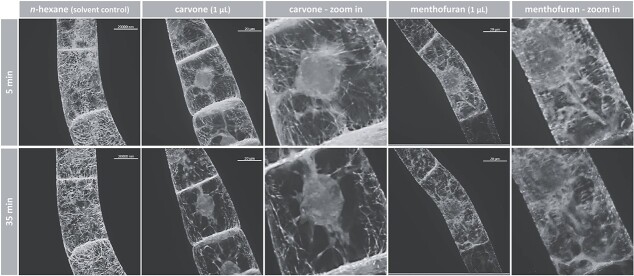 Figure 8
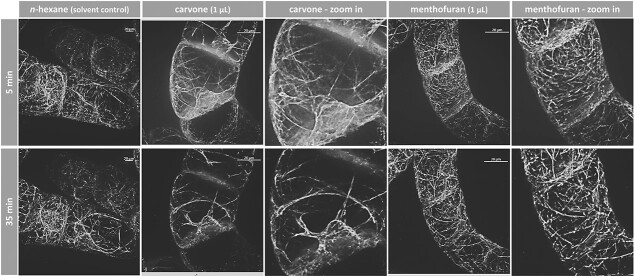 Figure 9
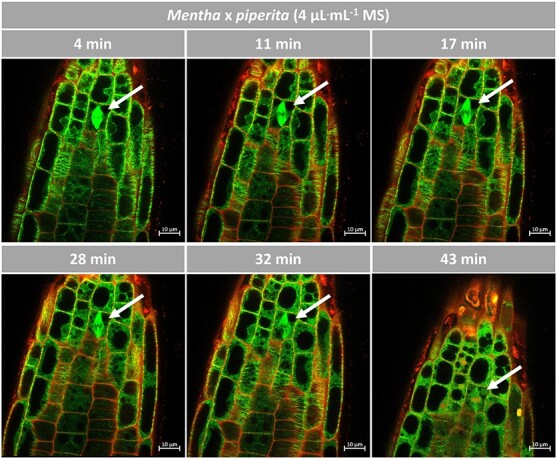 Figure 10
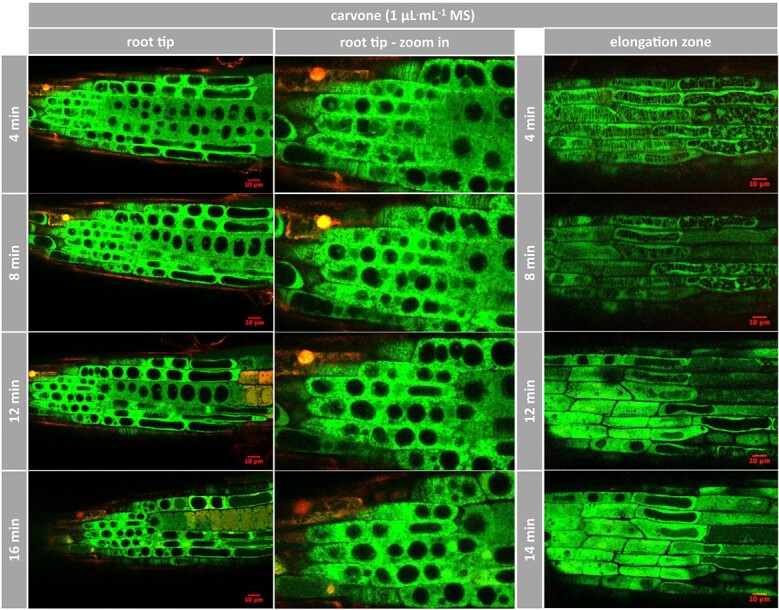 Figure 11
Peer Reviews
No public reviews on file for this paper yet. If you reviewed it on a platform where reviews are public (OpenReview, ICLR, NeurIPS, ICML), you can paste yours below so the community can read it here.
Videos
No videos yet. Explain this paper in a talk, walkthrough, or lecture? Add one.
Taxonomy
TopicsAllelopathy and phytotoxic interactions · Plant Parasitism and Resistance · Plant Reproductive Biology