Quantifiable and reproducible phenotypic assessment of a constitutive knockout mouse model for congenital nephrotic syndrome of the Finnish type
Katharina Lemberg, Nils D. Mertens, Kirollos Yousef, Ronen Schneider, Lea M. Merz, Bshara Mansour, Daanya Salmanullah, Caroline M. Kolvenbach, Ken Saida, Seyoung Yu, Selina Hölzel, Andrew Steinsapir, Kevin A. Goncalves, Camille Nicolas Frank, Gijs A. C. Franken, Shirlee Shril

TL;DR
This paper describes a detailed assessment of a mouse model for a rare kidney disease, providing key measurements to evaluate future gene therapy treatments.
Contribution
The study introduces a reproducible phenotyping framework for a CNF mouse model to support gene replacement therapy development.
Findings
Nphs1tm1Rkl/Nphs1tm1Rkl mice showed perinatal lethality with a median survival of 1 day.
The mice exhibited significantly reduced podocyte foot process density and increased tubular microcysts.
Urinary albumin/creatinine ratios were markedly elevated in the CNF mouse model.
Abstract
Steroid-resistant nephrotic syndrome (SRNS) is the second most frequent cause of childhood chronic kidney disease. Congenital nephrotic syndrome of the Finnish type (CNF) (MIM# 256300) is caused by biallelic variants in the gene NPHS1, encoding nephrin, an integral component of the kidney filtration barrier. No causal treatments exist, and children inevitably require kidney replacement therapy. In preparation for gene replacement therapy (GRT) in CNF, we established a quantifiable and reproducible phenotypic assessment of the nephrin-deficient CNF mouse model: 129/Sv-Nphs1tm1Rkl/J. We assessed the phenotypic spectrum of homozygous mice (Nphs1tm1Rkl/Nphs1tm1Rkl) compared to heterozygous controls (Nphs1tm1Rkl/Nphs1WT) by the following parameters: 1. cohort survival, 2. podocyte foot process (FP) density per glomerular basement membrane (GBM) using transmission electron microscopy, 3.…
Genes, proteins, chemicals, diseases, species, mutations and cell lines named across the full text — each resolved to its canonical identifier and authoritative record.
Click any figure to enlarge with its caption.
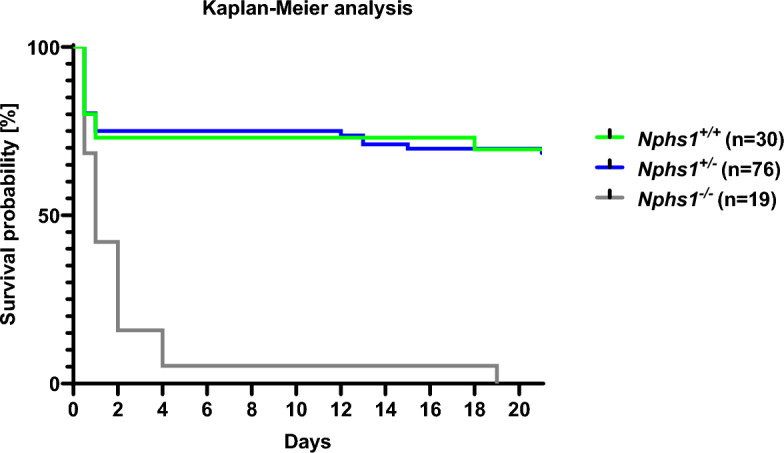 Figure 1
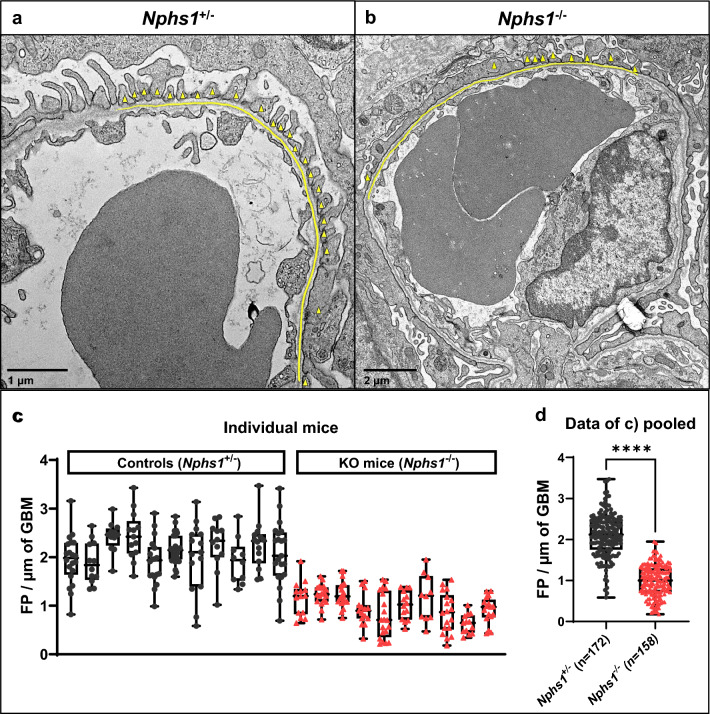 Figure 2
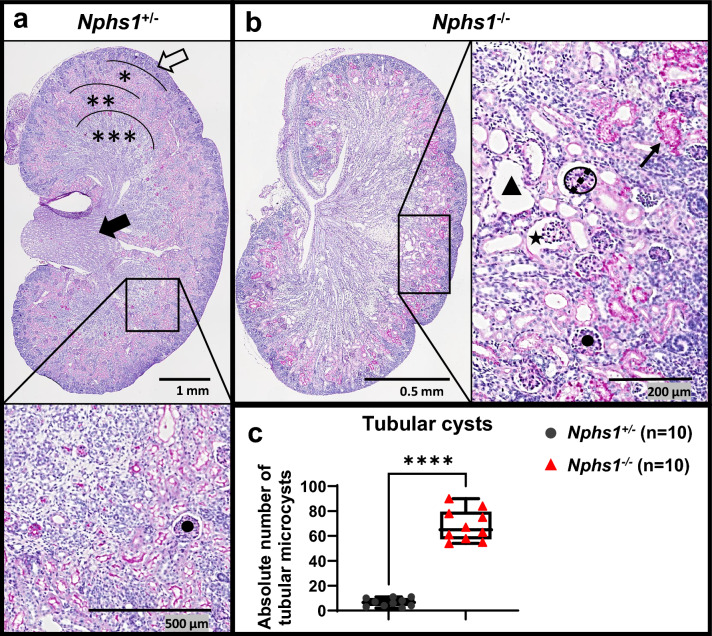 Figure 3
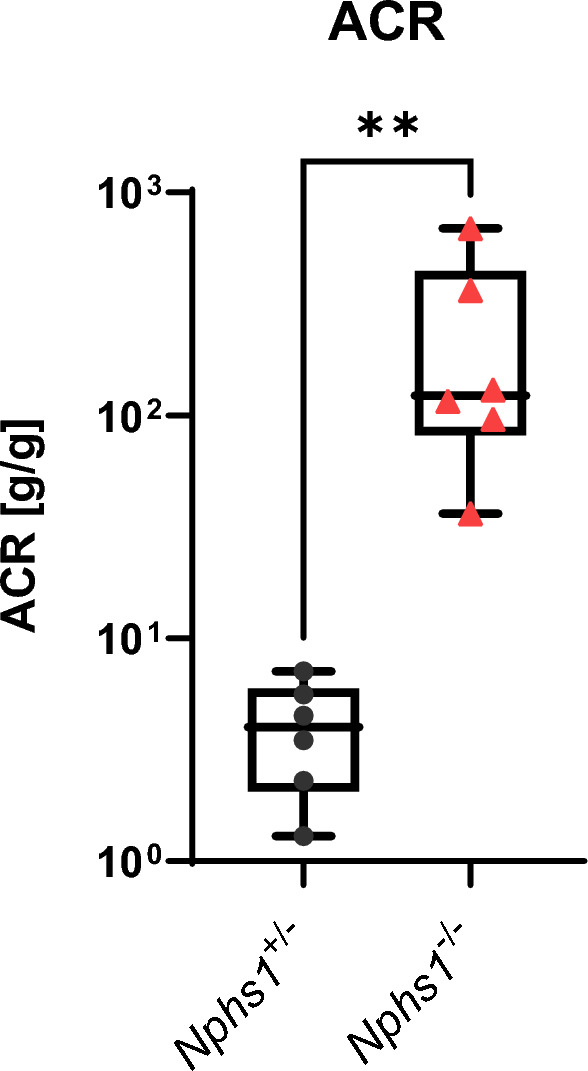 Figure 4
Peer Reviews
No public reviews on file for this paper yet. If you reviewed it on a platform where reviews are public (OpenReview, ICLR, NeurIPS, ICML), you can paste yours below so the community can read it here.
Videos
No videos yet. Explain this paper in a talk, walkthrough, or lecture? Add one.
Taxonomy
TopicsRenal Diseases and Glomerulopathies · Chronic Kidney Disease and Diabetes · Renal and related cancers