Repurposing therapy of ibrexafungerp vulvovaginal candidiasis drugs as cancer therapeutics
Tedi Rustandi, Abdul Mahmud Yumassik, Fitrah Shafran Ilahi, Riza Alfian, Erna Prihandiwati, Yugo Susanto, Yudi Hardi Susilo, Maria Ulfah, Faizatun Faizatun

Abstract
Genes, proteins, chemicals, diseases, species, mutations and cell lines named across the full text — each resolved to its canonical identifier and authoritative record.
Click any figure to enlarge with its caption.
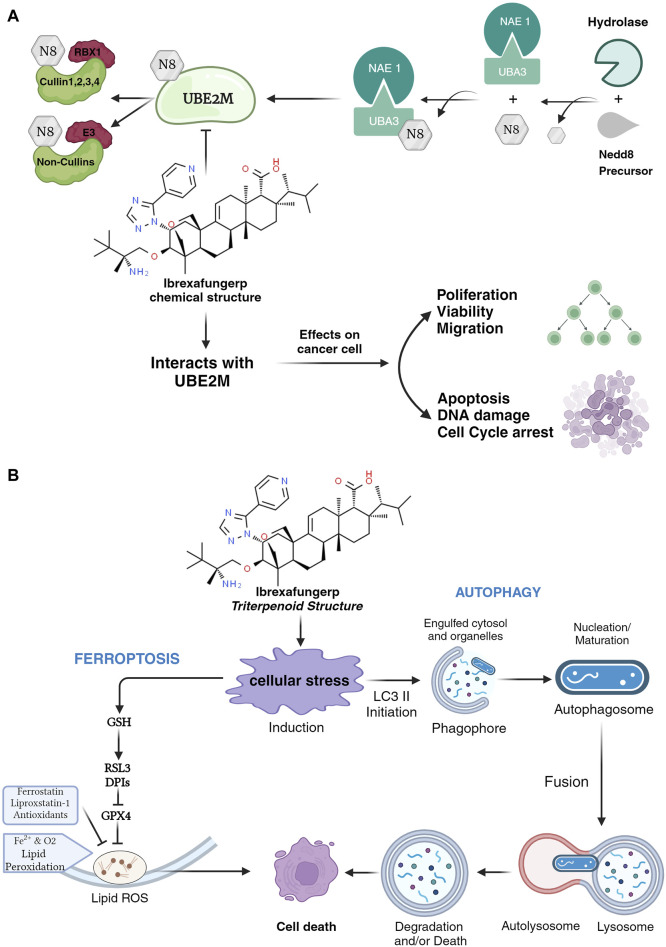 FIGURE 1
| Tools | Function | Web link | Reference |
|---|---|---|---|
| The cancer proteome Atlas V3.0 (TCPA V3.0) | Supports research to visualize and analyze Reverse phase protein arrays (RPPA) data |
|
|
| DemixTallmaterial | Supports research to estimate the proportion of specific cell types (tumor, stromal and immune cells) simultaneously |
|
|
| The Cancer Genom Atlas (TCGA) | Supports research as a Platform that has a catalog of analysis data in large groups to study cancer genetics |
|
|
| Tumor MAP | Supports research for visualization and interactive analysis in exploring patterns between tumor cells arranged relative to each other based on their molecules |
|
|
| SurvNet | Using one of the artificial intelligence (AI) methods, namely, Deep Neural Network (DNN), which is used to analyze lung cancer survival |
|
|
| METABRIC, HapMap, Lincs, KEGG, DrugBank | Identification of drug repurposing results of the best analysis for each breast cancer subtype | Not Available (NA) |
|
| shinyDeepDR | The study of personalization of cancer treatment through analysis of drug response to differences in genomic attributes |
|
|
| iODA | Tools used for heterogeneous multi-omics data analysis |
|
|
| MLSP | Bioinformatic analysis tools in breast cancer research to predict molecular subtypes and prognosis |
|
|
| DEBay | A tool that can be used in cancer research related to gene expression through quantitative PCR data deconvolution |
|
|
| The HPV Induced Cancer Resource (THInCR) | Tools used to explore the impact of HPV on cellular gene expression (mRNA and microRNA), changes in gene methylation, and their relationship to patient survival and features of the immune landscape |
|
|
| DAX-Net | The model that utilizes Convolutional Neural Network (CNN) and Transformer network for multiclass cancer classification |
|
|
| ExplORRNet | Tool for research related to miRNA expression profiles |
|
|
Peer Reviews
No public reviews on file for this paper yet. If you reviewed it on a platform where reviews are public (OpenReview, ICLR, NeurIPS, ICML), you can paste yours below so the community can read it here.
Videos
No videos yet. Explain this paper in a talk, walkthrough, or lecture? Add one.
Taxonomy
TopicsResearch on Leishmaniasis Studies · Cervical Cancer and HPV Research · Antifungal resistance and susceptibility
1 Introduction
The prevalence of cancer in 2022, according to World Health Organization (WHO) data, is 20 million new cases and 9.7 deaths. The comparison of death rates based on gender is that 1 in 9 men and 2 in 12 women die from cancer (WHO, 2024). New cancer cases in the United States (US) in 2024 will be 2,001,140, with 611,720 resulting in death (Siegel et al., 2024).
Cancer is one of the leading causes of death worldwide, with the rate of adoption of new drugs likely to be slower in clinical practice than expected. New drug development takes a long time, with an average of 13 years at a cost of ∼USD 2–3 billion (Zhang et al., 2020). This condition has global health and financial burdens (Roth et al., 2018). Discovery and development of new drugs to overcome this need to be done.
The drug repurposing method is a promising approach that will accelerate the research and development cycle. This approach is more effective in terms of cost and time than drug research and development using the de novo drug discovery approach (Tran and Prasad, 2020). Ibrexafungerp, approved by the FDA in 2021 as an antifungal derived from natural-product-based small compounds, has excellent potential to be developed using repurposing techniques to become a drug with other functions (Xu et al., 2022). The success of repurposing techniques in the development of anticancer drugs that have been approved by the FDA, such as a combination of aspirin, the antibiotic doxycycline, mifepristone, and the amino acid lysine, is used to prevent cancer metastasis (Wan et al., 2015).
The method used in this opinion article is a literature review. The literature review process uses Pubmed, Scopus, and Springer databases with criteria for articles published from 2015–2024. The article search method uses the query “repurposing therapy” AND/OR “ibrexafungerp” AND/OR “vulvovaginal candidiasis” AND/OR “cancer” AND/OR “computational screening” AND/OR “glucan synthase inhibitor” AND/OR “triterpenoid” AND/OR “ROS” AND/OR “siRNA” AND/OR “cancer mechanism” AND/OR “Tools” AND/OR “Computational” AND/OR “Artificial Intelligence” AND/OR “In Silico” AND/OR “Deep Learning” AND/OR “Machine Learning” AND/OR “bioinformatics.”
2 Mechanism ibrexafungerp for anticancer
Ibrexafungerp has antifungal activity by inhibiting (1,3)-β-D-glucan synthase (Apgar et al., 2021). This mechanism gives Ibrexafungerp a good toxicity profile in host cells. The pharmacokinetic profile of Ibrexafungerp is well-classified, with the ability to penetrate tissues and organs, such as the liver, lungs, and skin. This pharmacokinetic profile is influenced by the structure of Ibrexafungerp, which has a core phenanthropyran carboxylic acid ring system at position 15 and 2-amino-2,3,3-trimethyl-butyl ether at position 14, both of which are derivatives of the naturally occurring hemiacetal triterpene glycoside enfumafungin. The pharmacokinetic profile in animals shows that Ibrexafungerp has a 30%–50% bioavailability when administered orally and has poor penetration into the central nervous system. In vitro studies show hydroxylation metabolism by the CYP3A4 isoenzyme with primary excretion via bile. The steady-state volume of distribution (Vss) profile in humans averages 600 L with high binding to protein, mainly albumin (Apgar et al., 2021; Angulo et al., 2022).
The potential of Ibrexafungerp as a cancer therapeutics is based on the use of antifungals, which have been used as anticancer agents. Antifungals with anticancer activity include itraconazole, rapamycin, griseofulvin, clotrimazole, ciclopirox, and nannocystin A (Li et al., 2022; Mohi-ud-din et al., 2023). The mechanisms of antifungal drugs that act as anticancers include the function of increasing autophagy, reducing angiogenesis, increasing tumor regression, and reducing metastasis (Mohi-ud-din et al., 2023).
Ibrexafungerp has a mechanism as a non-competitive glucan synthase inhibitor and the exact mechanism as echinocandins as an antifungal (Jallow and Govender, 2021; Shi et al., 2023; Kumar et al., 2024). Ibrexafungerp’s activity includes a broad-spectrum anti-candida fungicide against species resistant to azole drugs. Capable Candida species associated with ibrexafungerp activity include auris, dubliniensis, glabrata, guilliermondii, keyfr, krusei, lusitaniae, parapsilosis, and tropicalis (Phillips et al., 2023). Activity as a broad-spectrum antifungal, such as Candida species, indicates that ibrexafungerp may have anticancer activity. The anticancer activity of broad-spectrum antifungals such as the triazole group, namely, itraconazole, is related to the mechanism of molecular smoothened (SMO) D477G mutations, sterol carrier protein 2 (SCP2), voltage-dependent anion channel 1 (VDAC1), and Niemann-Pick Type C 1 (NPC1) (Weng et al., 2023).
The mechanism of ibrexafungerp has the same action as micafungin, which is one of the echinocandin classes of antifungal agents. The mechanisms of action of Ibrexafungerp and micafungin as antifungals may have mechanisms similar to anticancer. The predicted mechanism of ibrexafungerp is to inhibit the neddylation process by stabilizing ubiquitin-conjugating enzyme 2 M (UBE2M). This enzyme is essential in molecular mechanisms such as DNA damage, apoptosis, and cell proliferation (Mamun et al., 2023a). The prediction of the Ibrexafungerp mechanism can be seen in Figure 1A (Mamun et al., 2023b; Mamun et al., 2023a; Yu et al., 2020b; Zheng et al., 2021; Zhou et al., 2023).
(A) Mechanism of Ibrexafungerp in inhibiting the neddylation process and (B) Mechanism of Ibrexafungerp as a ROS modulator.
Prediction of the mechanism of ibrexafungerp as a UBE2M inhibitor can inhibit the neddylation pathway which can reduce tumor-promoting factors and increase levels of tumor suppressors thereby improving the occurrence of tumors and prognosis (Zheng et al., 2021). Anticancers that target UBE2M in the neddylation process play a role in posttranslational modification mechanisms and target protein activity. The neddylation process begins with NEDD8 which is activated by E1 NEDD8-activating enzyme (NAE-consists of NAE1 and UBA3). This activation process results in the formation of the thioester-linked E1-NEDD8 complex which is then transferred to the NEDD8-conjugating enzyme (E2)/UBE2M (Yu et al., 2020b; Zheng et al., 2021). Ibrexafungerp inhibits the NEDD8 mechanism in UBE2M so that it cannot proceed to the next stage, namely, transferring NEDD8 from charged E2 to lysine residues in its target (Zhou et al., 2023).
Ibrexafungerp has a structure that belongs to the triterpenoid class (Angulo et al., 2022; Kumar et al., 2024). The triterpenoid group has the potential to be a cancer chemotherapy agent with a mechanism as a reactive oxygen species (ROS) modulator that can regulate cell survival and function. The impact of ROS on cancer cells is the mechanism of autophagy and ferroptosis (Endale et al., 2023; Jiang et al., 2021; Lee et al., 2023; Ling et al., 2022; Zeng et al., 2023). Autophagy works by causing cellular lipid accumulation and, ultimately, cell death. Another mechanism is inducing ferroptosis, which can cause increased chemosensitivity to chemotherapy drugs that are used to treat cancer cells. The mechanism of ibrexafungerp as a ROS modulator can be seen in Figure 1B (Ling et al., 2022).
3 Computational approaches ibrexafungerp
The development of ibrexafungerp as a cancer therapeutic can be done through 2 methods: experimental screening and computational (virtual) screening (Oliveira et al., 2023; Prada Gori et al., 2023; Weth et al., 2024). Experimental screening involves in vivo and in vitro research with drug-based phenotypic screens and target-based high throughput assays. Computational (virtual) screening methods include signature matching (-omics data), artificial intelligence (machine learning and deep learning), GWAS disease/target associations, and chemical similarity and molecular docking (Weth et al., 2024). A virtual screening server that can be used in computational approaches in the development of drug repurposing research, namely, DrugRep. The use of DrugRep in drug repurposing research uses receptor-based and ligand-based screening systems (Gan et al., 2023). Several tools can be used to develop anticancer from Ibrexafungerp, some of which can be seen in Table 1.
4 Conclusion
Ibrexafungerp is predicted to have two anticancer mechanisms. The anticancer mechanism is obtained by inhibiting the neddylation stage by stabilizing UBE2M, and Ibrexafungerp acts as a ROS modulator, which acts through cell death mechanisms with autophagy and ferroptosis.
The reference list from the paper itself. Each links out to its DOI / PubMed record.
- 1Angulo D. A.Alexander B.Rautemaa-Richardson R.Alastruey-Izquierdo A.Hoenigl M.Ibrahim A. S. (2022). Ibrexafungerp, a novel triterpenoid antifungal in development for the treatment of mold infections. J. Fungi 8 (11), 1121. 10.3390/jof 8111121 PMC 969596436354888 · doi ↗ · pubmed ↗
- 2Apgar J. M.Wilkening R. R.Parker D. L.Meng D.Wildonger K. J.Sperbeck D. (2021). Ibrexafungerp: an orally active β-1,3-glucan synthesis inhibitor. Bioorg. Med. Chem. Lett. 32, 127661. 10.1016/j.bmcl.2020.127661 33160023 · doi ↗ · pubmed ↗
- 3Bui D. C.Song B.Kim K.Kwak J. T. (2024). DAX-Net: a dual-branch dual-task adaptive cross-weight feature fusion network for robust multi-class cancer classification in pathology images. Comput. Methods Programs Biomed. 248, 108112. 10.1016/j.cmpb.2024.108112 38479146 · doi ↗ · pubmed ↗
- 4Chen M. J. M.Li J.Wang Y.Akbani R.Lu Y.Mills G. B. (2019). TCPA v 3.0: an integrative platform to explore the pan-cancer analysis of functional proteomic data. Mol. Cell. Proteomics 18 (8), S 15–S 25. 10.1074/mcp.RA 118.001260 31201206 PMC 6692772 · doi ↗ · pubmed ↗
- 5Devaraj V.Bose B. (2020). DE Bay: a computational tool for deconvolution of quantitative PCR data for estimation of cell type-specific gene expression in a mixed population. Heliyon 6 (7), e 04489. 10.1016/j.heliyon.2020.e 04489 32728643 PMC 7381708 · doi ↗ · pubmed ↗
- 6Endale H. T.Tesfaye W.Mengstie T. A. (2023). ROS induced lipid peroxidation and their role in ferroptosis. Front. Cell Dev. Biol. 11, 1226044. 10.3389/fcell.2023.1226044 37601095 PMC 10434548 · doi ↗ · pubmed ↗
- 7Firoozbakht F.Rezaeian I.Rueda L.Ngom A. (2022). Computationally repurposing drugs for breast cancer subtypes using a network-based approach. BMC Bioinforma. 23 (1), 143. 10.1186/s 12859-022-04662-6 PMC 902016135443626 · doi ↗ · pubmed ↗
- 8Gabriel A. A. G.Mathian E.Mangiante L.Voegele C.Cahais V.Ghantous A. (2020). A molecular map of lung neuroendocrine neoplasms. Giga Science 9 (11), giaa 112. 10.1093/gigascience/giaa 112 33124659 PMC 7596803 · doi ↗ · pubmed ↗