Paul Russell: the transcendentalist surgeon of America
Reza Abdi

TL;DR
The paper recounts an encounter with Dr. Paul Russell, a respected and humble surgeon at Massachusetts General Hospital.
Contribution
The paper provides a personal account highlighting Dr. Russell's character and demeanor in a professional setting.
Findings
Dr. Russell was described as attentive, soft-spoken, and unassuming despite his academic achievements.
He was observed standing for nearly two hours, engaging with questions in a composed manner.
The narrative emphasizes his modest and serene personality traits.
Abstract
I first met Dr. Russell in the Fall of 2000 at the Massachusetts General Hospital (MGH). I entered the Russell-Round-Room which was packed with surgeons and physicians of MGH, among whom there was no shortage of self-esteem. I came across a handsome man, full of vigor and competence, standing still for nearly two hours in the corner of the room near the blackboard. He was remarkably attentive to the questions, for which he had very concise responses. He was soft-spoken with an inviting smile, and had a welcoming, modest air about him. Despite his remarkable academic achievements, he was strikingly unassuming and serene -- features likely ingrained in his very nature.
Genes, proteins, chemicals, diseases, species, mutations and cell lines named across the full text — each resolved to its canonical identifier and authoritative record.
Click any figure to enlarge with its caption.
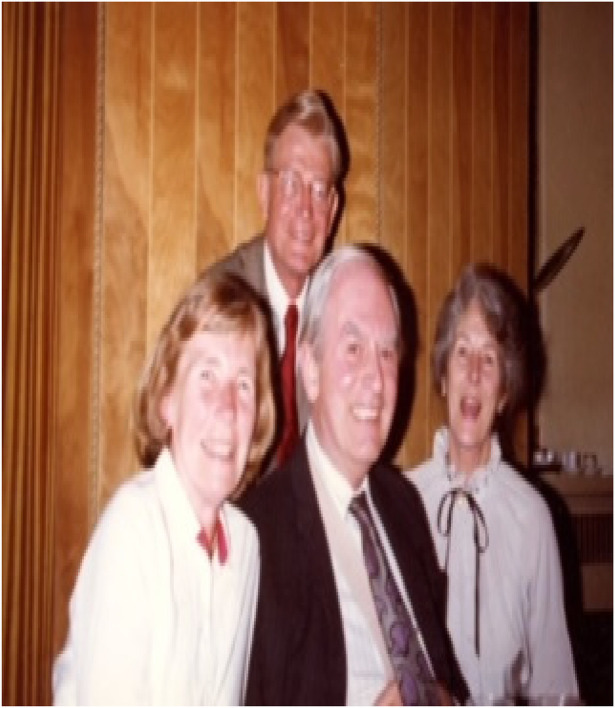 Figure 1
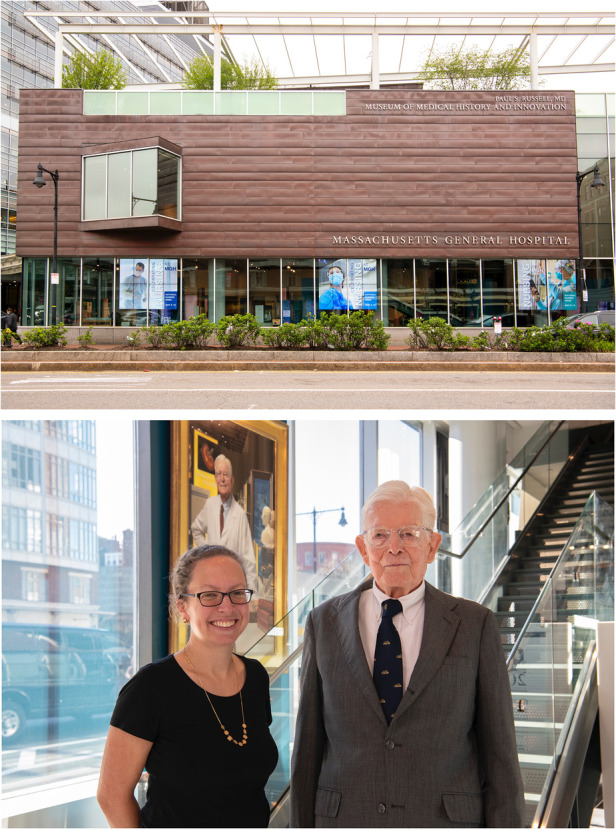 Figure 2
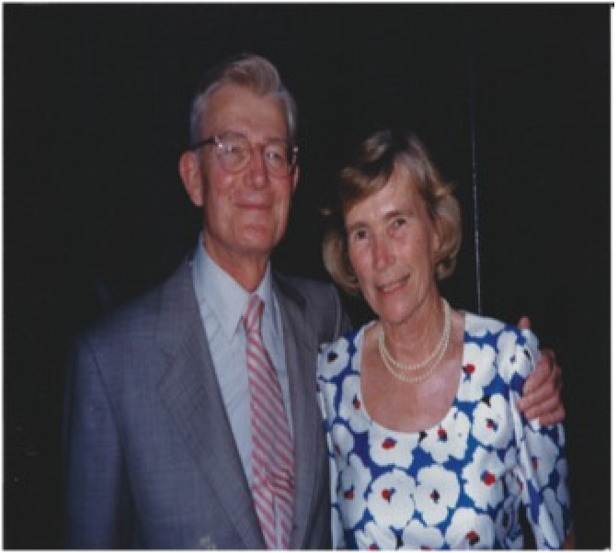 Figure 3
Peer Reviews
No public reviews on file for this paper yet. If you reviewed it on a platform where reviews are public (OpenReview, ICLR, NeurIPS, ICML), you can paste yours below so the community can read it here.
Videos
No videos yet. Explain this paper in a talk, walkthrough, or lecture? Add one.
Taxonomy
TopicsHealth and Medical Research Impacts · Innovations in Medical Education · Diversity and Career in Medicine
I first met Dr. Russell in the Fall of 2000 at the Massachusetts General Hospital (MGH). I entered the Russell-Round-Room which was packed with surgeons and physicians of MGH, among whom there was no shortage of self-esteem. I came across a handsome man, full of vigor and competence, standing still for nearly two hours in the corner of the room near the blackboard. He was remarkably attentive to the questions, for which he had very concise responses. He was soft-spoken with an inviting smile, and had a welcoming, modest air about him. Despite his remarkable academic achievements, he was strikingly unassuming and serene—features likely ingrained in his very nature.
Growing up in Iran, where one is infused with the mystical poetry of Rumi and Hafiz, I was struck by the mystic aura of a “thinker” around him. In addition to being an outstanding physician-scientist, his success in mentoring outstanding scientists and building superb programs, all very different features, were indeed indebted to his “thinker” quality which formed the foundation for a superb research environment for all comers with talent. He reminded me of the famous transcendentalist writers of Concord (MA)—Ralph Waldo Emerson and Henry David Thoreau—who were drawn to the mysticism of the East and Hafiz's poetry. Thoreau and Emerson were also, despite being at the pinnacle of their writing careers, better known for their unassailable mysticism with a wider perspective about life. Their simplicity and ingenuity were as remarkable as their intellectual greatness.
Recently, I was privileged to interview Dr. Russell. It was an inspiring and uplifting experience. He was residing at the same place as his old friend, Francis Moore, another giant of American surgical research and a key person leading the efforts to the first successful kidney transplantation in 1954. Moore had passed away long ago. It was Moore who called Dr. Russell one Sunday morning in the mid- 1960s to “say that he had heard on the radio of a patient recently admitted to the MGH who might prove to be a perfect donor of a liver for one of his patients.” A phone call led to the formation of the Boston Interhospital Organ Bank and later, the broader based New England Organ Bank and the establishment of one of the earliest systems of organ sharing for transplantation.
During our interview over Zoom, at age 97 recovering from COVID, he looked straight into the camera for two hours, gracefully poised but solid, sharply focused with his undivided attention. His memory was impeccable, and his responses were again short and to the point, all likely reflecting his lifelong characteristics. More than 20 years had passed since the first time I met him, and his soul was unaltered. He remained that larger-than-life man with vigor, sharp intellect, and above all, kindness.
Dr. Russell was born in 1925 and raised in Chicago, Illinois. It is probably unknown to many Bostonians that, some of their finest surgeons had come from the Mid-west. His father was a self-made man who became a very famous football player in 1913, played quarterback and earned All-Big Ten honors. Dr. Russell's mother, on the other hand, was an avant-garde artist who had a major role in the formation of modern dance in America. Dr. Russell was trained in the labs of two Nobel Laureates– Charles Huggins and Peter Medawar. Medawar was an unknown zoologist who was conducting experiments which were not of interest to many immunologists at that time. Medawar was then 39 years old. Medawar's reply to Dr. Russell's request for a research fellowship position was cheerfully negative that “This is an undergraduate teaching department of zoology”. Medawar's reply which described the types of ongoing projects in his lab, made it even more attractive to Dr. Russell. He used all sorts of means and eventually ended up joining Dr. Medawar's lab (Figure 1).
Most of Dr. Russell's surgery training was at MGH, where he became the Chair of the Department of Surgery and served in that role for nearly a decade. They began kidney transplantation on April 24, 1963 at MGH. His contributions to the field of clinical transplantation are enormous. Notably, he pioneered the concepts of brain death and organ donation. Dr. Russell formed one of the earliest classical academic research labs in the U.S. around preclinical and clinical models of transplantation (1–21). He recruited a scientist, Dr. Henry Winn, who was trained in the lab of the Nobel Laureate George Snell. Dr. Winn was amongst the very first immune-geneticists in pre-clinical organ transplantation research. Dr. Russell's lab attracted numerous key figures early on, not all mentioned here, including Anthony Monaco, Benedict Cosimi, David Sachs, Robert Colvin, Hugh Auchincloss, Megan Sykes and Frank Delmonico. In recognizing 200 years of evolution and innovation in medicine, MGH erected a museum named the Paul S. Russell, MD Museum of Medical History and Innovation (Figure 2).
During our interview, we went over many chapters of his life, over many of his magnificent research accomplishments, but the only time he stopped looking into the camera and gazed upward with his face shining more brightly than usual, was when I asked him about his wife. His answer this time was again brief. He described decades of living with Allene in only a few words, that “she was a wonderful woman” (Figure 3). His response and luminescent expression reminded me of a poem by the Persian Sufi Poet, Rumi: “that if you love someone with your heart and soul, there is no such thing as separation.” If I were to describe Dr. Russell with one word. I would say Optimism. He truly embodies optimism in its fullest sense and inspires others to embrace it as well.
Dr. Russell has seen it all: the unmatched efforts of Abraham Flexner who single-handedly built what then became the foundation of American Medical Research, with the financial support of Rockefeller, at the beginning of the 20th century; the peak of academic research and rise of some of the finest physician-scientists of our time. He has also been witnessing the widespread commercialization of medicine and a tsunami of cultural changes which, one way or other, are impacting American medical leadership and research. While it has been said that the generation of physician-scientists is at the verge of “extinction”, Dr. Russell remains a rarer breed still, a “physician-thinker” that we may never see again (22–24).
The reference list from the paper itself. Each links out to its DOI / PubMed record.
- 1Benson EM Colvin RB Russell PS. Induction of IA antigens in murine renal transplants. J Immunol. (1985) 134(1):7–9. 10.4049/jimmunol.134.1.73917285 · doi ↗ · pubmed ↗
- 2Billingham RE Russell PS. Studies on wound healing, with special reference to the phenomenon of contracture in experimental wounds in rabbits’ skin. Ann Surg. (1956) 144(6):961–81. 10.1097/00000658-195612000-0000513373285 PMC 1465358 · doi ↗ · pubmed ↗
- 3Cosimi AB Burton RC Colvin RB Goldstein G Delmonico FL La Quaglia MP Treatment of acute renal allograft rejection with OKT 3 monoclonal antibody. Transplantation. (1981) 32(6):535–9. 10.1097/00007890-198112000-000187041358 · doi ↗ · pubmed ↗
- 4Cosimi AB Colvin RB Burton RC Rubin RH Goldstein G Kung PC Use of monoclonal antibodies to T-cell subsets for immunologic monitoring and treatment in recipients of renal allografts. N Engl J Med. (1981) 305(6):308–14. 10.1056/NEJM 1981080630506036454075 · doi ↗ · pubmed ↗
- 5Jeannet M Pinn VW Flax MH Winn HJ Russell PS. Humoral antibodies in renal allotransplantation in man. N Engl J Med. (1970) 282(3):111–7. 10.1056/NEJM 1970011528203014902226 · doi ↗ · pubmed ↗
- 6Johnson GJ Russell PS. Reaction of human lymphocytes in culture to components of the medium. Nature. (1965) 208(5008):343–5. 10.1038/208343 a 05885444 · doi ↗ · pubmed ↗
- 7Medawar PB Russell PS. Adrenal homografts in mice, with special reference to immunological adrenalectomy. Immunology. (1958) 1(1):1–12. PMID: ; PMCID: 13513137 PMC 1423877 · pubmed ↗
- 8Monaco AP Abbott WM Othersen HB Simmons RL Wood ML Flax MH Antiserum to lymphocytes: prolonged survival of canine renal allografts. Science. (1966) 153(3741):1264–7. 10.1126/science.153.3741.12645331415 · doi ↗ · pubmed ↗