Pest categorisation of Monema flavescens
Claude Bragard, Paula Baptista, Elisavet Chatzivassiliou, Francesco Di Serio, Paolo Gonthier, Josep Anton Jaques Miret, Annemarie Fejer Justesen, Christer Sven Magnusson, Panagiotis Milonas, Juan A. Navas‐Cortes, Stephen Parnell, Roel Potting, Philippe Lucien Reignault

TL;DR
This paper assesses the risk of Monema flavescens, a caterpillar pest, to the European Union, highlighting its potential impact on plant health and the need for phytosanitary measures.
Contribution
The paper provides a comprehensive pest categorization of Monema flavescens for the EU, focusing on its biology, host range, and potential impact.
Findings
Monema flavescens is polyphagous, feeding on 51 plant species across 24 families.
The pest can establish in several EU member states due to favorable climatic conditions and widespread host plants.
Phytosanitary measures and potential biological control are identified as key strategies to mitigate its spread.
Abstract
The EFSA Panel on Plant Health performed a pest categorisation of Monema flavescens (Lepidoptera, Limacodidae), following the commodity risk assessment of Acer palmatum plants grafted on A. davidii from China, in which M. flavescens was identified as a pest of possible concern to the European Union. This species can be identified by morphological taxonomic keys and by barcoding. The adults of the overwintering generation emerge from late June to late August. The eggs are laid in groups on the underside of the host‐plant leaves, on which the larvae feed throughout their six to eight larval instars. Pupation occurs in ovoid cocoons at the junction between twigs and branches, or on the trunk. Overwintering occurs as fully grown larvae or prepupae in their cocoon. There are one or two generations per year. M. flavescens is polyphagous and feeds on broadleaves; it has been reported on 51…
Genes, proteins, chemicals, diseases, species, mutations and cell lines named across the full text — each resolved to its canonical identifier and authoritative record.
Click any figure to enlarge with its caption.
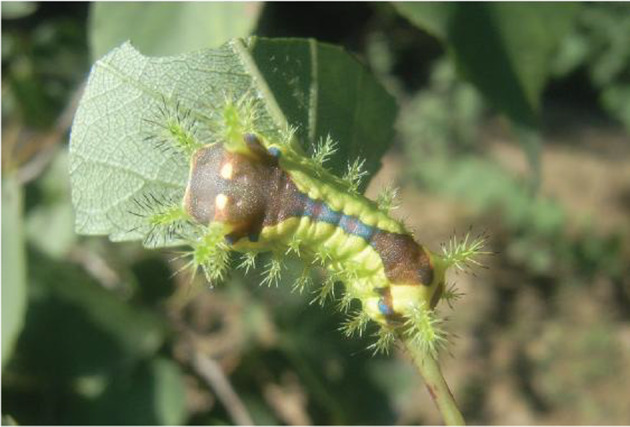 FIGURE 1
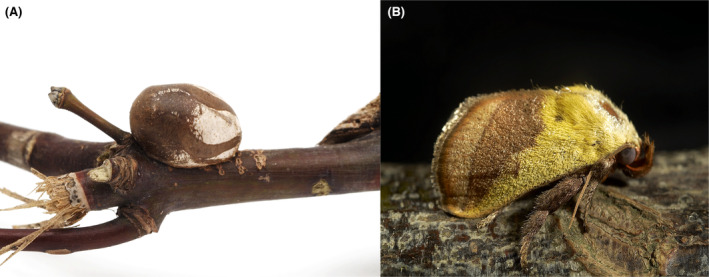 FIGURE 2
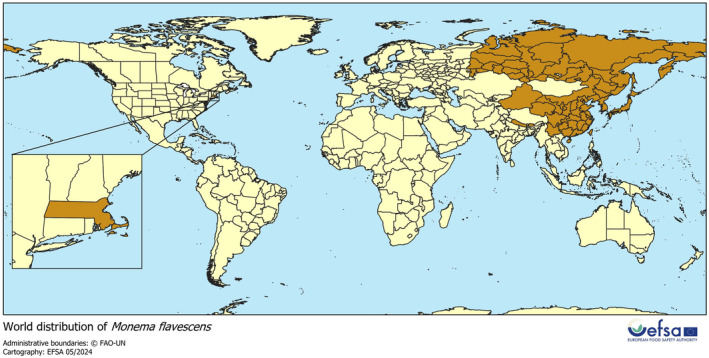 FIGURE 3
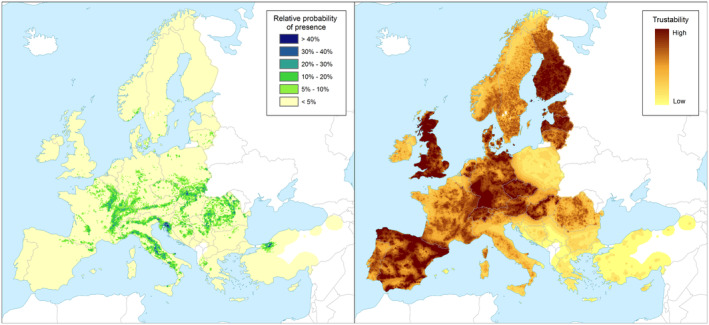 FIGURE 4
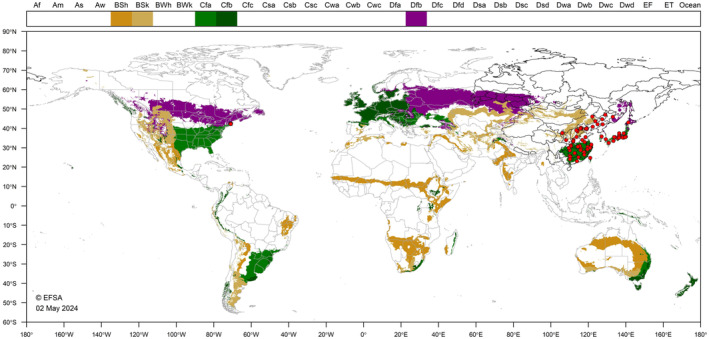 FIGURE 5
| Criterion of pest categorisation | Criterion in regulation (EU) 2016/2031 regarding union quarantine pest (article 3) |
|---|---|
| Identity of the pest (Section | Is the identity of the pest clearly defined, or has it been shown to produce consistent symptoms and to be transmissible? |
| Absence/presence of the pest in the EU territory (Section |
Is the pest present in the EU territory? If present, is the pest in a limited part of the EU or is it scarce, irregular, isolated or present infrequently? If so, the pest is considered to be not widely distributed |
|
| Is the pest able to enter into, become established in, and spread within, the EU territory? If yes, briefly list the pathways for entry and spread |
|
| Would the pests' introduction have an economic or environmental impact on the EU territory? |
|
| Are there measures available to prevent pest entry, establishment, spread or impacts? |
|
| A statement as to whether (1) all criteria assessed by EFSA above for consideration as a potential quarantine pest were met and (2) if not, which one(s) were not met |
| Life stage | Phenology and relation to host | Other relevant information |
|---|---|---|
|
| Oviposition in summer, on the underside of the leaves. 500/1000 eggs/female, laid in groups | |
|
|
6–8 larval instars Young larvae graze the underside of the leaves, older larvae skeletonize the leaves | Overwintering as either fully grown larva or prepupal stage in cocoons |
|
| In cocoons | Cocoons located on branches or trunks |
|
|
Japan (two generations/year): first generation‐adults appear in June, second generation in mid‐August USA (one generation/year): adults appear in late June and July |
|
| |||
|---|---|---|---|
| Description | CN code | Third country, group of third countries or specific area of third country | |
| 2. | Plants of |
ex 0602 10 90 ex 0602 20 20 ex 0602 20 80 ex 0602 90 41 ex 0602 90 45 ex 0602 90 46 ex 0602 90 48 ex 0602 90 50 ex 0602 90 70 ex 0602 90 99 ex 0604 20 90 ex 1404 90 00 | Third countries other than Albania, Andorra, Armenia, Azerbaijan, Belarus, Bosnia and Herzegovina, Canary Islands, Faeroe Islands, Georgia, Iceland, Liechtenstein, Moldova, Monaco, Montenegro, North Macedonia, Norway, Russia (only the following parts: Central Federal District (Tsentralny federalny okrug), Northwestern Federal District (Severo‐ Zapadny federalny okrug), Southern Federal District (Yuzhny federalny okrug), North Caucasian Federal District (Severo‐Kavkazsky federalny okrug) and Volga Federal District (Privolzhsky federalny okrug)), San Marino, Serbia, Switzerland, Türkiye, Ukraine and the United Kingdom |
| 3. | Plants of |
ex 0602 10 90 ex 0602 20 20 ex 0602 20 80 ex 0602 90 41 ex 0602 90 45 ex 0602 90 46 ex 0602 90 48 ex 0602 90 50 ex 0602 90 70 ex 0602 90 99 ex 0604 20 90 ex 1404 90 00 | Third countries other than Albania, Andorra, Armenia, Azerbaijan, Belarus, Bosnia and Herzegovina, Canary Islands, Faeroe Islands, Georgia, Iceland, Liechtenstein, Moldova, Monaco, Montenegro, North Macedonia, Norway, Russia (only the following parts: Central Federal District (Tsentralny federalny okrug), Northwestern Federal District (Severo‐ Zapadny federalny okrug), Southern Federal District (Yuzhny federalny okrug), North Caucasian Federal District (Severo‐Kavkazsky federalny okrug) and Volga Federal District (Privolzhsky federalny okrug)), San Marino, Serbia, Switzerland, Türkiye, Ukraine and the United Kingdom |
| 8. |
Plants for planting of […]
|
ex 0602 10 90 ex 0602 20 20 ex 0602 20 80 ex 0602 40 00 ex 0602 90 41 ex 0602 90 45 ex 0602 90 46 ex 0602 90 47 ex 0602 90 48 ex 0602 90 50 ex 0602 90 70 ex 0602 90 91 ex 0602 90 99 | Third countries other than Albania, Andorra, Armenia, Azerbaijan, Belarus, Bosnia and Herzegovina, Canary Islands, Faeroe Islands, Georgia, Iceland, Liechtenstein, Moldova, Monaco, Montenegro, North Macedonia, Norway, Russia (only the following parts: Central Federal District (Tsentralny federalny okrug), Northwestern Federal District (Severo‐ Zapadny federalny okrug), Southern Federal District (Yuzhny federalny okrug), North Caucasian Federal District (Severo‐Kavkazsky federalny okrug) and Volga Federal District (Privolzhsky federalny okrug)), San Marino, Serbia, Switzerland, Türkiye, Ukraine and the United Kingdom |
| 9. | Plants for planting of |
ex 0602 10 90 ex 0602 20 20 ex 0602 90 30 ex 0602 90 41 ex 0602 90 45 ex 0602 90 46 ex 0602 90 48 ex 0602 90 50 ex 0602 90 70 ex 0602 90 91 ex 0602 90 99 | Third countries other than Albania, Algeria, Andorra, Armenia, Australia, Azerbaijan, Belarus, Bosnia and Herzegovina, Canada, Canary Islands, Egypt, Faeroe Islands, Georgia, Iceland, Israel, Jordan, Lebanon, Libya, Liechtenstein, Moldova, Monaco, Montenegro, Morocco, New Zealand, North Macedonia, Norway, Russia (only the following parts: Central Federal District (Tsentralny federalny okrug), Northwestern Federal District (Severo‐Zapadny federalny okrug), Southern Federal District (Yuzhny federalny okrug), North Caucasian Federal District (Severo‐ Kavkazsky federalny okrug) and Volga Federal District (Privolzhsky federalny okrug)), San Marino, Serbia, Switzerland, Syria, Tunisia, Türkiye, Ukraine, the United Kingdom (1) and United States other than Hawaii |
| 11. |
Plants of |
ex 0602 10 90 ex 0602 20 20 0602 20 30 ex 0602 20 80 ex 0602 90 45 ex 0602 90 46 ex 0602 90 47 ex 0602 90 50 ex 0602 90 70 ex 0602 90 91 ex 0602 90 99 ex 0604 20 90 ex 1404 90 00 | All third countries |
| Pathways (e.g. host/intended use/source) | Life stage | Relevant mitigations [e.g. prohibitions (Annex VI), special requirements (Annex VII) or phytosanitary certificates (Annex XI) within Implementing Regulation 2019/2072] |
|---|---|---|
| Plants for planting | Cocoons on branches and trunks eggs | Plants for planting that are hosts of |
| Cut branches | Cocoons on branches eggs | Introduction of foliage, branches and other parts of plants of various hosts without flowers or flower buds, being goods of a kind suitable for bouquets or for ornamental purposes, fresh) from third countries require a phytosanitary certificate (Regulation 2019/2072, Annex XI, Part A) |
| Crop | Code | 2018 | 2019 | 2020 | 2021 | 2022 |
|---|---|---|---|---|---|---|
| Apples | F1110 | 506.27 | 491.08 | 489.19 | 492.56 | 477.98 |
| Cherries | F1240 | 175.49 | 176.30 | 178.61 | 175.71 | 175.31 |
| Plums | F1250 | 153.43 | 154.51 | 160.38 | 157.68 | 156.63 |
| Chestnuts | F4400 | 132.72 | 142.55 | 145.36 | 141.15 | 144.17 |
| Peaches | F1210 | 150.80 | 144.78 | 138.31 | 133.06 | 129.37 |
| Pears | F1120 | 113.54 | 110.66 | 108.29 | 106.96 | 103.09 |
| Raspberries | F3200 | 41.37 | 41.10 | 29.03 | 30.50 | 31.92 |
| Control measure/risk reduction option | RRO summary | Risk element targeted (entry/establishment/spread/impact) |
|---|---|---|
|
|
Plant or plant product comes from country officially free from pest, Pest free area, Pest free place of production (e.g. place of production and its immediate vicinity is free from pest over an appropriate time period, e.g. since the beginning of the last complete cycle of vegetation, or past 2 or 3 cycles). Pest free production site | Entry/Spread |
|
| This measure covers possible exclusion conditions that could be implemented to isolate the crop from pests and if applicable relevant vectors. E.g. a dedicated structure such as glass or plastic greenhouses.
Place of production is insect proof Originate in a place of production with complete physical isolation | Entry (reduce contamination/infestation)/Spread |
|
|
Plants collected directly from natural habitats, have been grown, held and trained for at least 2 consecutive years prior to dispatch in officially registered nurseries, which are subject to an officially supervised control regime | Entry (reduce contamination/infestation)/Spread |
|
| Roguing is defined as the removal of infested plants and/or uninfested host plants in a delimited area, whereas pruning is defined as the removal of infested plant parts only without affecting the viability of the plant.
Plants which have shown symptoms giving rise to the suspicion of contamination by the pests have been rogued out at that place and the plants have undergone appropriate treatment to rid them of specified pests | Entry/Spread/Impact |
|
|
Classical biological control Two family‐specific natural enemies are known: the fly | Entry/Establishment/Spread/Impact |
|
| A mixture of Avermectin 5% and Cypermethrin SRP 8% is used in nurseries against larvae of | Entry/Establishment/Spread/Impact |
|
| This measure covers the following categories of physical treatments: irradiation/ionisation; mechanical cleaning (brushing, washing); sorting and grading, and; removal of plant parts (e.g. debarking wood). The following treatments are not addressed under this measure: heat and cold treatment; roguing and pruning.
Mechanical removal of cocoons is possible | Entry/Spread |
|
|
Treatment of the waste (deep burial, composting, incineration, chipping, production of bio‐energy, etc.) in authorised facilities and official restriction on the movement of waste | Establishment/Spread |
|
| Controlled temperature treatments aimed to kill or inactivate pests without causing any unacceptable prejudice to the treated material itself. The measures covered here are autoclaving, steam, hot water, hot air, and cold treatment.
Thermal treatments appear difficult. Prepupae suffer little mortality at temperatures as low as −31° (Clausen, | Entry/Spread |
|
| Specific requirements for mode and timing of transport of commodities to prevent escape of the pest and/or contamination.
Insect‐proof physical protection of consignment Timing of transport/trade, restricted to periods when all cocoons have hatched (late summer to early autumn) | Entry |
|
| Treatment of plants by storage in a modified atmosphere (including modified humidity, O2, CO2, temperature, pressure) | Entry/Spread (via commodity) |
|
| Post‐entry quarantine for 1 year | Entry/Establishment/Spread |
| Supporting measure | Summary | Risk element targeted (entry/establishment/spread/impact) |
|---|---|---|
|
|
ISPM 5 (FAO, The effectiveness of sampling and subsequent inspection to detect pests may be enhanced by including trapping and luring techniques | Establishment/Spread |
|
| Examination, other than visual, to determine if pests are present using official diagnostic protocols. Diagnostic protocols describe the minimum requirements for reliable diagnosis of regulated pests | Entry/Spread |
|
|
According to ISPM 31 (FAO, For inspection, testing and/or surveillance purposes the sample may be taken according to a statistically based or a non‐statistical sampling methodology | Entry/Spread |
|
|
According to ISPM 5 (FAO, a) export certificate (import) b) plant passport (EU internal trade) | Entry/Spread |
|
| Mandatory/voluntary certification/approval of premises is a process including a set of procedures and of actions implemented by producers, conditioners and traders contributing to ensure the phytosanitary compliance of consignments. It can be a part of a larger system maintained by the NPPO in order to guarantee the fulfilment of plant health requirements of plants and plant products intended for trade. Key property of certified or approved premises is the traceability of activities and tasks (and their components) inherent the pursued phytosanitary objective. Traceability aims to provide access to all trustful pieces of information that may help to prove the compliance of consignments with phytosanitary requirements of importing countries | Entry/Spread |
|
| Plants come from within an approved propagation scheme and are certified pest free (level of infestation) following testing; Used to mitigate against pests that are included in a certification scheme | Entry/Spread |
|
| ISPM 5 (FAO, | Spread |
|
| Surveillance to guarantee that plants and produce originate from a Pest Free Area could be an option | Spread |
| Criterion of pest categorisation | Panel's conclusions against criterion in regulation (EU) 2016/2031 regarding union quarantine pest | Key uncertainties |
|---|---|---|
|
| The identity of the pest is clearly defined | None |
|
| The pest is absent from the EU territory | None |
|
| The pest is able to enter, establish and spread in the EU territory. Its main pathway is plants for planting | None |
|
| Impact could be expected if contrary to what occurs in native areas and in the US, where native or introduced parasitoids successfully control the pest, native or introduced natural enemies would not exert the same control | None |
|
| Measures exist to prevent pest entry, establishment, spread or impacts | None |
|
| All criteria assessed by EFSA above for consideration as a potential quarantine pest are met | |
| Aspects of assessment to focus on/scenarios to address in future if appropriate: | Focused impact studies could clarify the present uncertainty | |
Peer Reviews
No public reviews on file for this paper yet. If you reviewed it on a platform where reviews are public (OpenReview, ICLR, NeurIPS, ICML), you can paste yours below so the community can read it here.
Videos
No videos yet. Explain this paper in a talk, walkthrough, or lecture? Add one.
Taxonomy
TopicsInsect Pest Control Strategies · Insect-Plant Interactions and Control · Dengue and Mosquito Control Research
INTRODUCTION
1
Background and Terms of Reference as provided by the requestor
1.1
Background
1.1.1
The new Plant Health Regulation (EU) 2016/2031, on the protective measures against pests of plants, is applying from 14 December 2019. Conditions are laid down in this legislation in order for pests to qualify for listing as Union quarantine pests, protected zone quarantine pests or Union regulated non‐quarantine pests. The lists of the EU regulated pests together with the associated import or internal movement requirements of commodities are included in Commission Implementing Regulation (EU) 2019/2072. Additionally, as stipulated in the Commission Implementing Regulation 2018/2019, certain commodities are provisionally prohibited to enter in the EU (high risk plants, HRP). EFSA is performing the risk assessment of the dossiers submitted by exporting to the EU countries of the HRP commodities, as stipulated in Commission Implementing Regulation 2018/2018. Furthermore, EFSA has evaluated a number of requests from exporting to the EU countries for derogations from specific EU import requirements.
In line with the principles of the new plant health law, the European Commission with the Member States are discussing monthly the reports of the interceptions and the outbreaks of pests notified by the Member States. Notifications of an imminent danger from pests that may fulfil the conditions for inclusion in the list of the Union quarantine pest are included. Furthermore, EFSA has been performing horizon scanning of media and literature.
As a follow‐up of the above‐mentioned activities (reporting of interceptions and outbreaks, HRP, derogation requests and horizon scanning), a number of pests of concern have been identified. EFSA is requested to provide scientific opinions for these pests, in view of their potential inclusion by the risk manager in the lists of Commission Implementing Regulation (EU) 2019/2072 and the inclusion of specific import requirements for relevant host commodities, when deemed necessary by the risk manager.
Terms of reference
1.1.2
EFSA is requested, pursuant to Article 29(1) of Regulation (EC) No 178/2002, to provide scientific opinions in the field of plant health.
EFSA is requested to deliver 53 pest categorisations for the pests listed in Annex 1A, 1B, 1D and 1E (for more details see mandate M‐2021‐00027 on the Open.EFSA portal). Additionally, EFSA is requested to perform pest categorisations for the pests so far not regulated in the EU, identified as pests potentially associated with a commodity in the commodity risk assessments of the HRP dossiers (Annex 1C; for more details see mandate M‐2021‐00027 on the Open.EFSA portal). Such pest categorisations are needed in the case where there are not available risk assessments for the EU.
When the pests of Annex 1A are qualifying as potential Union quarantine pests, EFSA should proceed to phase 2 risk assessment. The opinions should address entry pathways, spread, establishment, impact and include a risk reduction options analysis.
Additionally, EFSA is requested to develop further the quantitative methodology currently followed for risk assessment, in order to have the possibility to deliver an express risk assessment methodology. Such methodological development should take into account the EFSA Plant Health Panel Guidance on quantitative pest risk assessment and the experience obtained during its implementation for the Union candidate priority pests and for the likelihood of pest freedom at entry for the commodity risk assessment of High Risk Plants.
Interpretation of the Terms of Reference
1.2
Monema flavescens is one of a number of pests relevant to Annex 1C of the Terms of Reference (ToR) to be subject to pest categorisation to determine whether it fulfils the criteria of a potential Union quarantine pest (QP) for the area of the EU excluding Ceuta, Melilla and the outermost regions of Member States referred to in Article 355(1) of the Treaty on the Functioning of the European Union (TFEU), other than Madeira and the Azores, and so inform EU decision making as to its appropriateness for potential inclusion in the lists of pests of Commission Implementing Regulation (EU) 2019/ 2072. If a pest fulfils the criteria to be potentially listed as a Union QP, risk reduction options will be identified.
Additional information
1.3
This pest categorisation was initiated following the commodity risk assessment of Acer palmatum plants grafted on A. davidii from China (EFSA PLH Panel, 2022) in which M. flavescens was identified as a relevant non‐regulated EU pest which could potentially enter the EU on Acer spp. plants.
A large amount of the information in this categorisation has been published in the above commodity risk assessment (EFSA PLH Panel, 2022). This information, when relevant, has been largely reproduced here, with modifications when deemed useful, and additional information from a literature search since 2022.
DATA AND METHODOLOGIES
2
Data
2.1
Literature search
2.1.1
A literature search on M. flavescens was conducted at the beginning of the categorisation in the ISI Web of Science bibliographic database, using the scientific name of the pest as search term (Appendix A). Papers relevant for the pest categorisation were reviewed, and further references and information were obtained from experts, as well as from citations within the references and grey literature.
Database search
2.1.2
Pest information, on host(s) and distribution, was retrieved from the CABI Crop Protection Compendium (CABI, online) and scientific literature databases as referred above in Section 2.1.1.
Data about the import of commodity types that could potentially provide a pathway for the pest to enter the EU and about the area of hosts grown in the EU were obtained from EUROSTAT (Statistical Office of the European Communities).
The Europhyt and TRACES databases were consulted for pest‐specific notifications on interceptions and outbreaks. Europhyt is a web‐based network run by the Directorate General for Health and Food Safety (DG SANTÉ) of the European Commission as a subproject of PHYSAN (Phyto‐Sanitary Controls) specifically concerned with plant health information. TRACES is the European Commission's multilingual online platform for sanitary and phytosanitary certification required for the importation of animals, animal products, food and feed of non‐animal origin and plants into the European Union, and the intra‐EU trade and EU exports of animals and certain animal products. Up until May 2020, the Europhyt database managed notifications of interceptions of plants or plant products that do not comply with EU legislation, as well as notifications of plant pests detected in the territory of the Member States and the phytosanitary measures taken to eradicate or avoid their spread. The recording of interceptions switched from Europhyt to TRACES in May 2020.
GenBank was searched to determine whether it contained any nucleotide sequences for Monema flavescens which could be used as reference material for molecular diagnosis. GenBank® (www.ncbi.nlm.nih.gov/genbank/) is a comprehensive publicly available database that as of August 2019 (release version 227) contained over 6.25 trillion base pairs from over 1.6 billion nucleotide sequences for 450,000 formally described species (Sayers et al., 2020).
Methodologies
2.2
The Panel performed the pest categorisation for M. flavescens, following guiding principles and steps presented in the EFSA guidance on quantitative pest risk assessment (EFSA PLH Panel, 2018), the EFSA guidance on the use of the weight of evidence approach in scientific assessments (EFSA Scientific Committee, 2017) and the International Standards for Phytosanitary Measures No. 11 (FAO, 2013).
The criteria to be considered when categorising a pest as a potential Union QP is given in Regulation (EU) 2016/2031 Article 3 and Annex I, Section 1 of the Regulation. Table 1 presents the Regulation (EU) 2016/2031 pest categorisation criteria on which the Panel bases its conclusions. In judging whether a criterion is met, the Panel uses its best professional judgement (EFSA Scientific Committee, 2017) by integrating a range of evidence from a variety of sources (as presented above in Section 2.1) to reach an informed conclusion as to whether or not a criterion is satisfied.
The Panel's conclusions are formulated respecting its remit and particularly with regard to the principle of separation between risk assessment and risk management (EFSA founding regulation (EU) No 178/2002); therefore, instead of determining whether the pest is likely to have an unacceptable impact, deemed to be a risk management decision, the Panel will present a summary of the observed impacts in the areas where the pest occurs, and make a judgement about potential likely impacts in the EU. Whilst the Panel may quote impacts reported from areas where the pest occurs in monetary terms, the Panel will seek to express potential EU impacts in terms of yield and quality losses and not in monetary terms, in agreement with the EFSA guidance on quantitative pest risk assessment (EFSA PLH Panel, 2018). Article 3 (d) of Regulation (EU) 2016/2031 refers to unacceptable social impact as a criterion for QP status. Assessing social impact is outside the remit of the Panel.
PEST CATEGORISATION
3
Identity and biology of the pest
3.1
Identity and taxonomy
3.1.1
Is the identity of the pest clearly defined, or has it been shown to produce consistent symptoms and/or to be transmissible?
Yes, the pest is known as Monema flavescens Walker. However, the synonym Cnidocampa flavescens Dyar, is still regularly used, even in recent literature causing some confusion.
M. flavescens Walker, 1855 is an insect of the family Limacodidae, order Lepidoptera. It is commonly known as the oriental moth (EFSA PLH Panel, 2022; Pan et al., 2013).
Several synonyms exist: Cnidocampa flavescens, Cnidocampa johanibergmani, Knidocampa flavescens, Miresa flavescens, Monema flavescens var. nigrans, Monema melli, Monema nigrans (Dyar, 1909; EFSA PLH Panel, 2022; Pan et al., 2013).
The synonym, Cnidocampa flavescens Dyar, 1905, is still frequently found in the literature, including publications dating around one century from that description (e.g. Tang ZhiXiang, 2001; Lammers & Stigter, 2004; Huang et al., 2010; Yuan et al., 2015; Peng et al., 2017), which is a cause of confusion.
The EPPO code1 (EPPO, 2019; Griessinger & Roy, 2015) for this species is: CNIDFL (EPPO, online).
Biology of the pest
3.1.2
This section has largely drawn from EFSA PLH Panel (2022).
M. flavescens develops through four life stages: egg, larva, pupa and adult (Collins, 1933; Dyar, 1909) (Figures 1, 2A,B). During the summer, recently emerged females use a sex pheromone to attract males for mating (Shibasaki et al., 2013; Yang, 2022; Yang et al., 2016). Mated females lay between 500 and 1000 eggs on the underside of the leaves (Clausen, 1978; Collins, 1933). The eggs are laid in masses (Clausen, 1978). They hatch in about 1 week. The larvae live through 6 to 8 instars. Young larvae feed on small patches of green tissue from the underside of the leaf. Instead, the older larvae consume the entire leaf except for the main veins (Collins, 1933). After some time, the fully grown larva stops feeding and moves from the leaf to the bark of the tree, usually to axils of twigs and branches, where it forms its cocoon (Collins, 1933). Cocoons can be found also on trunks (Furukawa et al., 2017). Pupation occurs in the spring, and adults emerge from the cocoons during summer (Collins, 1933). Adults are active at night and fly only short distances (Dowden, 1946).
Larva of Monema flavescens (Size: 18–24 mm. Source: Pan et al. (2013). CC BY 3.0, https://commons.wikimedia.org/w/index.php?curid=26502833).
(A) Monema flavescens cocoon intercepted in the UK on Acer palmatum imported from China and (B) the adult that emerged (Image courtesy of Fera).
Depending on environmental conditions, there are between one (e.g. in USA) and two (e.g. in Japan) generations per year (Collins, 1933; Yamada, 1992). The overwintering stage is either fully grown larva or prepupal stage in cocoons located in axils of twigs and branches (Clausen, 1978). In USA, the adults appear during late June and July. Cocoons are formed between early August and early October. The larvae within the cocoons transform to pupae in May (Collins, 1933; Dowden, 1946). In Japan, the first generation‐adults appear in June and the second generation in mid to late August (Yamada, 1992).
Table 2 summarises key features of the life history of M. flavescens.
Host range/species affected
3.1.3
According to EFSA PLH Panel (2022), host plants of M. flavescens are Acer spp., A. palmatum, A. platanoides, A. pseudoplatanus, Betula lenta, B. nigra, Castanea spp., C. crenata, C. sativa, Celtis spp., Citrus reticulata, Diospyros spp., D. malabarica, Gleditsia triacanthos, Hicoria spp., Juglans spp., J. regia, Malus spp., Platanus spp., Populus spp., Prunus spp., Pyrus spp., Quercus spp., Q. acutissima, Q. serrata, Q. variabilis, Rhamnus spp., Salix spp., S. chaenomeloides, Ulmus spp., Zelkova sp., Z. serrata and Ziziphus sp. (CABI, online; Collins, 1933; EUROPHYT, online; Lammers & Stigter, 2004; Robinson et al., online).
The moth was reported to attack blueberry plants (Vaccinium spp.) in South Korea (Choi et al., 2018), Ziziphus jujuba in China (Tang ZhiXiang, 2001), Diospyros kaki (Togashi & Ishikawa, 1994) and Salix subfragilis in Japan (Yamada, 1992).
According to Furukawa et al. (2017) in Japan, the overwintering cocoons were found on additional plant species such as Acer buergerianum, Alnus hirsuta var. sibirica, Cerasus x yedoensis, C. spachiana var. spachiana, Cercis chinensis, Cornus kousa, Diospyros kaki, Eriobotrya japonica, Hamamelis japonica, Lagerstroemia indica, Photinia glabra, Styrax japonica and Ulmus parvifolia.
A full list of host plants is provided in Appendix B.
Intraspecific diversity
3.1.4
Pan et al. (2013) described one subspecies based on morphological characters, Monema flavescens rubriceps (Matsumura).
Japanese and Chinese populations of M. flavescens differ in their responses to sex pheromone blends (see Section 3.1.5 below).
Detection and identification of the pest
3.1.5
Are detection and identification methods available for the pest?
Yes, the pest can be detected directly or remotely by its symptoms and adults can be captured using pheromone traps. Identification keys are available.
Detection
Visual detection. The fully grown larvae and cocoons have very distinctive features (see below). The damage of the mature larvae is also conspicuous: only the main veins remain from the otherwise fully consumed leaves. The cocoons are usually located on the axils of twigs and branches and can be found also on the trunks.
Remote sensing. In the Republic of Korea, the cocoons have been successfully detected during specifically designed winter aerial surveys of Zelkova trees using a drone equipped with a camera sensitive to visible light, 3–5 m above the canopy, with an accuracy and precision higher to that of conventional ground surveys (Park et al., 2021).
Pheromones. An attractive blend of female sex pheromones has been identified in Japan (Shibasaki et al., 2013). It proved inactive in China, but another, locally active blend was successfully tested (Yang, 2022; Yang et al., 2016). It is unknown whether these pheromones are commercially available.
Identification
Morphological identification. Pan et al. (2013) provide an identification key for the species of the genus Monema, and Dyar (1909) describes very precisely all stages of M. flavescens. The eggs are oval, flattened, transparent and their size is about 1.8 × 1.2 mm. The first instar larva is semi‐transparent/white and approximately the same length as the eggs. With each moult, the larva takes on a greater variety of colours (Collins, 1933). Details on each larval instar can be found in Dyar (1909). The fully grown larva has spiny horns and a very striking appearance, with yellow, blue, green, and purple markings (Collins, 1933). Its length is about 18–24 mm (Dyar, 1909). The cocoon is greyish brown with white markings, smooth, hard and oval, resembling a small bird's egg (Collins, 1933). According to Furukawa et al. (2017), there are two types of cocoons: bold striped (entirely covered with black and white stripes) and non‐bold striped (entirely or partly covered with nonbold stripes, or entirely brownish). The adult is light yellow (thorax and inner portion of the wings above) and light reddish brown (other portions of the body and wings) (Collins, 1933). Wing expanse is 35–39 mm in adult females and 30–32 mm in adult males (Pan et al., 2013).
Molecular identification. The complete mitochondrial genome of M. flavescens has been sequenced by Liu et al. (2016) and Peng et al. (2017).
Pest distribution
3.2
Pest distribution outside the EU
3.2.1
M. flavescens mainly occurs in Asia: Bhutan (Peng et al., 2017); China (Yang et al., 2016; Zhao and Chen, 1992); the Democratic People's Republic of Korea (Kawada, 1930); Japan (Asahina et al., 1954; Dowden, 1946; Peng et al., 2017; Shibasaki et al., 2013; Togashi & Ishikawa, 1994; Yamada, 1992; Yang et al., 2016); Nepal (Peng et al., 2017); the Republic of Korea (Peng et al., 2017); Russia (Eastern Siberia) (Yang et al., 2016); Taiwan (Kawada, 1930).
In the United States, the species is restricted to Massachusetts (Dowden, 1946) (Figure 3, Appendix C). The distribution of the pest appears stable since the early 1900s. The fact that there is no recent record of occurrence raises uncertainty as to the presence of M. flavescens in the country.
Global distribution of Monema flavescens (Source: literature; for details see Appendix C).
Pest distribution in the EU
3.2.2
Is the pest present in the EU territory? If present, is the pest in a limited part of the EU or is it scarce, irregular, isolated or present infrequently? If so, the pest is considered to be not widely distributed. No, the pest is absent from the EU territory.
Regulatory status
3.3
Commission Implementing Regulation 2019/2072
3.3.1
M. flavescens is not listed in Annex II of Commission Implementing Regulation (EU) 2019/2072, an implementing act of Regulation (EU) 2016/2031, or in any emergency plant health legislation.
Hosts or species affected that are prohibited from entering the Union from third countries
3.3.2
According to the Commission Implementing Regulation (EU) 2019/2072, Annex VI, introduction of several M. flavescens hosts in the Union from certain third countries is prohibited (Table 3). However, plants for planting of Cydonia Mill., Malus Mill., Prunus L. and Pyrus L. and their hybrids, and […] other than seeds (i.e. item 9.), are permitted from United States where M. flavescens is present.
Entry, establishment and spread in the EU
3.4
Entry
3.4.1
Is the pest able to enter into the EU territory? If yes, identify and list the pathways. Comment on plants for planting as a pathway.Yes, the pest is able to enter the EU on plants for planting and cut branches. It has been intercepted as cocoons on plants for planting.The main pathway for entry is plants for planting with cocoons attached.
Potential entry pathways are listed in Table 4.
Acer L., Alnus L., Castanea Mill., Diospyros L., Juglans L., Malus Mill., Populus L., Prunus L, Quercus L., Salix L., and Ulmus L., host plants of M. flavescens, are included in the list of high‐risk plants (EU 2018/2019) whose introduction is prohibited until a third country‐specific full risk assessment has been carried out.
Notifications of interceptions of harmful organisms began to be compiled in Europhyt in May 1994 and in TRACES in May 2020. As at 19.3.2024, there were no records of interception of M. flavescens in the Europhyt and TRACES databases.
Lammers and Stigter (2004) report that 'the [Dutch] Plant Protection Service intercepted M. flavescens reported as Cnidocampa flavescens “several times” in consignments of Acer and Zelkova plants originating from Asian countries'. M. flavescens was also intercepted once on Ziziphus sp. plants originating from China to Canada (Lammers & Stigter, 2004, citing others). The pest has also been intercepted as cocoons on Acer palmatum in the UK (DEFRA, unpublished).
Establishment
3.4.2
Is the pest able to become established in the EU territory?
Yes, following entry on plants for planting, M. flavescens could become established in the EU as the hosts are available and the climate in most of the EU is suitable.
Climatic mapping is the principal method for identifying areas that could provide suitable conditions for the establishment of a pest taking key abiotic factors into account (Baker, 2002). Availability of hosts is considered in Section 3.4.2.1. Climatic factors are considered in Section 3.4.2.2.
EU distribution of main host plants
3.4.2.1
The main hosts of the pest cultivated in the EU between 2018 and 2022 are shown in Table 5. M. flavescens can attack 51 species belonging to 24 families. Among others, apples, cherries, plums, peaches, pears are important crops in the EU. M. flavences also attacks plants of Acer spp. which are present in the EU (Figure 4).
Left panel: Relative probability of the presence (RPP) of the genus Acer in Europe, mapped at 100 km2 resolution. The underlying data are from European‐wide forest monitoring data sets and from national forestry inventories based on standard observation plots measuring in the order of hundreds m2. RPP represents the probability of finding at least one individual of the taxon in a standard plot placed randomly within the grid cell. For details, see Appendix C (courtesy of JRC, 2017). Right panel: Trustability of RPP. This metric expresses the strength of the underlying information in each grid cell and varies according to the spatial variability in forestry inventories. The colour scale of the trustability map is obtained by plotting the cumulative probabilities (0–1) of the underlying index (for details on methodology, see Appendix D).
Climatic conditions affecting establishment
3.4.2.2
The climate in the current area of distribution of the pest is well represented in the EU, especially the Köppen‐Geiger climatic zones Cfa, Cfb and Dfb, and to a lesser extent Bsh and Bsk (Kottek et al., 2006). Collectively these zones are represented in 66.5% of EU 27 five arcmin grid cells (MacLeod & Korycinska, 2019) (Figure 5).
World distribution of five Köppen–Geiger climate types that occur in the EU and which occur in countries where Monema flavescens has been reported.
Spread
3.4.3
Describe how the pest would be able to spread within the EU territory following establishment?
Comment on plants for planting as a mechanism of spread. Yes, the pest could spread within the EU territory following establishment, either by flight or with plants for planting. The main pathway for spread is plants for planting with cocoons attached.
The moth, following introduction to the USA, spread only 25–30 miles during the first 40 years (Dowden, 1946). Intriguingly, to date, it still appears confined to Massachusetts.
Impacts
3.5
Would the pests' introduction have an economic or environmental impact on the EU territory? Yes, impact could be expected if contrary to what occurs in native areas and in the US, where native or introduced parasitoids successfully control the pest, native or introduced natural enemies would not exert the same control.
The moth was reported to attack blueberry plants (Vaccinium spp.) in South Korea (Choi et al., 2018), Ziziphus jujuba in China (Tang ZhiXiang, 2001), Diospyros kaki (Togashi & Ishikawa, 1994) and Salix subfragilis in Japan (Yamada, 1992). According to EFSA PLH Panel (2022), M. flavescens causes damage to its hosts occasionally. In Japan the moth causes defoliation of host trees only rarely, because it is controlled by its parasitoid Praestochrysis (= Chrysis) shanghaiensis. In Russia, it is sometimes a pest in gardens and nurseries (Lammers & Stigter, 2004). In the early 20th century in the USA, the moth caused tree defoliation, including Prunus, Pyrus and Acer platanoides (Collins, 1933; Dowden, 1946). Since 1946, there is no record of a serious damage caused by M. flavescens in Massachusetts. An introduced and established parasitoid from Japan, Chaetexorista javana Brauer & Bergenstamm (Diptera, Tachinidae) may have an impact on the population density of the moth in the USA (Dowden, 1946; Lammers & Stigter, 2004).
Recognising that natural enemies prevent M. flavescens being regarded as a pest in Asia, there is uncertainty regarding the magnitude of potential impact in EU depending on the influence of natural enemies present in the EU, and the possibility to introduce specific natural enemies from the area of origin.
The larvae of M. flavescens have urticating spines that cause serious irritation and inflammation in human skin (Collins, 1933; Dowden, 1946; Lammers & Stigter, 2004).
Available measures and their limitations
3.6
Are there measures available to prevent pest entry, establishment, spread or impacts such that the risk becomes mitigated? Yes, see Sections 3.3.2, 3.4.1 and 3.6.1.
Identification of potential additional measures
3.6.1
Phytosanitary measures (prohibitions) are currently applied to some host plants for planting (see Section 3.3.2).
Additional potential risk reduction options and supporting measures are shown in Sections 3.6.1.1 and 3.6.1.2.
Additional potential risk reduction options
3.6.1.1
Potential additional control measures are listed in Table 6.
Additional supporting measures
3.6.1.2
Potential additional supporting measures are listed in Table 7.
Biological or technical factors limiting the effectiveness of measures
3.6.1.3
The effectiveness of biocontrol in the EU would be delayed if natural enemies from outside the EU had to be introduced. Recognising the time taken to identify appropriate natural enemies, pre‐emptive biocontrol (to select, screen and potentially pre‐approve natural enemies prior to a pest establishing) could be implemented as part of a contingency plan.
Uncertainty
3.7
No key uncertainties have been identified.
CONCLUSIONS
4
Monema flavescens satisfies all the criteria that are within the remit of EFSA to assess for it to be regarded as a potential Union quarantine pest (Table 8).
GLOSSARYContainment (of a pest)Application of phytosanitary measures in and around an infested area to prevent spread of a pest (FAO, 2023).Control (of a pest)Suppression, containment or eradication of a pest population (FAO, 2023).Entry (of a pest)Movement of a pest into an area where it is not yet present, or present but not widely distributed and being officially controlled (FAO, 2023).Eradication (of a pest)Application of phytosanitary measures to eliminate a pest from an area (FAO, 2023).Establishment (of a pest)Perpetuation, for the foreseeable future, of a pest within an area after entry (FAO, 2023).GreenhouseA walk‐in, static, closed place of crop production with a usually translucent outer shell, which allows controlled exchange of material and energy with the surroundings and prevents release of plant protection products (PPPs) into the environment.HitchhikerAn organism sheltering or transported accidentally via inanimate pathways including with machinery, shipping containers and vehicles; such organisms are also known as contaminating pests or stowaways (Toy & Newfield, 2010).Impact (of a pest)The impact of the pest on the crop output and quality and on the environment in the occupied spatial units.Introduction (of a pest)The entry of a pest resulting in its establishment (FAO, 2023).PathwayAny means that allows the entry or spread of a pest (FAO, 2023).Phytosanitary measuresAny legislation, regulation or official procedure having the purpose to prevent the introduction or spread of quarantine pests, or to limit the economic impact of regulated non‐quarantine pests (FAO, 2023).Quarantine pestA pest of potential economic importance to the area endangered thereby and not yet present there, or present but not widely distributed and being officially controlled (FAO, 2023).Risk reduction option (RRO)A measure acting on pest introduction and/or pest spread and/or the magnitude of the biological impact of the pest should the pest be present. A RRO may become a phytosanitary measure, action or procedure according to the decision of the risk managerSpread (of a pest)Expansion of the geographical distribution of a pest within an area (FAO, 2023).
ABBREVIATIONSEPPOEuropean and Mediterranean Plant Protection OrganisationFAOFood and Agriculture OrganisationIPPCInternational Plant Protection ConventionISPMInternational Standards for Phytosanitary MeasuresMSMember StatePLHEFSA Panel on Plant HealthPZProtected ZoneTFEUTreaty on the Functioning of the European UnionToRTerms of Reference
CONFLICT OF INTEREST
If you wish to access the declaration of interests of any expert contributing to an EFSA scientific assessment, please contact [email protected].
REQUESTOR
European Commission
QUESTION NUMBER
EFSA‐Q‐2023‐00344
COPYRIGHT FOR NON‐EFSA CONTENT
EFSA may include images or other content for which it does not hold copyright. In such cases, EFSA indicates the copyright holder and users should seek permission to reproduce the content from the original source. Figure 1: Courtesy of Pan et al. (2013) CC BY 3.0, Figure 2A, 2B: Courtesy of Fera.
PANEL MEMBERS
Claude Bragard, Paula Baptista, Elisavet Chatzivassiliou, Francesco Di Serio, Paolo Gonthier, Josep Anton Jaques Miret, Annemarie Fejer Justesen, Alan MacLeod, Christer Sven Magnusson, Panagiotis Milonas, Juan A. Navas‐Cortes, Stephen Parnell, Roel Potting, Philippe L. Reignault, Emilio Stefani, Hans‐Hermann Thulke, Wopke Van der Werf, Antonio Vicent Civera, Jonathan Yuen, and Lucia Zappalà.
MAP DISCLAIMER
The designations employed and the presentation of material on any maps included in this scientific output do not imply the expression of any opinion whatsoever on the part of the European Food Safety Authority concerning the legal status of any country, territory, city or area or of its authorities, or concerning the delimitation of its frontiers or boundaries.
The reference list from the paper itself. Each links out to its DOI / PubMed record.
- 1Asahina, E. , Aoki, K. , & Shinozaki, J. (1954). The freezing process of frost‐hardy caterpillars. Bulletin of Entomological Research, 45(2), 329–339.
- 2Baker, R. H. A. (2002). Predicting the limits to the potential distribution of alien crop pests. In G. J. Hallman & C. P. Schwalbe (Eds.), Invasive arthropods in agriculture: Problems and solutions (pp. 207–241). Science Publishers Inc.
- 3Bossard, M. , Feranec, J. , & Otahel, J. (2000). CORINE land cover technical guide ‐ addendum 2000. Technical Report 40. European Environment Agency. https://www.eea.europa.eu/ds_resolveuid/032TFUPGVR
- 4Büttner, G. , Kosztra, B. , Maucha, G. , & Pataki, R. (2012). Implementation and achievements of CLC 2006. Technical report. European Environment Agency. https://www.eea.europa.eu/ds_resolveuid/GQ 4JECM 8TB
- 5CABI (Centre for Agriculture and Bioscience International) . (online). CABI. Crop Protection Compendium. https://www.cabi.org/cpc/
- 6Cai, P. , Bai, L. J. , Xiang, R. L. , & Zhang, L. (2005). The biological characteristics of the leading pests of loquat and their control. South China Fruits, 2, 38–41.
- 7Choi, S. H. , Jeong, M. G. , & Lee, D. W. (2018). Insecticidal activity of plant extracts against lepidopteran insect pests (Latoia hilarata, Monema flavescens and Euproctis similis) in blueberry. The Korean Journal of Pesticide Science, 22, 255–260. 10.7585/kjps.2018.22.4.255 · doi ↗
- 8Clausen, C. P. (1978). Limacodidae. Oriental moth (Cnidocampa flavescens (Walker)). In: Introduced parasites and predators of arthropod pests and weeds: A world review. Agriculture Handbook, 480, 193–194.