Editorial: Searching for causes of infertility: from pathophysiologic mechanisms to therapeutic strategies
Marzena Kamieniczna, Marta Olszewska, Agnieszka Malcher, Tomasz Stokowy, Sezgin Gunes

Abstract
Genes, proteins, chemicals, diseases, species, mutations and cell lines named across the full text — each resolved to its canonical identifier and authoritative record.
Click any figure to enlarge with its caption.
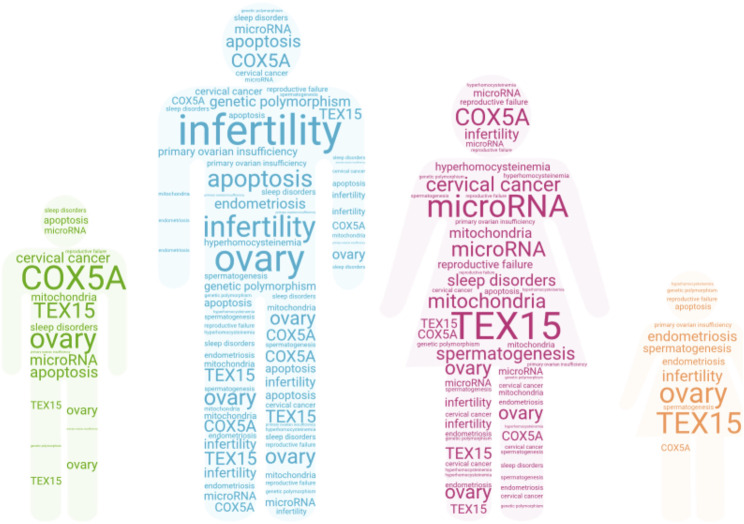 Figure 1
Peer Reviews
No public reviews on file for this paper yet. If you reviewed it on a platform where reviews are public (OpenReview, ICLR, NeurIPS, ICML), you can paste yours below so the community can read it here.
Videos
No videos yet. Explain this paper in a talk, walkthrough, or lecture? Add one.
Taxonomy
TopicsReproductive Biology and Fertility · Prenatal Screening and Diagnostics · Assisted Reproductive Technology and Twin Pregnancy
Reproductive disorders are global health problems affecting millions of people worldwide. In humans, infertility is indeed a very serious disease that disturbs also mental health. In animals, it is not such a big problem, unless it involves, i.e., extinct species or precious specimens for the environment, farming, forestry, etc. In both humans and animals, it reflects abnormalities at many levels of the very complicated fertilization process. The search for the causes of the lack of offspring focuses primarily on the gametes themselves—their fusion is the most important step in the fertilization process. The health of gametes depends on so many factors that it seems improbable that we reproduce.
The discovery of new pathophysiological mechanisms affecting fertilization is a continuous process forced by the progress of methods. The innovative techniques used, e.g., advanced genomic analysis and functional experiments, provide robust evidence and insights into the genetic basis of reproductive health. Animal models greatly help to study of the fertilization process mechanisms.
The investigation of genetic factors is currently the most promising type of biological research. Here, we recommend a collection of interesting publications on reproductive disorders, cervical cancer and male infertility. We hope that cognition of specific genetic variants and an understanding of the mechanisms involved in reproduction will refine the choice of therapies and contribute to global improvements in human and animal reproductive health.
Three publications in this collection deal with the most serious dysfunctions of the female reproductive tract related to endometriosis, premature expiration of ovarian function, and cervical cancer. Studies of genetic variants indicate new polymorphisms that are candidates as potential biomarkers and could become new therapeutic targets. The publication by Chen et al. concerns genetic polymorphisms in the world’s most common cervical cancer in women. The authors investigated the association between specific genetic variations (SNPs) in microRNA genes involved in the PI3K/Akt signaling pathway and susceptibility to cervical cancer. Numerous researchers have pointed out that these dysregulated microRNAs could play an important role in cervical cancer development (Hillyar et al., 2023; Shen et al., 2020). Some of the stage-specific microRNAs can also be used as biomarkers for cancer classification and monitoring the progression of cervical cancer (Causin et al., 2021). Chen showed that rs107822 of miR-219a and rs2292832 of miR-149 were associated with cervical cancer risk, indicating a potential role of microRNAs in cervical cancer development. They predicted that miR-219a could target integrins (ITGA and ITGB) that participate in the activation of the PI3K/Akt signaling pathway. Thus, the function of these two SNPs in cervical cancer development should be investigated and verified in the future.
In the paper of Wan et al. the association between three WTAP (Wilms tumor 1-associated protein) gene polymorphisms and ovarian endometriosis risk in Chinese women was addressed. Results indicated that specific WTAP variants may increase susceptibility to ovarian endometriosis among Chinese women. They found that the rs1853259G variant genotypes significantly increased, whereas the rs7766006T variant decreased the association with ovarian endometriosis risk and were correlated with the WTAP expression level.
Premature ovarian insufficiency is characterized by early loss of ovarian function before the age of 40 years. This disease has genetic basis. The relationship between novel CLPP (caseinolytic mitochondrial matrix peptidase proteolytic subunit) gene variation and premature ovarian insufficiency was investigated by Yuan et al. Results suggested that novel CLPP gene variant affects mitochondrial function and triggers granulosa cell apoptosis, potentially contributing to the pathogenesis of premature ovarian insufficiency.
Women’s health is important not only for procreation but also for the health of the offspring Suszynska-Zajczyk et al. investigated the effects of maternal hyperhomocysteinemia induced by a high-methionine diet on the health of their offspring. Elevated homocysteine levels, are a known risk factor for cardiovascular, renal, and neurological diseases as well as pregnancy complications. Results suggested sex-dependent effects on cognition, muscle strength, and breeding outcomes in offspring. A high-metionine diet impairs memory and cognition in female juveniles and weakens muscle strength in male pups. These effects may stem from abnormal placental function affecting early neurogenesis, dysregulation of autophagy-related pathways in the cortex, or epigenetic mechanisms of gene regulation triggered by hyperhomocysteinemia during embryonic development.
Men’s health and the disturbances on the reproductive process are presented the next two publications. Qureshi et al. used whole-exome and genome sequencing to identify novel, clinically significant variants in testis-expressed gene 15 (TEX15) in unrelated men with spermatogenic failure (oligozoospermia, nonobstructive azoospermia). The authors found that recessive loss-of-function TEX15 mutations are associated with spermatogenic failures (meiotic double-strand break repair) in humans and a knockout male mice model.
Lu et al. investigated the association of sleep traits with male fertility, such as the relationship between sleep-related traits (chronotype, sleep duration, insomnia, snoring, dozing, daytime nap, oversleeping, and undersleeping), abnormal sperm or bioavailable testosterone levels using Mendelian randomization analysis. Results suggested a potential link between genetically predicted chronotype and testosterone levels, but no significant association was observed between other sleep traits and male fertility. The authors point out that the human biological clock may be important in reducing the risk of male infertility.
A common Research Topic among all listed studies is the investigation of genetic factors and their impact on various aspects of reproductive health and disease. Using advanced genomic techniques, these studies explored the role of genetic variations (single nucleotide polymorphisms (SNPs) or gene mutations) in conditions such as: cervical cancer, male fertility, spermatogenic failure, premature ovarian insufficiency, endometriosis, and hyperhomocysteinemia-induced deficits in offspring. They also highlighted the importance of understanding the genetic basis of reproductive disorders for improving diagnosis, prognosis, and potential therapeutic interventions. In summary, genetic factors play a significant role in the development and progression of various reproductive disorders, and studying these factors can provide valuable insights into their underlying mechanisms and potential clinical implications (Nagirnaja et al., 2022; Malcher et al., 2022; Turkyilmaz et al., 2022). Despite focusing on different conditions, all studies investigated how genetic variations contribute to disease susceptibility or reproductive health outcomes. Each study contributes valuable insights to its respective field, highlighting the complex interplay among genetics, environmental factors, and disease susceptibility or reproductive health.
The reference list from the paper itself. Each links out to its DOI / PubMed record.
- 1Causin R. L.Freitas A. J. A.Trovo Hidalgo Filho C. M.Reis R. D.Reis R. M.Marques M. M. C. (2021). A systematic review of Micro RN As involved in cervical cancer progression. Cells 10 (3), 668. 10.3390/cells 10030668 33803022 PMC 8002658 · doi ↗ · pubmed ↗
- 2Hillyar C. R.Kanabar S. S.Pufal K. R.Saw Hee J. L.Lawson A. W.Mohamed Y. (2023). A systematic review and meta-analysis of mi RN As for the detection of cervical cancer. Epigenomics 15 (10), 593–613. 10.2217/epi-2023-0183 37535320 · doi ↗ · pubmed ↗
- 3Kina B. G.Topbas Selcuki N. F.Bahat P. Y.Usta T.Aydin S.Rahmioglu N. (2024). Whole exome sequencing reveals novel candidate variants for endometriosis utilizing multiple affected members in a single family. Mol. Genet. Genomic Med. 12 (1), e 2312. 10.1002/mgg 3.2312 38013616 PMC 10767589 · doi ↗ · pubmed ↗
- 4Linder A.Westbom-Fremer S.Mateoiu C.Olsson W. A.Österlund T.Veerla S. (2024). Genomic alterations in ovarian endometriosis and subsequently diagnosed ovarian carcinoma. Hum. Reprod. 39 (5), 1141–1154. 10.1093/humrep/deae 043 38459814 PMC 11063555 · doi ↗ · pubmed ↗
- 5Malcher A.Stokowy T.Berman A.Olszewska M.Jedrzejczak P.Sielski D. (2022). Whole-genome sequencing identifies new candidate genes for nonobstructive azoospermia. Andrology 10 (8), 1605–1624. 10.1111/andr.13269 36017582 PMC 9826517 · doi ↗ · pubmed ↗
- 6Nagirnaja L.Lopes A. M.Charng W. L.Miller B.Stakaitis R.Golubickaite I. (2022). Diverse monogenic subforms of human spermatogenic failure. Nat. Commun. 13 (1), 7953. 10.1038/s 41467-022-35661-z 36572685 PMC 9792524 · doi ↗ · pubmed ↗
- 7Shen S.Zhang S.Liu P.Wang J.Du H. (2020). Potential role of micro RN As in the treatment and diagnosis of cervical cancer. Cancer Genet. 248-249, 25–30. 10.1016/j.cancergen.2020.09.003 32987255 · doi ↗ · pubmed ↗
- 8Turkyilmaz A.Alavanda C.Ates E. A.Geckinli B. B.Polat H.Gokcu M. (2022). Whole-exome sequencing reveals new potential genes and variants in patients with premature ovarian insufficiency. J. Assist. Reprod. Genet. 39 (3), 695–710. 10.1007/s 10815-022-02408-0 35066699 PMC 8995228 · doi ↗ · pubmed ↗