Predictors of Outcomes in Cerebellar Stroke: A Retrospective Cohort Study From the National Inpatient Sample Data
Ankita Prasad, Vinod Nookala, Riddhi Machchar, Jamarc R Simon, Lakshmi A Nakka, Twisha Vanamala, Sonia Mehta, Aishwarya Ramesh, Amber L Schilling, Christopher S Hollenbeak, Pramil Cheriyath

TL;DR
This study identifies factors affecting outcomes in cerebellar stroke patients, such as age, race, and hospital admission type, using U.S. hospital data from 2010 to 2015.
Contribution
The study provides a large-scale analysis of predictors for mortality, hospital stay, and costs in cerebellar stroke patients using the National Inpatient Sample.
Findings
Older age and non-emergency department admissions are linked to higher mortality in cerebellar stroke patients.
Race, geographic location, and insurance type significantly influence outcomes and hospital costs.
Mortality is associated with longer hospital stays and higher costs, while commercial insurance and lower comorbidities reduce costs.
Abstract
Cerebellar strokes have high morbidity and mortality due to bleeding or edema, leading to increased pressure in the posterior fossa. This retrospective cohort study analyzed three outcomes following a cerebellar stroke: in-hospital mortality, length of hospital stay, and total hospitalization costs. It uses data from the National Inpatient Sample (NIS) and aims to identify the predictors of outcomes in cerebellar stroke patients, including 464,324 patients, 18 years of age and older, hospitalized between 2010 and 2015 in US hospitals with cerebellar strokes. In our study, for every decade age increased beyond 59 years, there was a significant increase in mortality; those aged 80+ years had 5.65 odds of mortality (95% CI: 5.32-6.00; P < 0.0001). Significant differences in patient characteristics were observed between patients who survived to discharge and those who did not, including…
Genes, proteins, chemicals, diseases, species, mutations and cell lines named across the full text — each resolved to its canonical identifier and authoritative record.
Click any figure to enlarge with its caption.
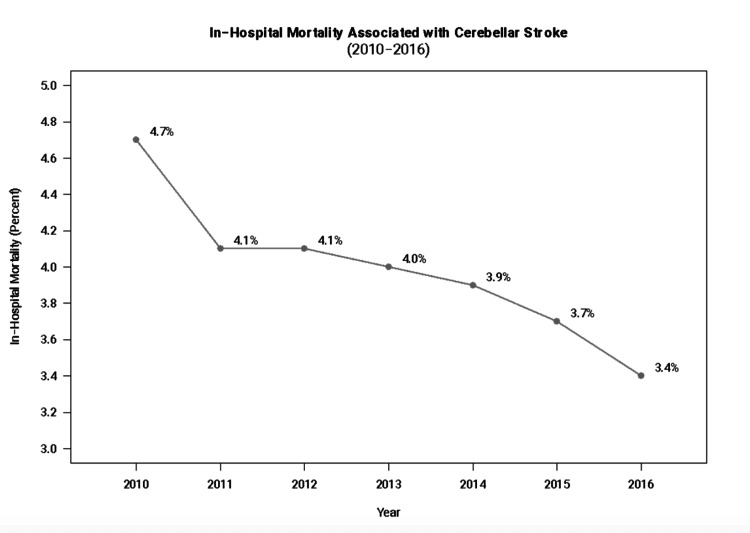 Figure 1
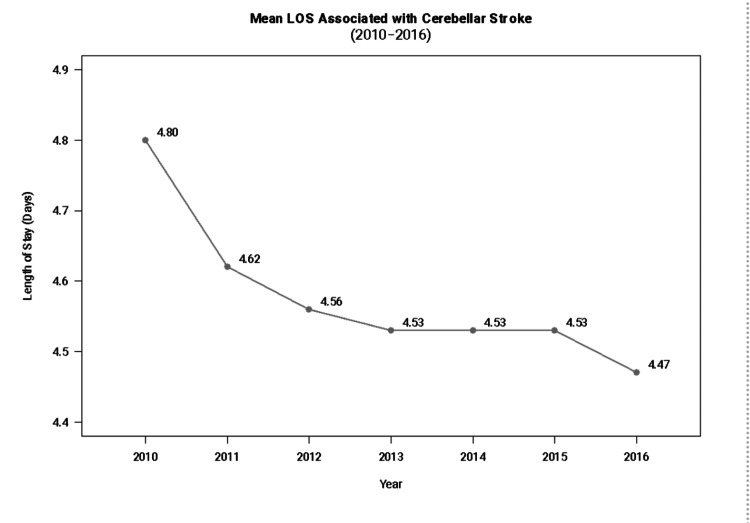 Figure 2
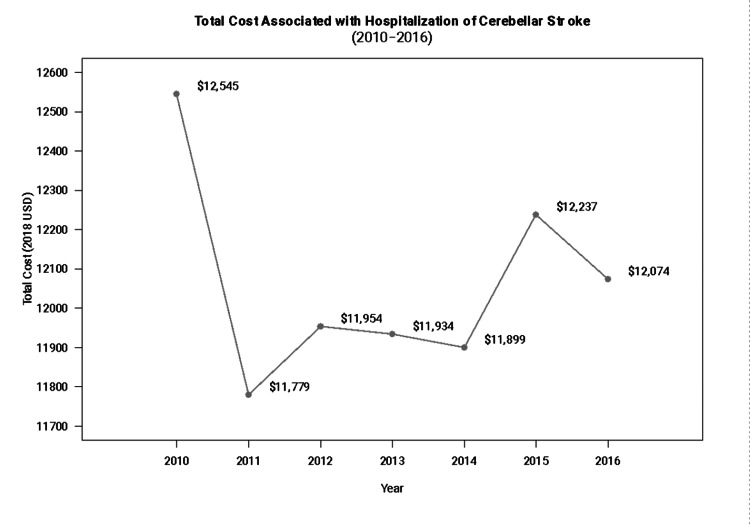 Figure 3
Peer Reviews
No public reviews on file for this paper yet. If you reviewed it on a platform where reviews are public (OpenReview, ICLR, NeurIPS, ICML), you can paste yours below so the community can read it here.
Videos
No videos yet. Explain this paper in a talk, walkthrough, or lecture? Add one.
Taxonomy
TopicsAcute Ischemic Stroke Management · Cerebrovascular and Carotid Artery Diseases · Cerebral Venous Sinus Thrombosis