Sulfasalazine-Induced Epstein–Barr Virus-Positive Mucocutaneous Ulcer
Cedric Stabel, F. J. Sherida H. Woei-A-Jin, Thomas Tousseyn, Maria Garmyn

TL;DR
This paper reports a rare case of an Epstein-Barr virus-related skin ulcer possibly caused by the drug sulfasalazine.
Contribution
The paper introduces sulfasalazine as a potential trigger for EBV-positive mucocutaneous ulcers.
Findings
EBV-positive mucocutaneous ulcers are a rare manifestation of EBV-driven lymphoproliferative disorders.
Sulfasalazine may contribute to the development of such ulcers in some patients.
The case highlights the need for awareness of EBV reactivation in immunomodulated settings.
Abstract
Epstein–Barr virus (EBV) may cause a wide spectrum of symptomatology in humans ranging from asymptomatic upper respiratory tract infection to infectious mononucleosis and in more severe cases lymphoproliferative disorders or hemophagocytic lymphohistiocytosis. Its neoplastic potential is higher in immunocompromised individuals. We describe a case of EBV-positive mucocutaneous ulcer, a more indolent clinical entity on the spectrum of EBV-driven lymphoproliferative disorders, and are one of the first to put sulfasalazine, an immunomodulatory agent, forward as the possible culprit.
Genes, proteins, chemicals, diseases, species, mutations and cell lines named across the full text — each resolved to its canonical identifier and authoritative record.
Click any figure to enlarge with its caption.
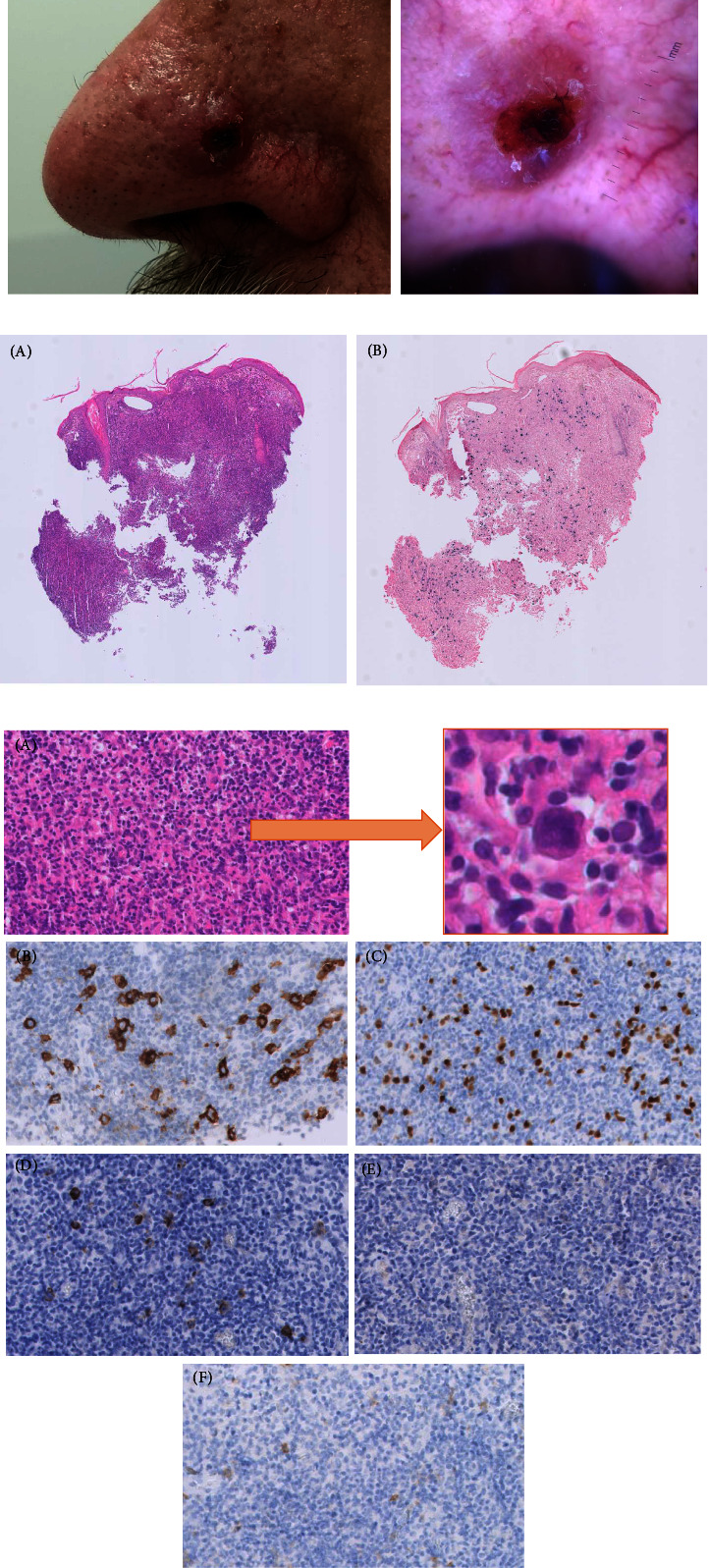 Figure 1
Peer Reviews
No public reviews on file for this paper yet. If you reviewed it on a platform where reviews are public (OpenReview, ICLR, NeurIPS, ICML), you can paste yours below so the community can read it here.
Videos
No videos yet. Explain this paper in a talk, walkthrough, or lecture? Add one.
Taxonomy
TopicsCutaneous lymphoproliferative disorders research · Eosinophilic Disorders and Syndromes · Autoimmune and Inflammatory Disorders