Epidaure Market–Effectiveness and transferability of a school-based intervention to improve healthy and sustainable food choices by schoolchildren: Protocol of a randomized controlled trial and qualitative study
Aurélie Curnier, Marie Cholley-Gomez, Florian Lecêtre, Audrey Peteuil, Nicolas Meunier-Beillard, Leslie Fonquerne, Lucy Darras, Sabrina Eymard-Duvernay, Caroline Méjean, Cyrille Delpierre, Vanessa Cottet, Florence Cousson-Gélie, Vanessa Carels, Vanessa Carels

TL;DR
This study tests a school-based program to encourage healthier and more sustainable food choices among middle school students in France.
Contribution
The study introduces a novel school-based intervention combining scientific evidence with experiential knowledge to promote sustainable diets.
Findings
The intervention includes teaching sessions and a virtual supermarket game integrated into the school curriculum.
Effectiveness is being evaluated through a cluster randomized controlled trial with multiple assessment points.
The study also assesses the program's transferability for nationwide implementation in French middle schools.
Abstract
At least 40% of cancers are linked to environmental or behavioral factors, and dietary behavior appears to be a major lever. Epidaure Market is a prevention initiative developed using a method for co-constructing health promotion initiatives and prevention programs that stratifies evidence from the scientific literature and combines it with experiential knowledge (DEVA, TPB, BCT). It promotes a sustainable diet (i.e., healthy, ecological and ethical nutrition) among 5th and 4th grade students during the crucial period of adolescence, when these behaviors are often far from the recommendations. The protocol implemented was carried out in 72 middle school classes in the Montpellier and Dijon academies. The intervention included teaching sessions and a virtual supermarket game, integrated into the school curriculum and delivered by science teachers. Effectiveness is tested in a cluster…
Genes, proteins, chemicals, diseases, species, mutations and cell lines named across the full text — each resolved to its canonical identifier and authoritative record.
Click any figure to enlarge with its caption.
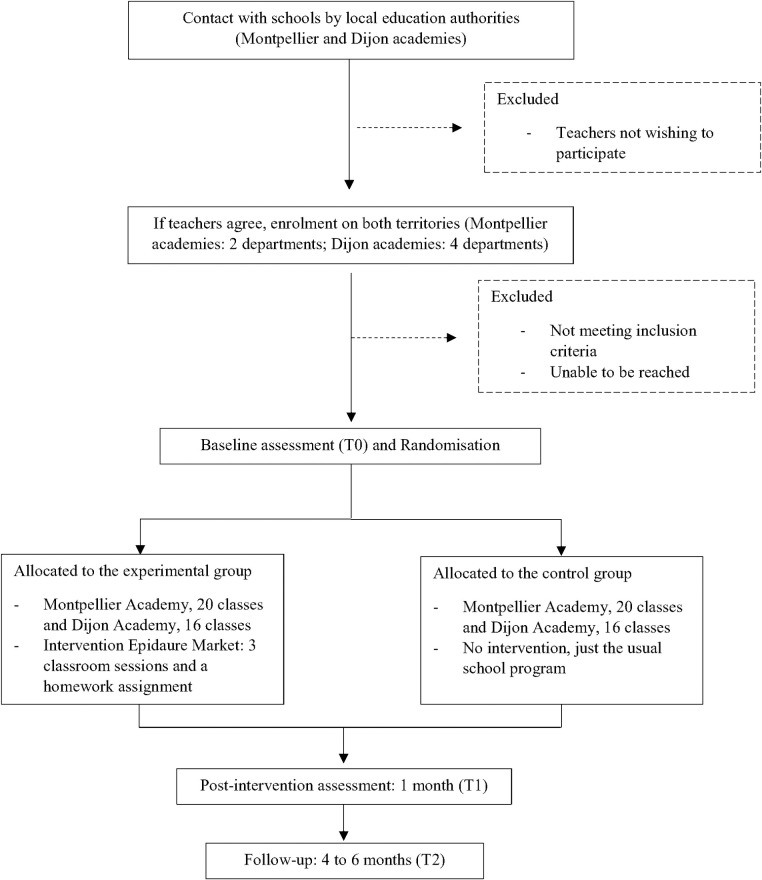 Figure 1
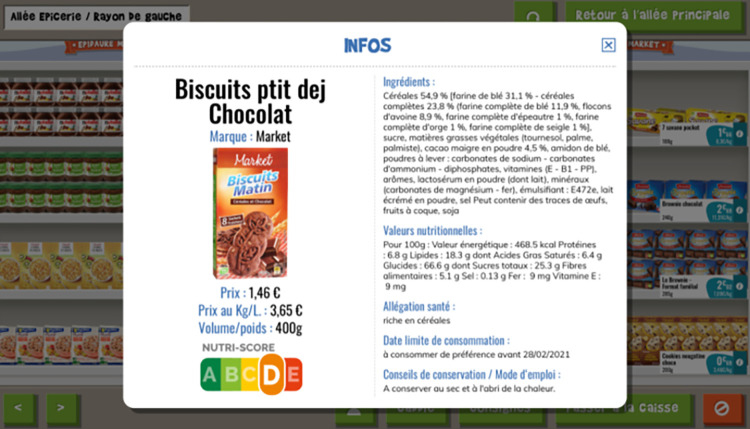 Figure 2
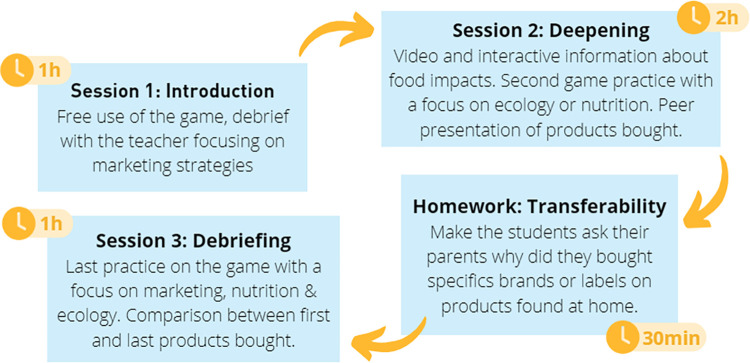 Figure 3
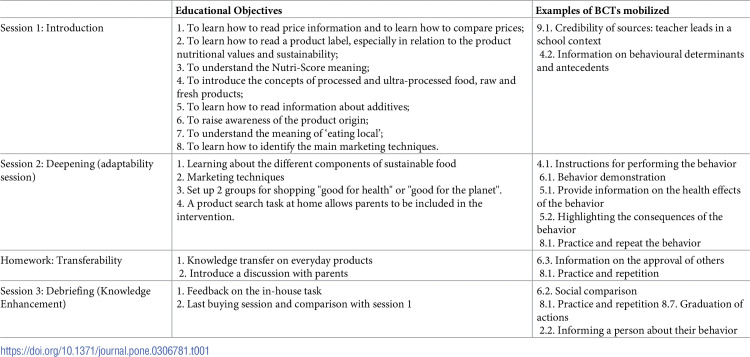 Figure 4
 Figure 5
Peer Reviews
No public reviews on file for this paper yet. If you reviewed it on a platform where reviews are public (OpenReview, ICLR, NeurIPS, ICML), you can paste yours below so the community can read it here.
Videos
No videos yet. Explain this paper in a talk, walkthrough, or lecture? Add one.
Taxonomy
TopicsBehavioral Health and Interventions · Obesity, Physical Activity, Diet · Physical Activity and Health