Improved serodiagnosis of Trypanosoma vivax infections in cattle reveals high infection rates in the livestock regions of Argentina
Iván Alejandro Bontempi, Diego Gustavo Arias, Graciela Verónica Castro, Luz María Peverengo, Genaro Francisco Díaz, Martín Allassia, Gonzalo Greif, Iván Marcipar

TL;DR
A new, more accurate test for detecting T. vivax in cattle was developed, revealing high infection rates in Argentina and highlighting the need for better disease surveillance.
Contribution
The development of a novel TvISG-based ELISA with improved sensitivity and specificity for T. vivax detection in cattle.
Findings
The TvISG-based ELISA achieved 89.6% sensitivity and 93.8% specificity in detecting T. vivax antibodies.
Seroprevalence in Argentina's cattle was 53%, with regional variation from 21% to 69%.
This study reports the first seroprevalence data for T. vivax in Argentina, indicating widespread endemicity.
Abstract
Bovine trypanosomosis, caused by Trypanosoma vivax, currently affects cattle and has a significant economic impact in sub-Saharan Africa and South America. The development of new diagnostic antigens is essential to improve and refine existing methods. Our study evaluated the efficacy of two recombinant antigens in detecting specific antibodies in cattle. These antigens are derivatives of an invariant surface glycoprotein (ISG) from T. vivax. A fraction of a previously described antigen (TvY486_0045500), designated TvISGAf, from an African strain was evaluated, and a new ISG antigen from an American isolate, TvISGAm, was identified. The two antigens were expressed as fusion proteins in Escherichia coli: TvISGAf was fused to the MBP-His-tag, and TvISGAm was obtained as a His-tag fused protein. An ELISA evaluation was conducted using these antigens on 149 positive and 63 negative bovine…
Genes, proteins, chemicals, diseases, species, mutations and cell lines named across the full text — each resolved to its canonical identifier and authoritative record.
Click any figure to enlarge with its caption.
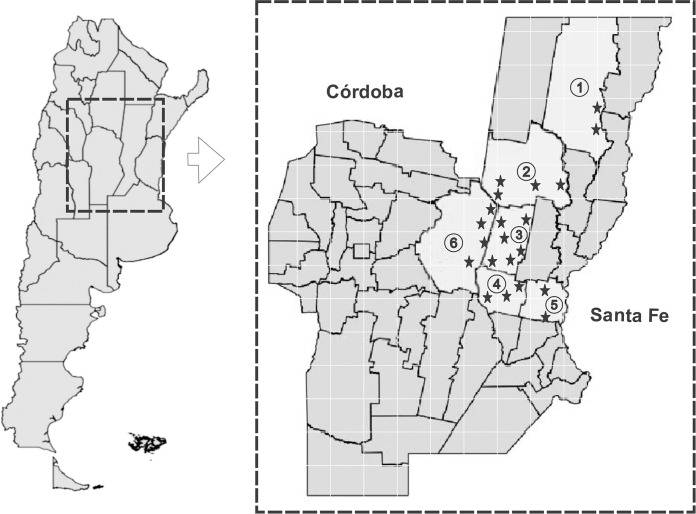 Figure 1
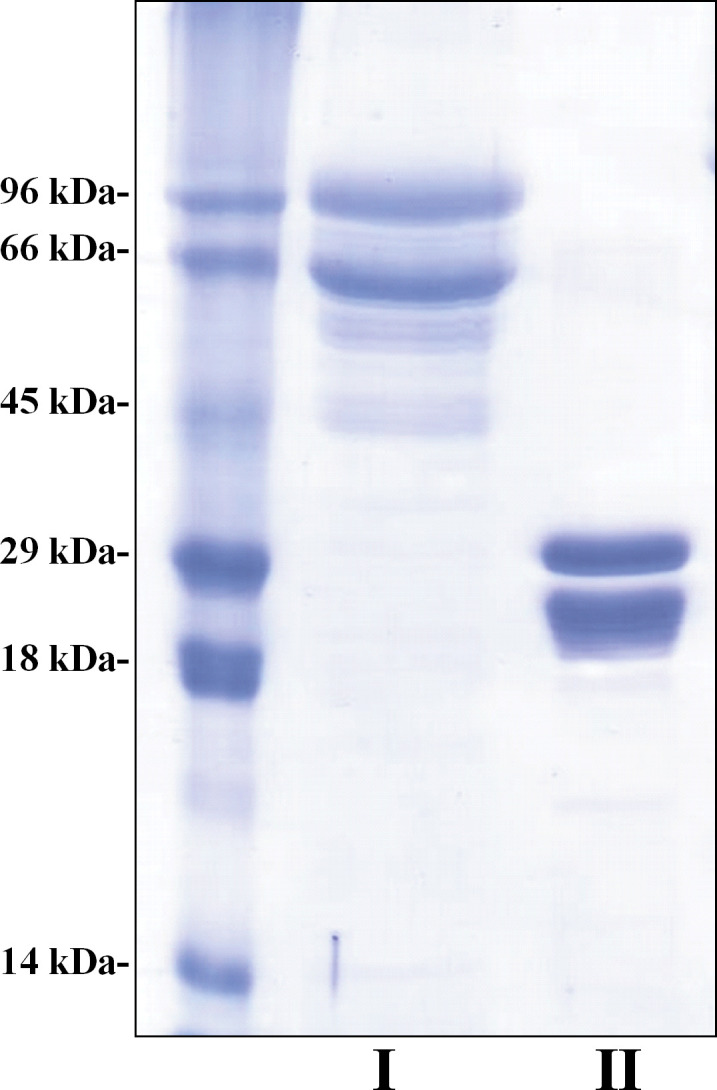 Figure 2
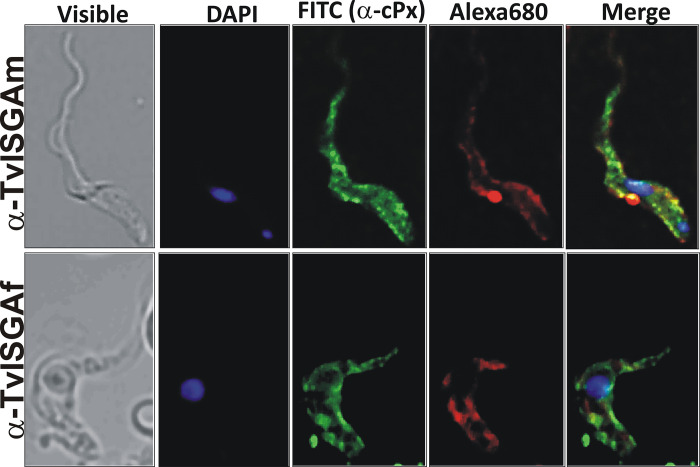 Figure 3
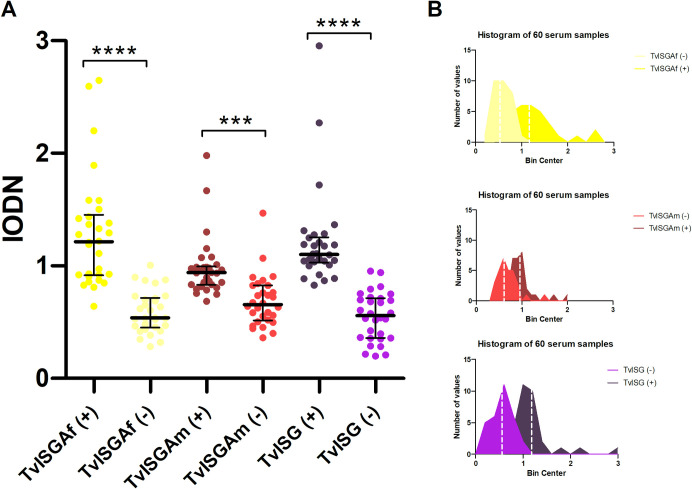 Figure 4
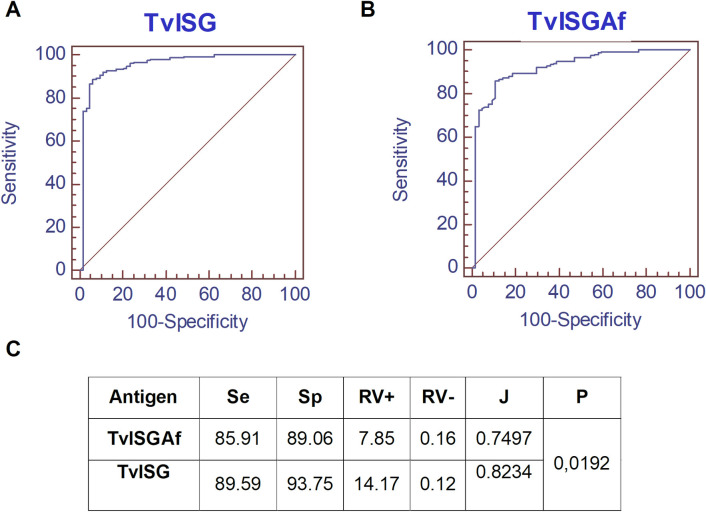 Figure 5
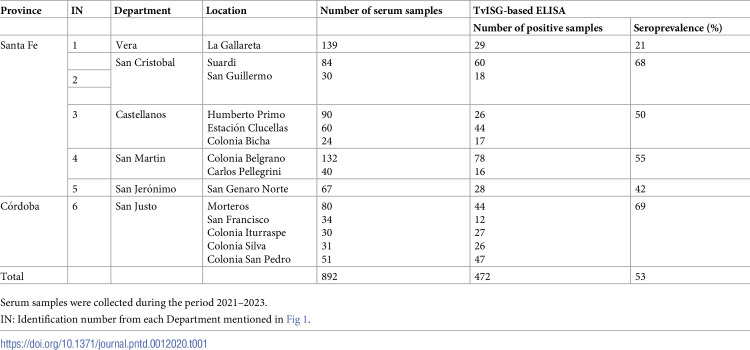 Figure 6
Peer Reviews
No public reviews on file for this paper yet. If you reviewed it on a platform where reviews are public (OpenReview, ICLR, NeurIPS, ICML), you can paste yours below so the community can read it here.
Videos
No videos yet. Explain this paper in a talk, walkthrough, or lecture? Add one.
Taxonomy
TopicsTrypanosoma species research and implications · Vector-Borne Animal Diseases · Helminth infection and control