Are healthy ageing trajectories suitable to identify rehabilitation needs of the ageing population? An exploratory study using ATHLOS cohort data
Carla Sabariego, Jsabel Hodel, Vanessa Seijas, Angel Rodriguez-Laso, Jerome Bickenbach, Cristina Ehrmann

TL;DR
This study explores if healthy ageing patterns can help identify rehabilitation needs in older adults using data from the ATHLOS and ELSA cohorts.
Contribution
The study introduces the use of healthy ageing trajectories to inform rehabilitation service planning for heterogeneous ageing populations.
Findings
Healthy ageing trajectories were consistent with previous findings using ATHLOS and ELSA data.
Expected-influence centrality measures revealed different insights compared to prevalence estimates.
Mobility and handling objects had the highest impact on functioning for both 'high stable' and 'rapid decline' trajectories.
Abstract
The ageing process is highly heterogeneous leading to diverse ageing trajectories. Such trajectories have been modelled to study trends and determinants of ageing and could potentially be used to inform the planning of rehabilitation services at population level. The objective of this paper was to explore whether healthy ageing trajectories are suitable to identify targets for rehabilitation interventions for the ageing population. Data from the Ageing Trajectories of Health: Longitudinal Opportunities and Synergies (ATHLOS) harmonized cohort and the English Longitudinal Study of Ageing (ELSA), which is included in ATHLOS, were used. Growth mixture models were implemented to replicate healthy ageing trajectories modelled elsewhere as ’high stable’, ’low stable’, and ’rapid decline’. Regularized partial correlation networks were used to estimate expected-influence and bridge…
Genes, proteins, chemicals, diseases, species, mutations and cell lines named across the full text — each resolved to its canonical identifier and authoritative record.
Click any figure to enlarge with its caption.
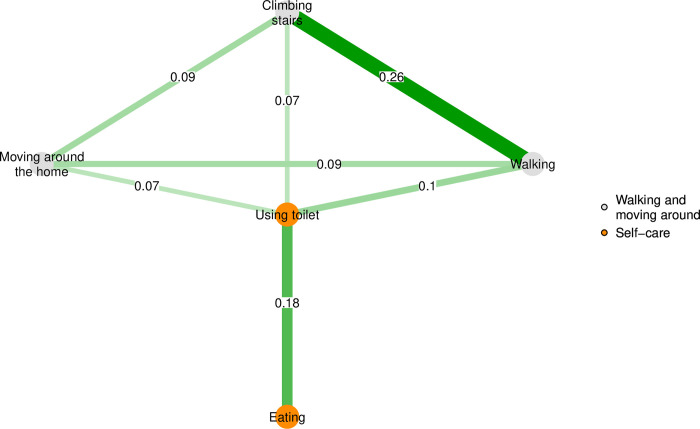 Figure 1
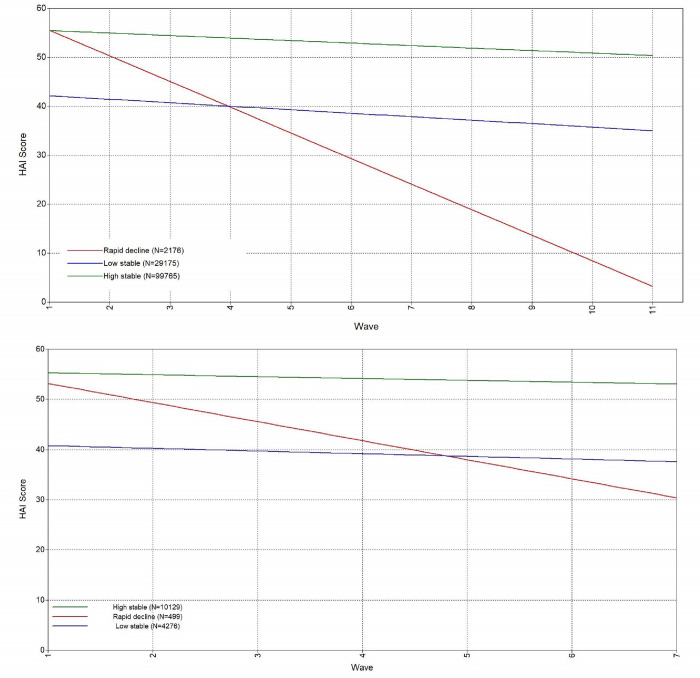 Figure 2
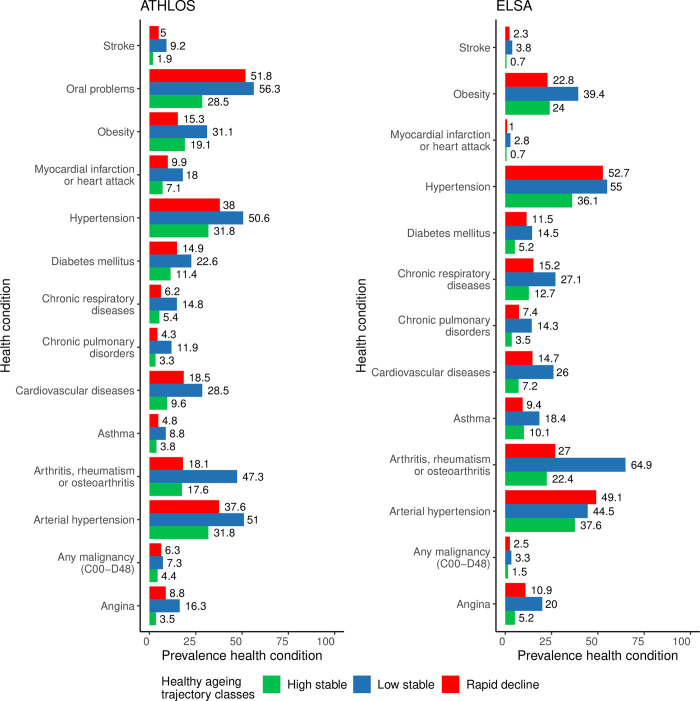 Figure 3
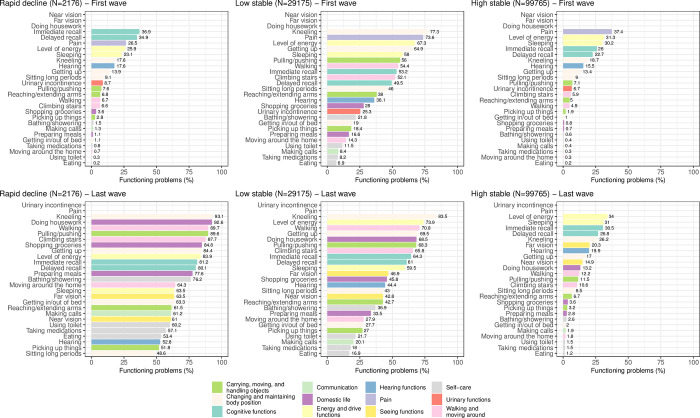 Figure 4
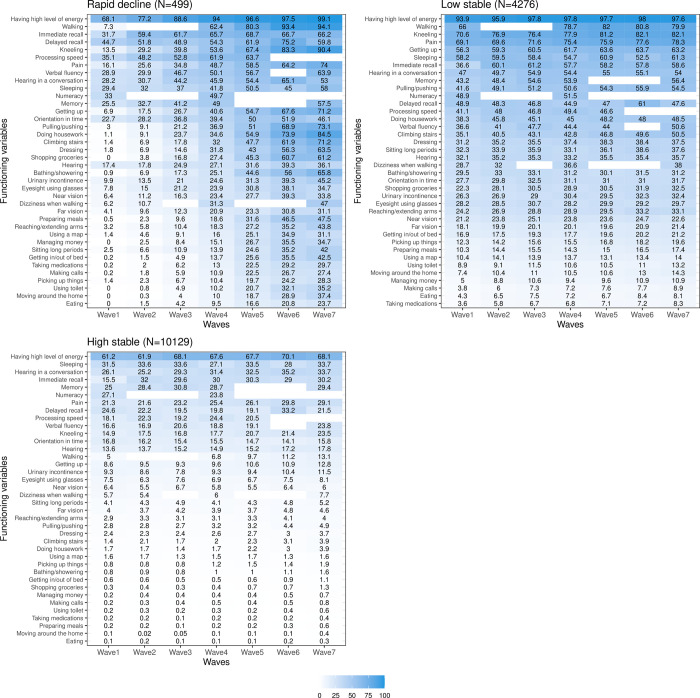 Figure 5
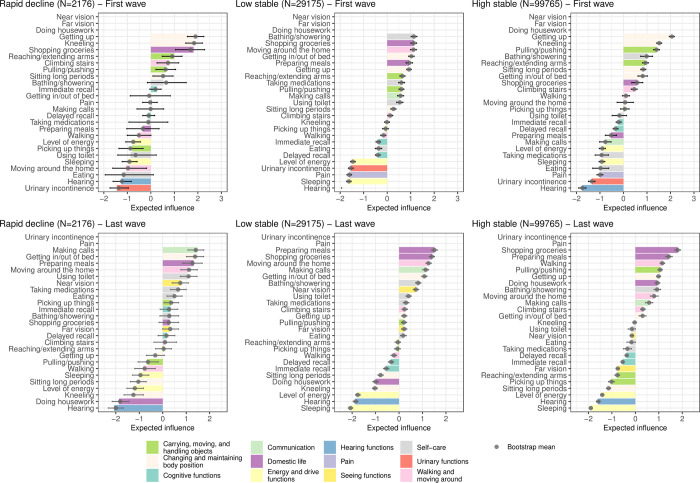 Figure 6
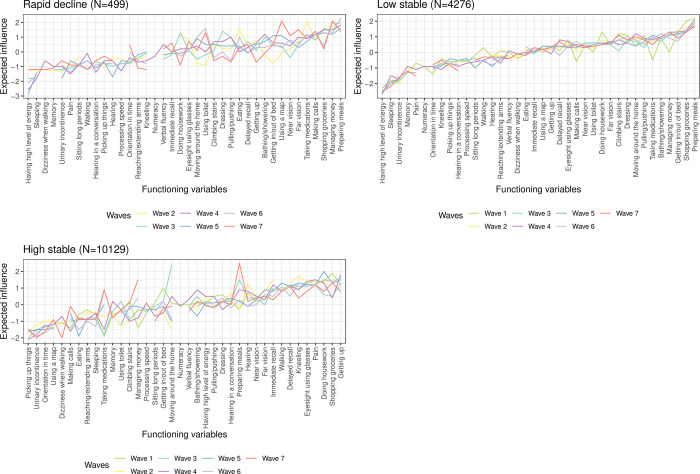 Figure 7
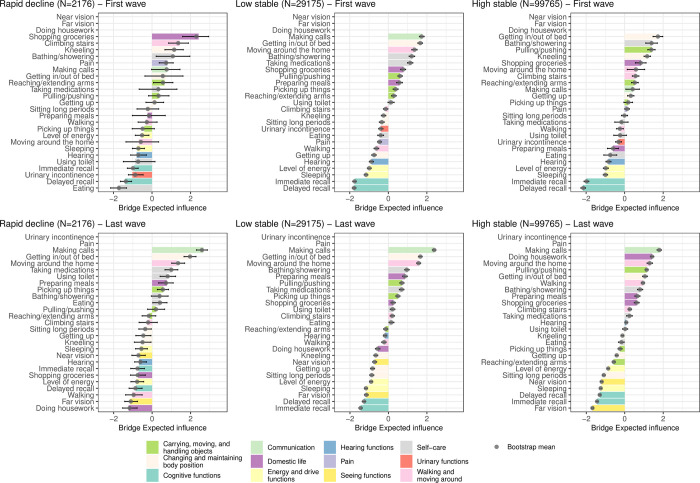 Figure 8
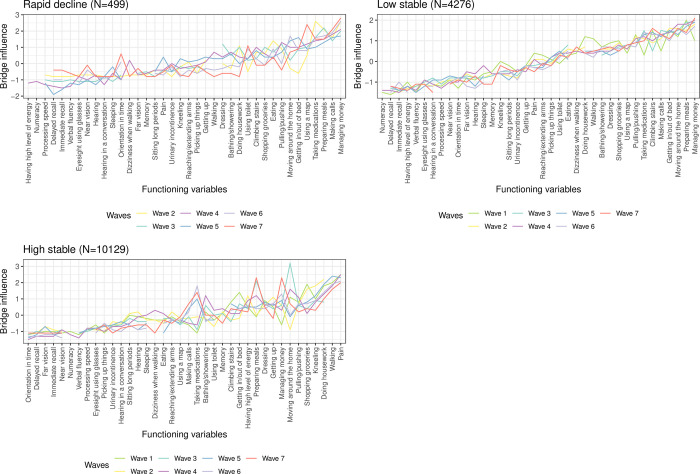 Figure 9
 Figure 10
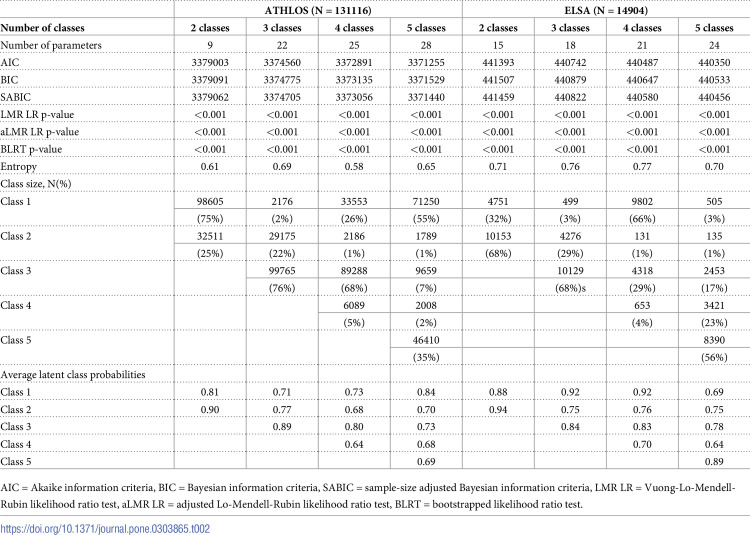 Figure 11
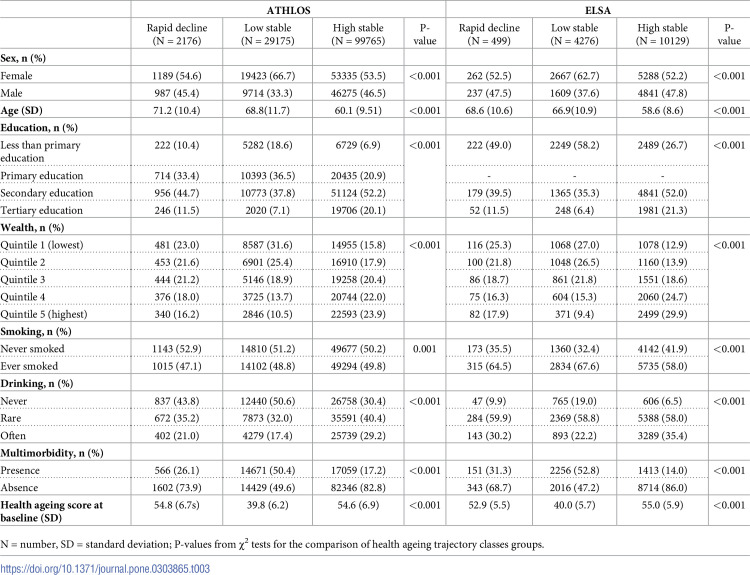 Figure 12
Peer Reviews
No public reviews on file for this paper yet. If you reviewed it on a platform where reviews are public (OpenReview, ICLR, NeurIPS, ICML), you can paste yours below so the community can read it here.
Videos
No videos yet. Explain this paper in a talk, walkthrough, or lecture? Add one.
Taxonomy
TopicsHealth disparities and outcomes · Health Systems, Economic Evaluations, Quality of Life · Mental Health Research Topics