Research on intelligent forecasts of flight actions based on the implemented bi-LSTM
Xin Hua, Xuejie Yang

TL;DR
This paper uses a bi-LSTM algorithm to forecast flight actions from real flight data, aiming to improve the objectivity of flight training assessments.
Contribution
The novel implementation of bi-LSTM for flight action forecasting with optimized parameters and high recognition accuracy.
Findings
The model achieved over 85% accuracy in forecasting flight actions.
Training duration was controlled between 1 to 3 hours per session.
Inference time remained under 2 seconds per run.
Abstract
Rapid identification of flight actions by utilizing flight data is more realistic so the quality of flight training can be objectively assessed. The bidirectional long short-term memory (bi-LSTM) algorithm is implemented to forecast the flight actions of aircraft. The dataset containing the flight actions is structured by collecting tagged flight data when real flight training is exercised. However, the dataset needs to be preprocessed and annotated with expert rules. One of the deep learning (DL) methods, called the bi-LSTM algorithm, is implemented to train and test, and the pivotal parameters of the algorithm are optimized. Finally, the constructed model is applied to forecast the flight actions of aircraft. The training’s accuracy and loss rates are computed. The duration is kept between 1 through 3 h per session. Thus, the development of training the model is continued until an…
Genes, proteins, chemicals, diseases, species, mutations and cell lines named across the full text — each resolved to its canonical identifier and authoritative record.
Click any figure to enlarge with its caption.
 Figure 1
 Figure 2
 Figure 3
 Figure 4
 Figure 5
 Figure 6
 Figure 7
 Figure 8
 Figure 9
 Figure 10
 Figure 11
 Figure 12
 Figure 13
 Figure 14
 Figure 15
 Figure 16
 Figure 17
 Figure 18
 Figure 19
 Figure 20
 Figure 21
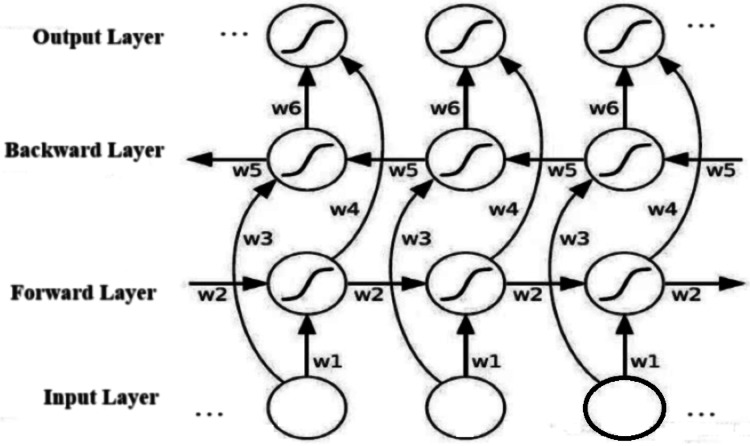 Figure 22
 Figure 23
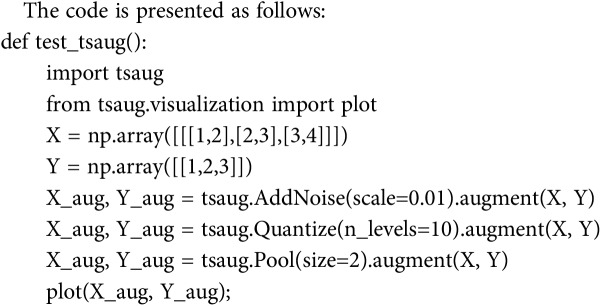 Figure 24
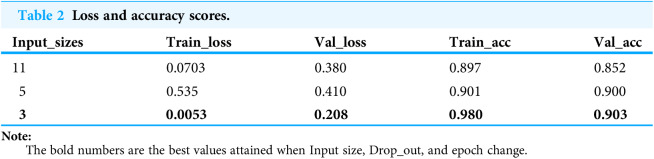 Figure 25
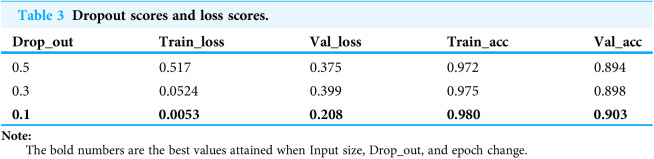 Figure 26
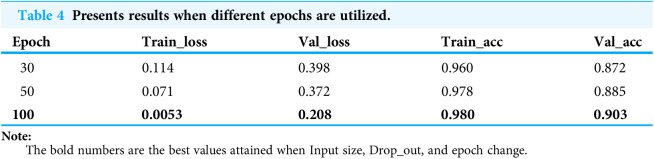 Figure 27
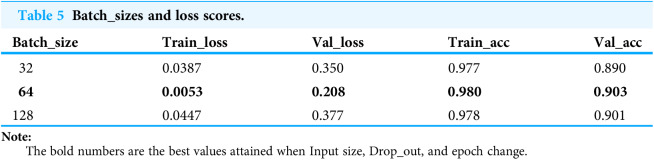 Figure 28
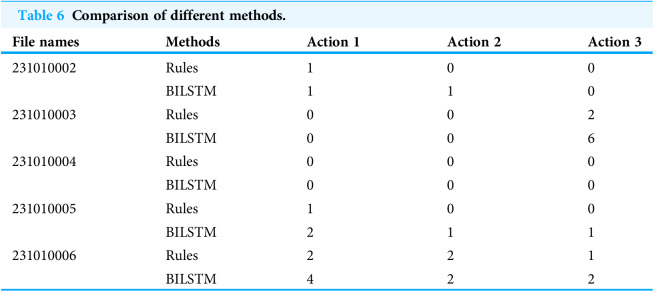 Figure 29
 Figure 30
 Figure 31
 Figure 32
 Figure 33
 Figure 34
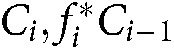 Figure 35
 Figure 36
 Figure 37
 Figure 38
 Figure 39
 Figure 40
 Figure 41
 Figure 42
 Figure 43
 Figure 44
 Figure 45
 Figure 46
 Figure 47
 Figure 48
 Figure 49
 Figure 50
Peer Reviews
No public reviews on file for this paper yet. If you reviewed it on a platform where reviews are public (OpenReview, ICLR, NeurIPS, ICML), you can paste yours below so the community can read it here.
Videos
No videos yet. Explain this paper in a talk, walkthrough, or lecture? Add one.
Taxonomy
TopicsAerospace and Aviation Technology · Inertial Sensor and Navigation · Advanced Decision-Making Techniques