Rapid in vitro activity of telavancin against Bacillus anthracis and in vivo protection against inhalation anthrax infection in the rabbit model
William S. Lawrence, Jennifer E. Peel, Richard A. Slayden, Johnny W. Peterson, Wallace B. Baze, Martha E. Hensel, Elbert B. Whorton, David W. C. Beasley, Jason E. Cummings, Ines Macias-Perez

TL;DR
Telavancin, a new antibiotic, effectively kills Bacillus anthracis in lab tests and protects rabbits from lethal anthrax infections better than existing treatments.
Contribution
Telavancin shows potent in vitro and in vivo efficacy against Bacillus anthracis, including complete survival in a rabbit model.
Findings
Telavancin had low MICs (0.06–0.125 μg/mL) against all 17 B. anthracis isolates tested.
Telavancin achieved 100% survival in rabbits infected with anthrax spores.
Telavancin cleared bacteria from blood and tissues more effectively than levofloxacin.
Abstract
Inhalation anthrax is the most severe form of Bacillus anthracis infection, often progressing to fatal conditions if left untreated. While recommended antibiotics can effectively treat anthrax when promptly administered, strains engineered for antibiotic resistance could render these drugs ineffective. Telavancin, a semisynthetic lipoglycopeptide antibiotic, was evaluated in this study as a novel therapeutic against anthrax disease. Specifically, the aims were to (i) assess in vitro potency of telavancin against 17 B. anthracis isolates by minimum inhibitory concentration (MIC) testing and (ii) evaluate protective efficacy in rabbits infected with a lethal dose of aerosolized anthrax spores and treated with human-equivalent intravenous telavancin doses (30 mg/kg every 12 hours) for 5 days post-antigen detection versus a humanized dose of levofloxacin and vehicle control. Blood samples…
Genes, proteins, chemicals, diseases, species, mutations and cell lines named across the full text — each resolved to its canonical identifier and authoritative record.
Click any figure to enlarge with its caption.
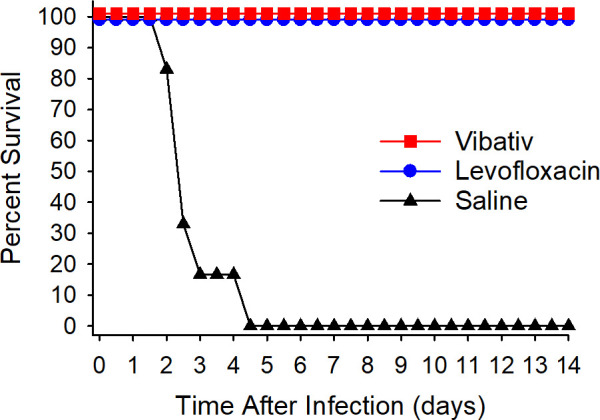 Figure 1
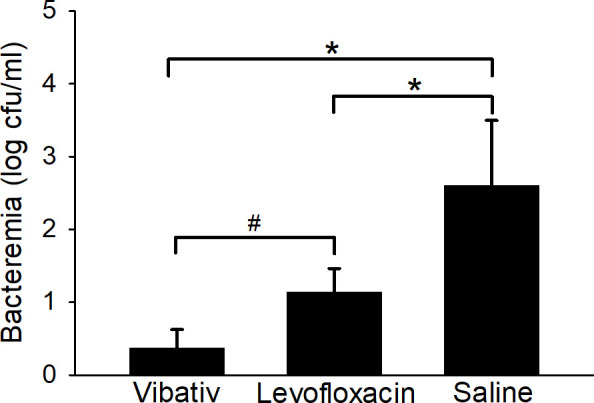 Figure 2
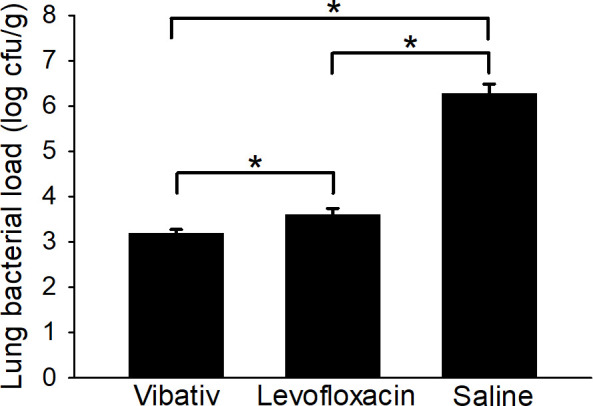 Figure 3
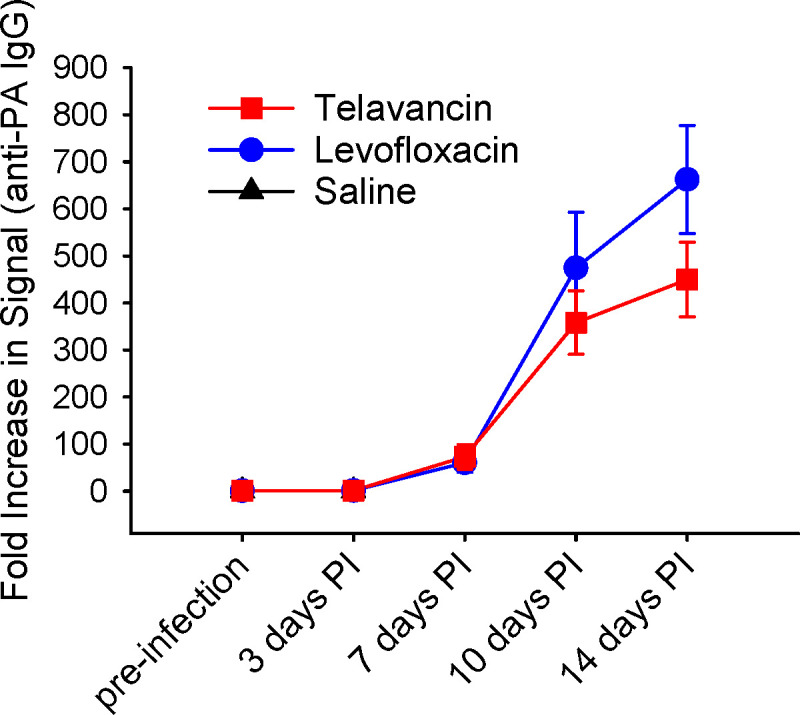 Figure 4
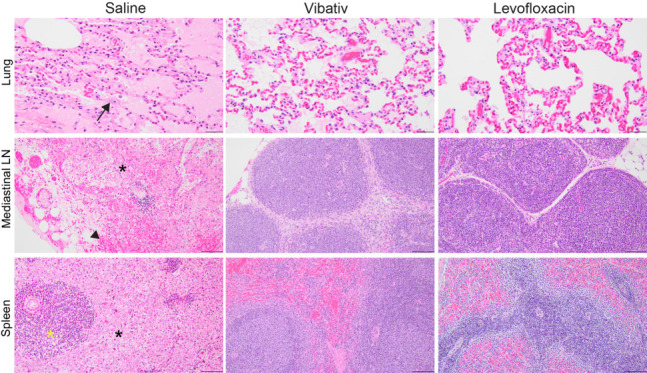 Figure 5
Peer Reviews
No public reviews on file for this paper yet. If you reviewed it on a platform where reviews are public (OpenReview, ICLR, NeurIPS, ICML), you can paste yours below so the community can read it here.
Videos
No videos yet. Explain this paper in a talk, walkthrough, or lecture? Add one.
Taxonomy
TopicsBacillus and Francisella bacterial research · Bacterial Genetics and Biotechnology · Viral gastroenteritis research and epidemiology