gcplyr: an R package for microbial growth curve data analysis
Michael Blazanin

TL;DR
gcplyr is an R package that simplifies the analysis of microbial growth curve data using a tidy framework and model-free methods.
Contribution
gcplyr introduces a flexible and extensible R package for analyzing microbial growth curves without requiring parametric assumptions.
Findings
gcplyr supports importing and reshaping growth curve data in a tidy format for custom analyses.
The package enables model-free extraction of traits like growth rate, doubling time, and carrying capacity.
gcplyr integrates with visualization and statistical analysis tools for streamlined microbial data analysis.
Abstract
Characterization of microbial growth is of both fundamental and applied interest. Modern platforms can automate collection of high-throughput microbial growth curves, necessitating the development of computational tools to handle and analyze these data to produce insights. To address this need, here I present a newly-developed R package: gcplyr. gcplyr can flexibly import growth curve data in common tabular formats, and reshapes it under a tidy framework that is flexible and extendable, enabling users to design custom analyses or plot data with popular visualization packages. gcplyr can also incorporate metadata and generate or import experimental designs to merge with data. Finally, gcplyr carries out model-free (non-parametric) analyses. These analyses do not require mathematical assumptions about microbial growth dynamics, and gcplyr is able to extract a broad range of important…
Genes, proteins, chemicals, diseases, species, mutations and cell lines named across the full text — each resolved to its canonical identifier and authoritative record.
Click any figure to enlarge with its caption.
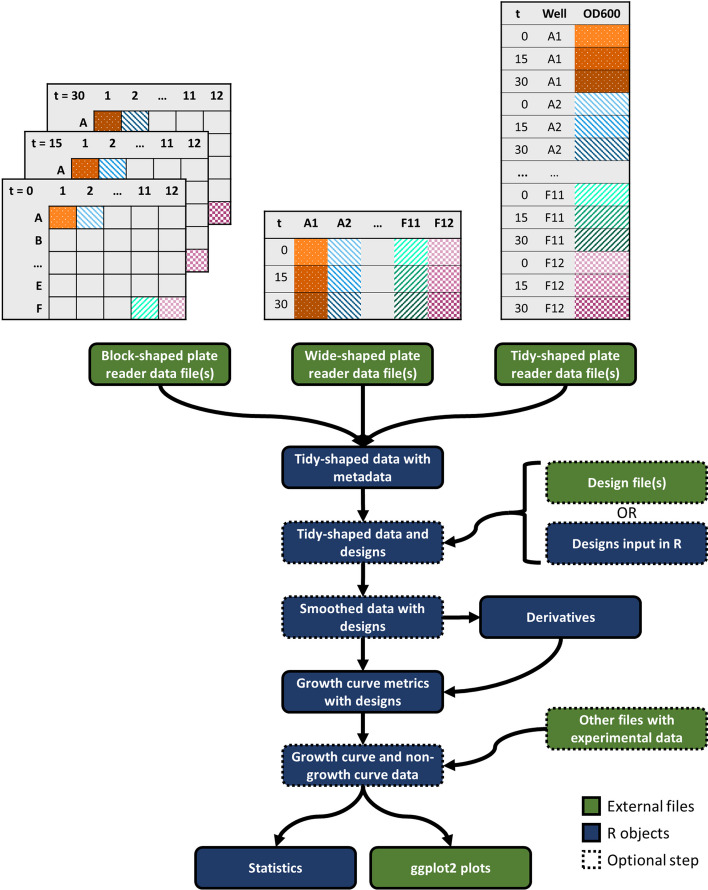 Figure 1
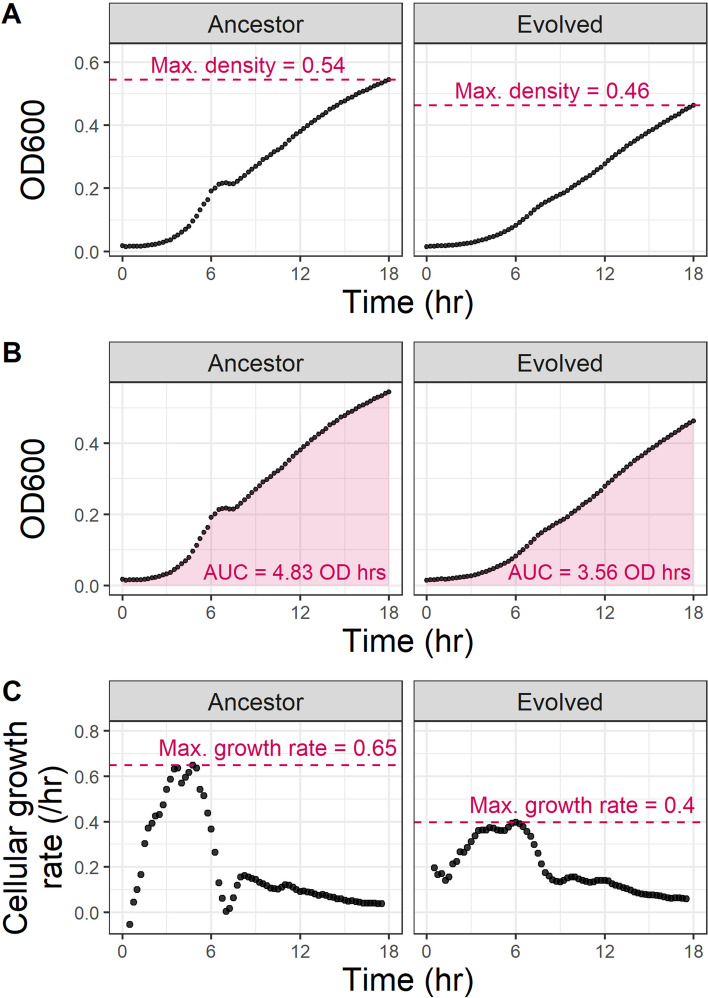 Figure 2
Peer Reviews
No public reviews on file for this paper yet. If you reviewed it on a platform where reviews are public (OpenReview, ICLR, NeurIPS, ICML), you can paste yours below so the community can read it here.
Videos
No videos yet. Explain this paper in a talk, walkthrough, or lecture? Add one.
Taxonomy
TopicsSocial Sciences and Policies · Political Theory and Democracy · Comparative constitutional jurisprudence studies