Delineating redox cooperativity in water‐soluble and membrane multiheme cytochromes through protein design
Benjamin J. Hardy, Paulina Dubiel, Ethan L. Bungay, May Rudin, Christopher Williams, Christopher J. Arthur, Matthew J. Guberman‐Pfeffer, A. Sofia Oliveira, Paul Curnow, J. L. Ross Anderson

TL;DR
This paper uses designed proteins to study how electron transfer works in cytochromes, revealing that electrostatic interactions are key to redox cooperativity.
Contribution
The study introduces de novo designed cytochromes to dissect redox cooperativity mechanisms in bioenergetic systems.
Findings
Two heme sites in designed cytochromes have similar redox potentials in isolation.
Electrostatic coupling between heme sites is enhanced in membrane environments.
BioDC simulations align with experimental results on heme interactions.
Abstract
Nature has evolved diverse electron transport proteins and multiprotein assemblies essential to the generation and transduction of biological energy. However, substantially modifying or adapting these proteins for user‐defined applications or to gain fundamental mechanistic insight can be hindered by their inherent complexity. De novo protein design offers an attractive route to stripping away this confounding complexity, enabling us to probe the fundamental workings of these bioenergetic proteins and systems, while providing robust, modular platforms for constructing completely artificial electron‐conducting circuitry. Here, we use a set of de novo designed mono‐heme and di‐heme soluble and membrane proteins to delineate the contributions of electrostatic micro‐environments and dielectric properties of the surrounding protein medium on the inter‐heme redox cooperativity that we have…
Genes, proteins, chemicals, diseases, species, mutations and cell lines named across the full text — each resolved to its canonical identifier and authoritative record.
Click any figure to enlarge with its caption.
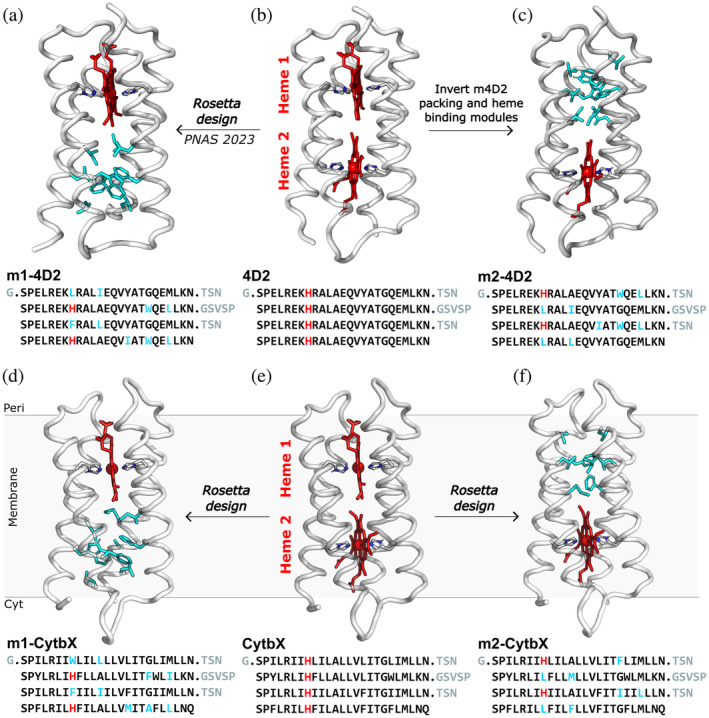 Figure 1
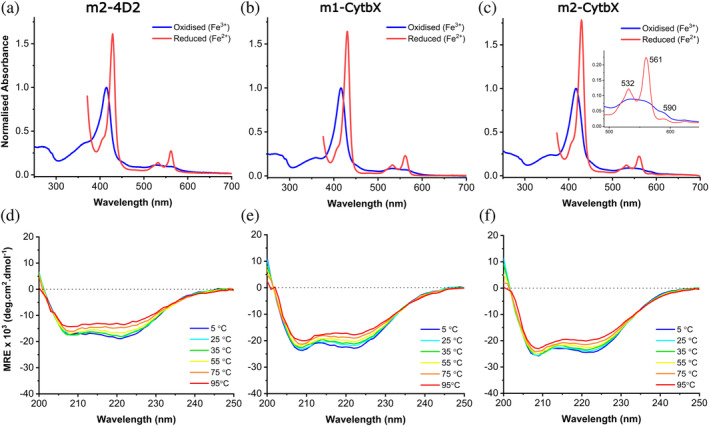 Figure 2
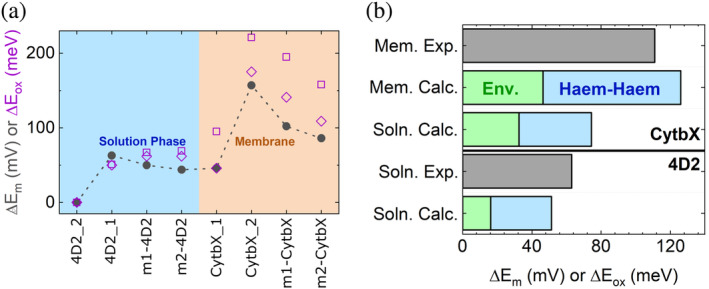 Figure 3
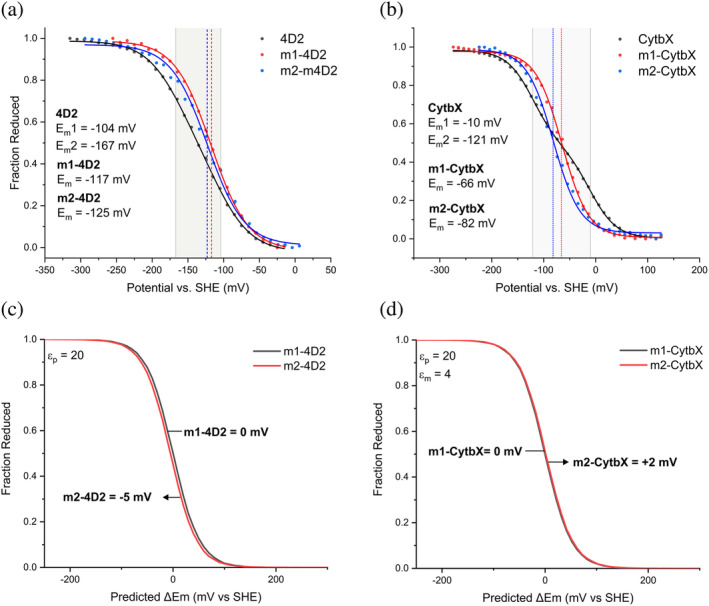 Figure 4
Peer Reviews
No public reviews on file for this paper yet. If you reviewed it on a platform where reviews are public (OpenReview, ICLR, NeurIPS, ICML), you can paste yours below so the community can read it here.
Videos
No videos yet. Explain this paper in a talk, walkthrough, or lecture? Add one.
Taxonomy
TopicsLibraries, Manuscripts, and Books