Ventricular Fibrillation Arrest Triggered by Antiemetics Revealing an Underlying Long QT Syndrome in a Young Woman
Ameer Khan, Adel Kenawi, Sourabh Jadhav, Amsal Amjad, Muhammad Saleem

TL;DR
A young woman's undiagnosed heart condition was revealed when antiemetic drugs triggered a life-threatening event, highlighting the need for awareness of medication side effects.
Contribution
This case study emphasizes the importance of recognizing antiemetics as potential triggers for cardiac events in undiagnosed long QT syndrome.
Findings
Antiemetics can precipitate cardiac arrest in patients with undiagnosed long QT syndrome.
Survival is possible if the condition is recognized and managed promptly.
Clinicians should be aware of QT-prolonging drug side effects to prevent fatalities.
Abstract
Undiagnosed phenomena such as long QT syndrome can have devastating effects on patients. Our case, involving a woman in her 30s, highlights the serious effects of undiagnosed long QT and how antiemetic medications can precipitate cardiac events that can lead to fatalities. Various medications are known to prolong QT intervals, and clinicians must be aware of the side effects of some of these commonly used medications. While survival was achieved in this case, education and reflection can act as a tool to help improve global standards of care in this subgroup of the population.
Genes, proteins, chemicals, diseases, species, mutations and cell lines named across the full text — each resolved to its canonical identifier and authoritative record.
Click any figure to enlarge with its caption.
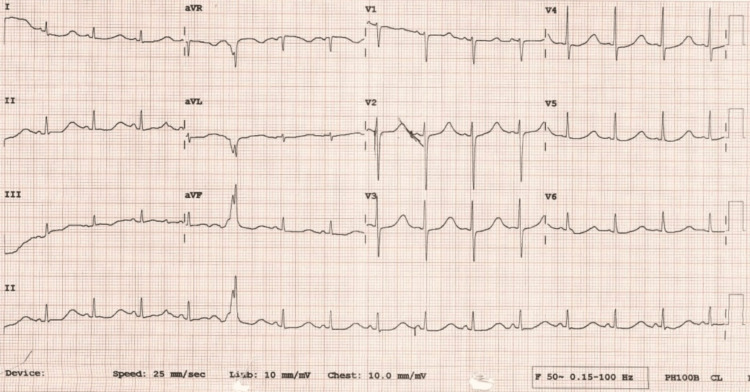 Figure 1
Peer Reviews
No public reviews on file for this paper yet. If you reviewed it on a platform where reviews are public (OpenReview, ICLR, NeurIPS, ICML), you can paste yours below so the community can read it here.
Videos
No videos yet. Explain this paper in a talk, walkthrough, or lecture? Add one.
Taxonomy
TopicsCardiac electrophysiology and arrhythmias · Ion channel regulation and function · Cardiac Ischemia and Reperfusion