Reductive Transamination of Pyridinium Salts to N-Aryl Piperidines
Zhenyu Chen, Geyang Song, Leiming Qi, Ramachandran Gunasekar, Christophe Aïssa, Craig Robertson, Alexander Steiner, Dong Xue, Jianliang Xiao

TL;DR
A new rhodium-catalyzed method converts pyridinium salts into N-aryl piperidines, useful in pharmaceuticals.
Contribution
A novel reductive transamination method for synthesizing N-(hetero)aryl piperidines from pyridinium salts.
Findings
The reaction involves a dihydropyridine intermediate formed via reduction with HCOOH.
Hydrolysis and reductive amination with (hetero)aryl amines yield N-(hetero)aryl piperidines.
This method expands the options for dearomatization and skeletal editing of heterocycles.
Abstract
Saturated N-heterocycles are found in numerous bioactive natural products and are prevalent in pharmaceuticals and agrochemicals. While there are many methods for their synthesis, each has its limitations, such as scope and functional group tolerance. Herein, we describe a rhodium-catalyzed transfer hydrogenation of pyridinium salts to access N-(hetero)aryl piperidines. The reaction proceeds via a reductive transamination process, involving the initial formation of a dihydropyridine intermediate via reduction of the pyridinium ion with HCOOH, which is intercepted by water and then hydrolyzed. Subsequent reductive amination with an exogenous (hetero)aryl amine affords an N-(hetero)aryl piperidine. This reductive transamination method thus allows for access of N-(hetero)aryl piperidines from readily available pyridine derivatives, expanding the toolbox of dearomatization and skeletal…
Genes, proteins, chemicals, diseases, species, mutations and cell lines named across the full text — each resolved to its canonical identifier and authoritative record.
Click any figure to enlarge with its caption.
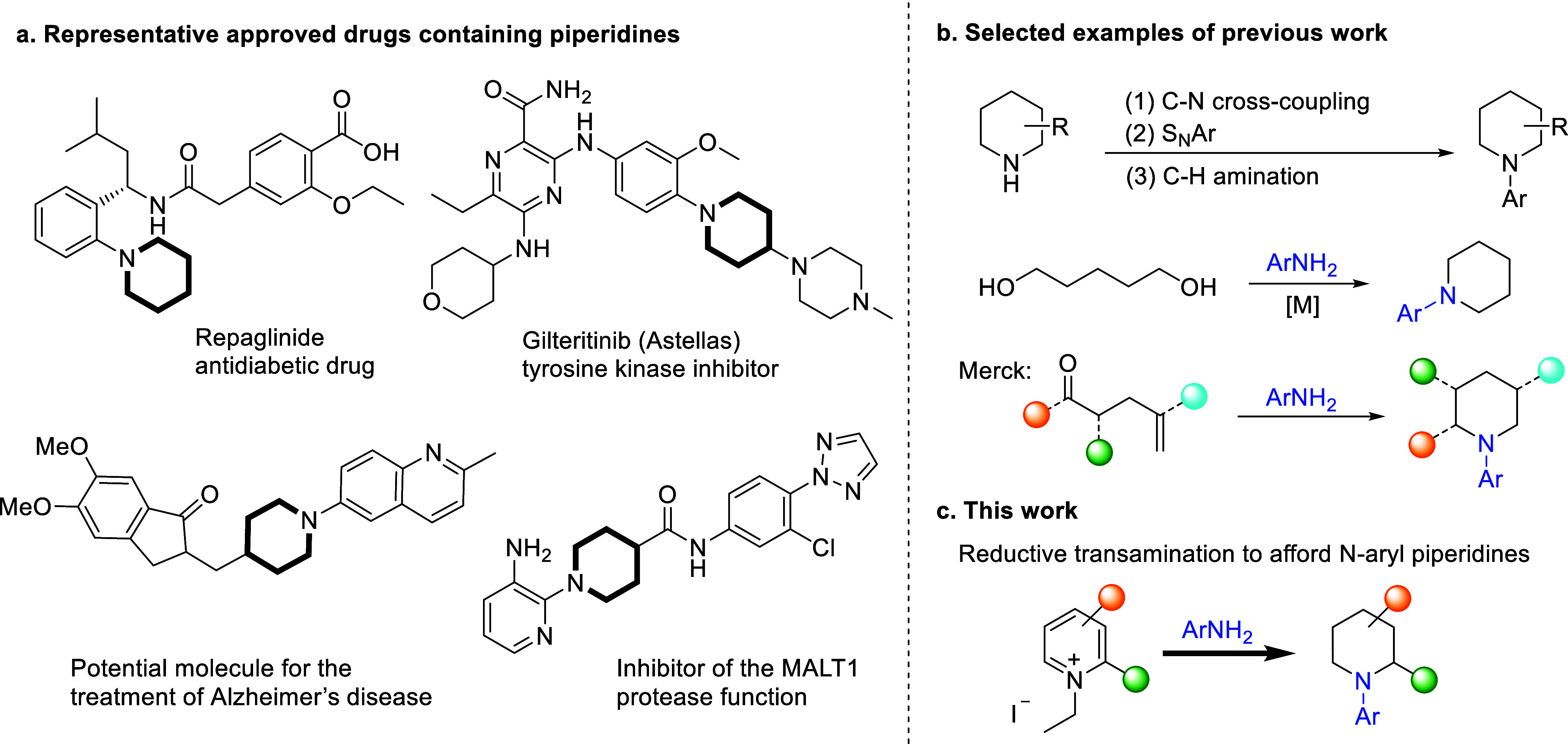 Figure 1
 Figure 2
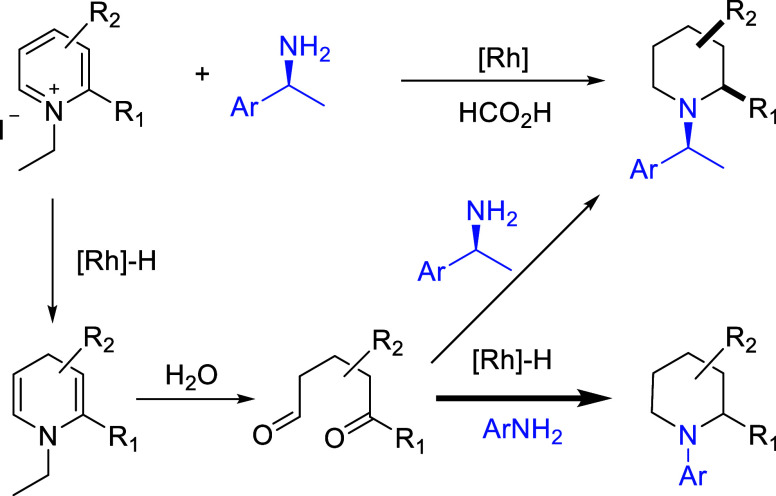 Figure 3
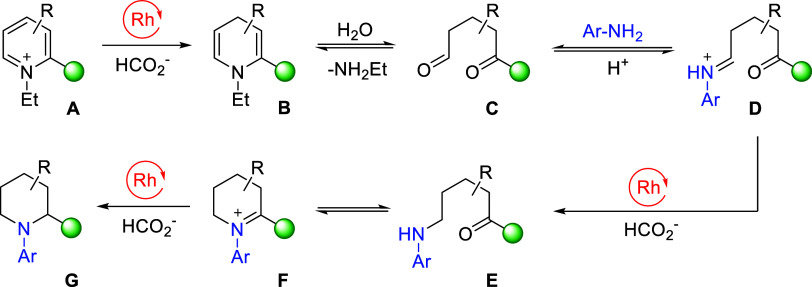 Figure 4
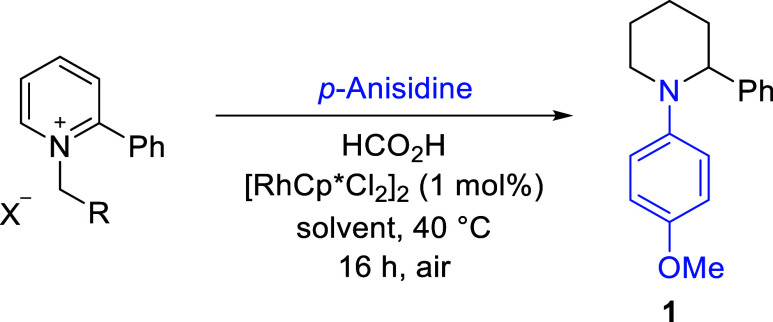 Figure 5
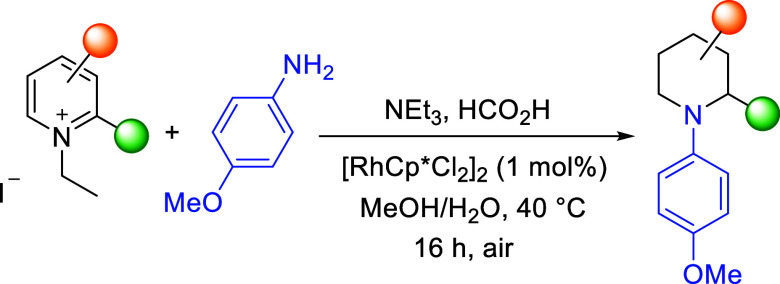 Figure 6
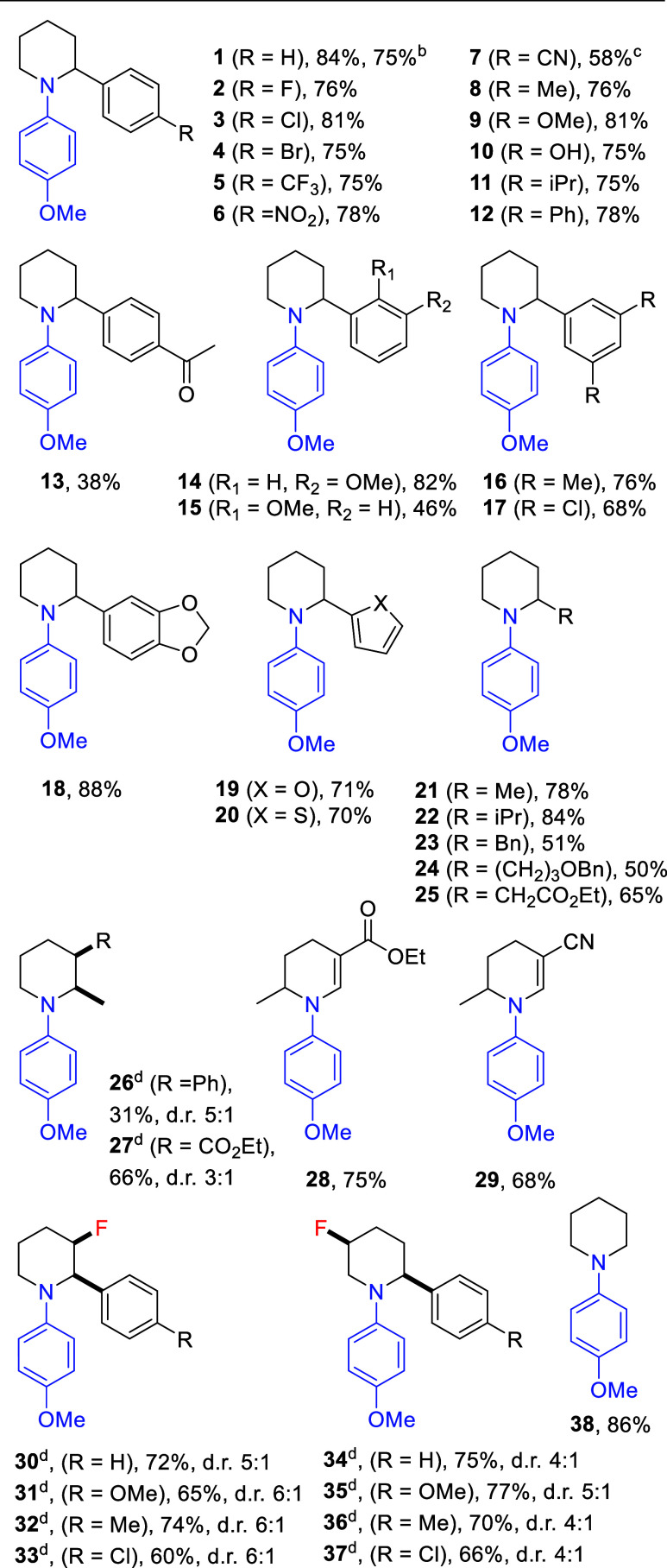 Figure 7
 Figure 8
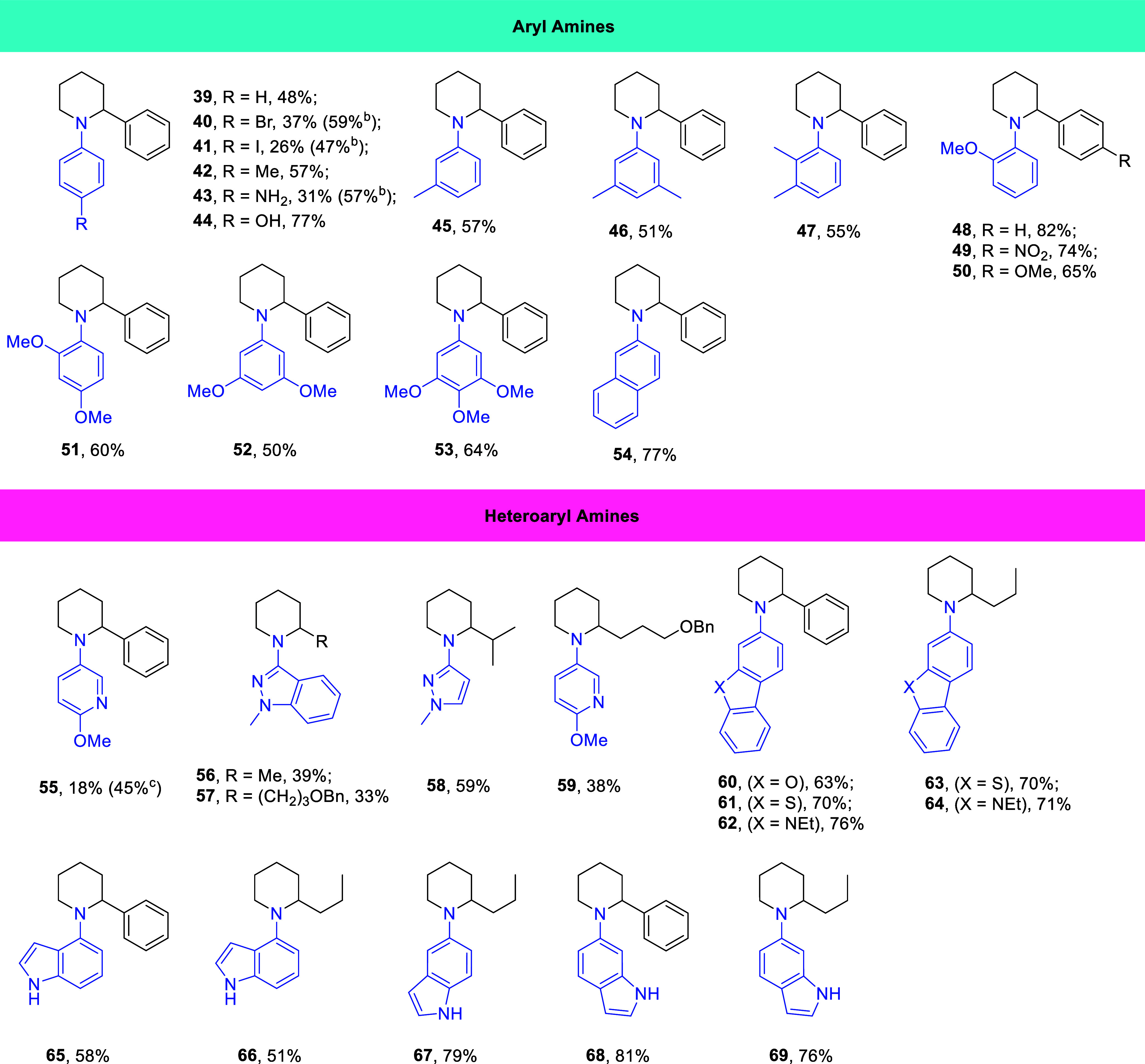 Figure 9
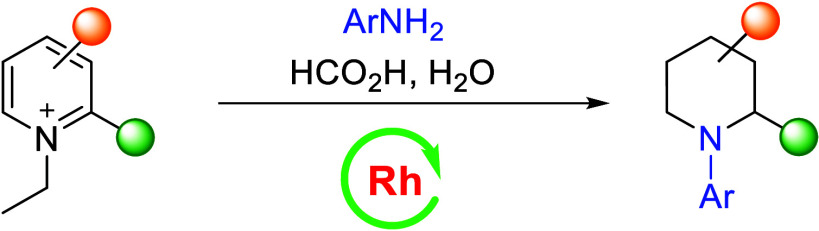 Figure 10
Peer Reviews
No public reviews on file for this paper yet. If you reviewed it on a platform where reviews are public (OpenReview, ICLR, NeurIPS, ICML), you can paste yours below so the community can read it here.
Videos
No videos yet. Explain this paper in a talk, walkthrough, or lecture? Add one.
Taxonomy
TopicsEarly Modern Spanish Literature · Medieval and Early Modern Iberia · Medieval Iberian Studies