Comparative Effects of Target-Controlled Infusion of Propofol Versus Spinal and Thiopental-Sevoflurane Anesthesia on Lipid Peroxidation in Elective Cesarean Section: A Prospective, Open-Label Study
Suzana Sobot Novakovic, Snezana Uletilovic, Nebojsa Mandic-Kovacevic, Tanja Cvjetkovic, Milos P Stojiljkovic, Ranko Skrbic, Dragana Loncar-Stojiljkovic

TL;DR
This study compares how different anesthetics affect oxidative stress in mothers and fetuses during cesarean sections, finding that propofol reduces lipid peroxidation more effectively than other methods.
Contribution
The study introduces a novel comparison of propofol's effects on oxidative stress against spinal and thiopental-sevoflurane anesthesia in cesarean sections.
Findings
Propofol significantly reduced TBARS levels in maternal blood during and after surgery compared to spinal and thiopental-sevoflurane anesthesia.
Umbilical venous TBARS levels were lowest in the propofol group, indicating reduced oxidative stress in fetuses.
Umbilical cord PO2 was significantly lower in the spinal group compared to propofol and thiopental-sevoflurane groups.
Abstract
Background: During pregnancy, physiological changes can increase oxidative stress (OS) in both mothers and fetuses. The use of anesthesia for cesarean sections (CSs) could exacerbate this stress due to its impact on the ischemia-reperfusion effect. Our study aimed to explore the effects of target-controlled infusion of propofol on OS during CSs, and to compare these effects with those of spinal and thiopental-sevoflurane anesthesia. Methods: The study included ninety parturients undergoing elective CS, allocated into three groups: Group S (spinal) (n = 30), Group P (propofol) (n = 30), and Group TS (thiopental-sevoflurane) (n = 30). Venous blood samples were taken from mothers at three time points, before, during, and after surgery, and one sample was taken from the umbilical vein after delivery. Blood samples were analyzed with the thiobarbituric acid reactive substances (TBARS) assay…
Genes, proteins, chemicals, diseases, species, mutations and cell lines named across the full text — each resolved to its canonical identifier and authoritative record.
Click any figure to enlarge with its caption.
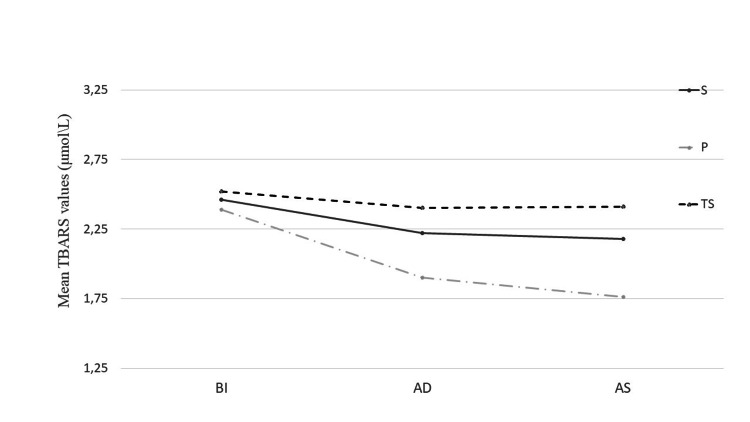 Figure 1
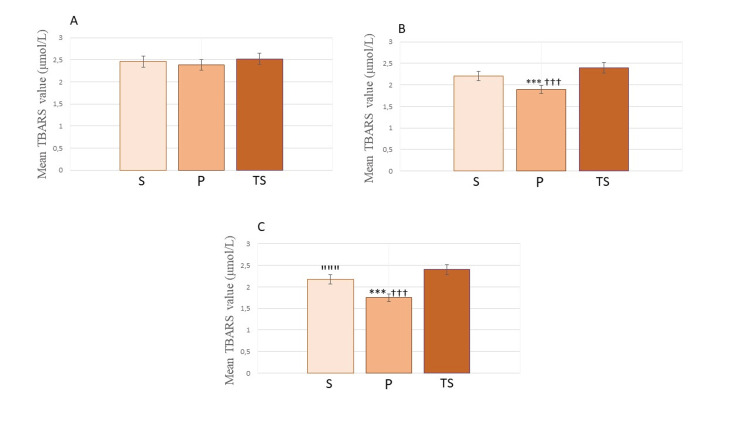 Figure 2
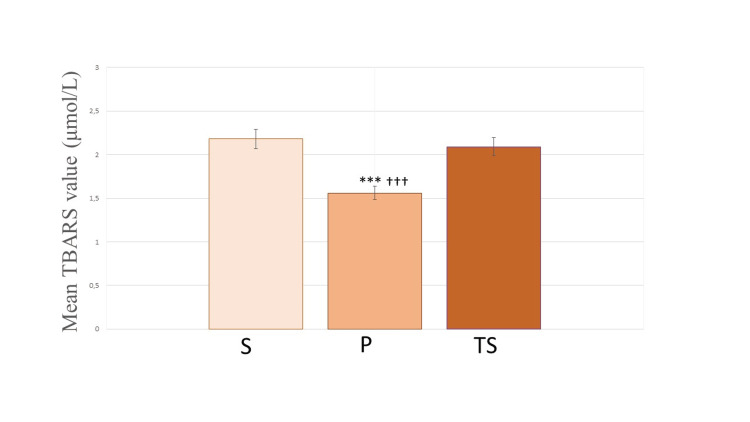 Figure 3
Peer Reviews
No public reviews on file for this paper yet. If you reviewed it on a platform where reviews are public (OpenReview, ICLR, NeurIPS, ICML), you can paste yours below so the community can read it here.
Videos
No videos yet. Explain this paper in a talk, walkthrough, or lecture? Add one.
Taxonomy
TopicsAnesthesia and Neurotoxicity Research · Anesthesia and Sedative Agents · Anesthesia and Pain Management