Red carpet moments: recognition of neuroscientists by election to UK national academies
Tara L Spires-Jones

TL;DR
This paper explores how neuroscientists are recognized for their achievements through election to UK national academies.
Contribution
It highlights the importance of incentivizing translational neuroscience research.
Findings
Election to national academies is a key recognition for neuroscientists.
The paper raises questions about how research incentives are structured.
Translational neuroscience is emphasized as a critical area for support.
Abstract
Our editor discusses recognition of achievement in translational neuroscience and the wider issues around incentivization of research. Graphical Abstract
Genes, proteins, chemicals, diseases, species, mutations and cell lines named across the full text — each resolved to its canonical identifier and authoritative record.
Click any figure to enlarge with its caption.
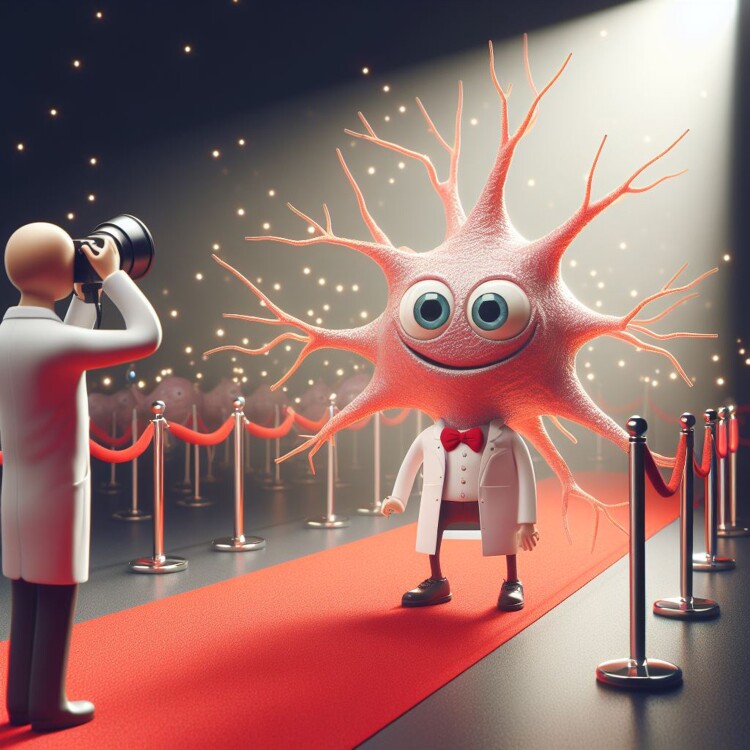 Figure 1
Peer Reviews
No public reviews on file for this paper yet. If you reviewed it on a platform where reviews are public (OpenReview, ICLR, NeurIPS, ICML), you can paste yours below so the community can read it here.
Videos
No videos yet. Explain this paper in a talk, walkthrough, or lecture? Add one.
Taxonomy
TopicsHealth and Medical Research Impacts · Neurology and Historical Studies · Science, Research, and Medicine
Welcome to Volume 6, issue 4 of Brain Communications. In the week when I’m writing this editorial, new 2024 Fellows of the Royal Society and Fellows of the Academy of Medical Sciences have been announced in the UK. These learned academies promote science and its benefits and recognize excellence in scientific research. I am honoured to be one of the new Fellows of the Academy of Medical Sciences and delighted to see so many neuroscientists and indeed Brain Communications authors honoured in these elections.
While there are too many eminent neuroscientists among the newly elected fellows to cover all of them, new Fellows of the Royal Society include Prof. Sarah Tabrizi, one of the Guarantors of Brain, who has co-authored six papers in our journal including important negative results on lack of improvement of neuroinflammation in a Huntington’s disease clinical trial.^1^ Prof. Ammar Al-Chalabi, another Guarantor and Associate Editor of Brain, was elected as a Fellow of the Academy of Medical Sciences (FMedSci), and has co-authored five papers in Brain Communications including work on microRNA involvement in life expectancy of people with amyotrophic lateral sclerosis.^2^ Prof. James Boardman, another newly elected FMedSci, from my neck of the woods in Edinburgh, published a study with us in 2022 examining DNA methylation in preterm infants.^3^ Prof. Rustam Al-Shahi Salman, FMedSci, was co-author of a Brain Communications paper examining risk factors for neurological and psychiatric complications of COVID-19 in a nationwide surveillance study.^4^
As well as honouring scientists through the election of fellows, learned societies play an important role in the scientific ecosystem. Both the Royal Society and the Academy of Medical Sciences are national academies that represent the UK research community and advocate for science and its benefits. The Royal Society, founded in 1660, is the oldest continuously existing scientific academy in the world and one of the pioneers of disseminating scientific findings through publication.^5^ The Academy of Medical Sciences was founded in 1998 as one of four UK national academies with the intention of creating a national resource, independent of the government, bringing together biomedical scientists and academics to promote translation of medical science into benefits for society. Prof. Sir John Savill, commenting in 1999 on the formation of the Academy of Medical Sciences, was hopeful that the academy would improve research culture in academic medicine calling the academy ‘a good thing’.^6^ As independent expert bodies, these societies are often consulted by the government on important scientific issues. The academies also offer grants and do important work to support research culture.
However, as with any institution, the academies are not perfect. Unlike the British Neuroscience Association, Society for Neuroscience and other membership organizations that can be joined by any neuroscientist, by design, the fellowship of the academies is elitist, recognizing the ‘best of the best’. Over the years, the national academies have been criticized for this elitism and for not being representative of the full diversity of scientists. One example of this is that it was 285 years from its founding before the Royal Society admitted its first women, Kathleen Lonsdale and Marjory Stephenson. The academies are in a way ‘closed shops’ since new members are elected by existing members, adding to their reputations as old boys’ networks. However, there is evidence that the academies are working towards inclusion both in their memberships and their wider activities like grants (https://acmedsci.ac.uk/about/ourwork/equity-diversity-and-inclusion/edi-strategy https://royalsociety.org/current-topics/diversity/).
Another potential downside of the academies for fellows was highlighted by my teenage son. When I got the news of being elected as FMedSci, I texted the family, very excited about the recognition and the prospect of more letters after my name. My son’s response was ‘Will this mean any more work for you? Will you have to take more work trips? Do you get any more money for this?’ The answers were of course yes, yes and no as fellows work for the academy in many ways and are not paid for this charitable work. Adding to the amount of service work not related to core research and teaching activities is daunting. Like many of you, I’m buried in administrative tasks as well as reviewing papers and grants. While the ‘reward’ of recognition is very nice, it raises the wider question of incentives and recognition in neuroscience and how the academies might contribute to this wider issue of research culture.
On balance as a new ‘good old boy’, I believe that the national academies are a force for good, and I look forward to working with other fellows to improve both research culture and evidence-based policy.
The cover image for this issue shows a graphical representation of the conceptual activities of small non-coding regulatory RNAs, which have emerged as contributing to the loss of personal cognitive memories in the brain of some, but not all Alzheimer’s disease patients.^7^ Image courtesy of Dr Eyal Soreq.
The reference list from the paper itself. Each links out to its DOI / PubMed record.
- 1Roussakis AA, Gennaro M, Gordon MF, et al A PET-CT study on neuroinflammation in Huntington’s disease patients participating in a randomized trial with laquinimod. Brain Commun. 2023;5(2):fcad 084.37020532 10.1093/braincomms/fcad 084PMC 10069663 · doi ↗ · pubmed ↗
- 2Waller R, Bury JJ, Appleby-Mallinder C, et al Establishing m RNA and micro RNA interactions driving disease heterogeneity in amyotrophic lateral sclerosis patient survival. Brain Commun. 2024;6(1):fcad 331.38162899 10.1093/braincomms/fcad 331PMC 10754318 · doi ↗ · pubmed ↗
- 3Wheater ENW, Galdi P, Mc Cartney DL, et al DNA methylation in relation to gestational age and brain dysmaturation in preterm infants. Brain Commun. 2022;4(2):fcac 056.35402911 10.1093/braincomms/fcac 056PMC 8984700 · doi ↗ · pubmed ↗
- 4Ross Russell AL, Hardwick M, Jeyanantham A, et al Spectrum, risk factors and outcomes of neurological and psychiatric complications of COVID-19: A UK-wide cross-sectional surveillance study. Brain Commun. 2021;3(3):fcab 168.34409289 10.1093/braincomms/fcab 168PMC 8364668 · doi ↗ · pubmed ↗
- 5Fyfe A, Mc Dougall-Waters J, Moxham N. 350 years of scientific periodicals. Notes Rec R Soc J History Sci. 2015;69(3):227–239.10.1098/rsnr.2015.0036 PMC 452840626495575 · doi ↗ · pubmed ↗
- 6Savill J . More than merely academic: The new Academy of Medical Sciences. J R Soc Med. 1999;92(8):387.10656001 10.1177/014107689909200801 PMC 1297311 · doi ↗ · pubmed ↗
- 7Soreq H . Micro RNA guardians of the posterior cingulate cortex delay cognitive deterioration in elders. Brain Commun. 2024;6:fcae 099.38572269 10.1093/braincomms/fcae 099PMC 10988635 · doi ↗ · pubmed ↗